
Business
Nigeria’s oil revenue at risk as production falls

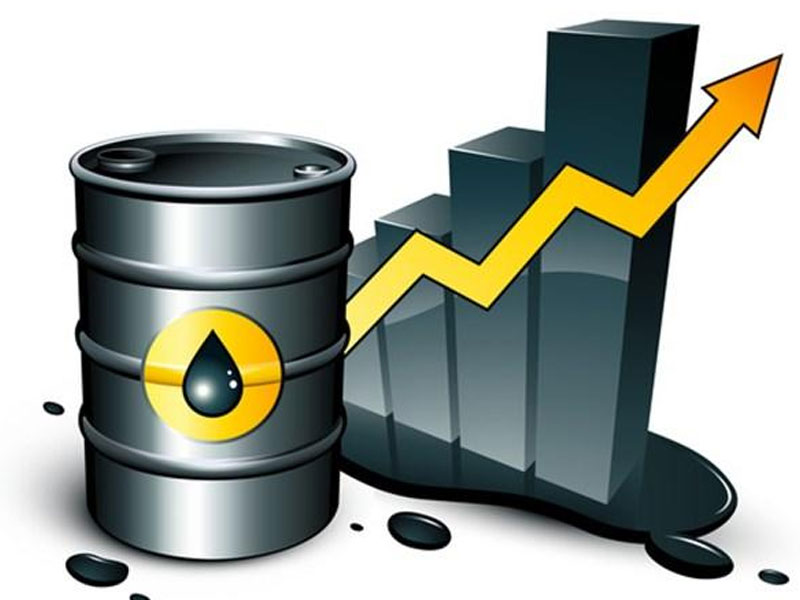
Nigeria’s daily crude oil production has fallen further to 1.024 million barrels per day (mbpd) in the month of May 2022, a 15.9% decline compared to 1.219mbpd recorded in the preceding month.
This is contained in the monthly oil market report recently released by the Organization of the Petroleum Exporting Countries (OPEC).
According to the report, information based on direct information revealed that Nigeria, Angola, Equatorial Guinea, Kuwait, and Venezuela all recorded a decline in the month of May compared to the previous month, while Algeria, Gabon, Iraq, UAE, and Saudi Arabia grew their production.
READ ALSO: Angola overtakes Nigeria as Africa’s biggest oil producer
Meanwhile, based on information from secondary sources, Nigeria’s crude oil production declined 3.37% to 1.262mbpd in May from 1.306mbpd recorded in the previous month. The continuous decline in Nigeria’s crude oil production puts the country’s oil revenue at risk.
Crude oil revenue is a major component of Nigeria’s revenue, accounting for over 50% of the nation’s revenue. However, due to a persistent decrease in production and export, Nigeria’s oil revenue has continued to underperform despite rising crude oil prices.
India’s crude imports jumped 13%, or 0.6 mb/d, to average 5.1 mb/d in April 2022, as refineries maximized run rates and snapped up discounted Russian crude.
In terms of crude imports by source, the latest data shows Iraq moved up to the top position in March, with a share of 30%. Saudi Arabia was second with 17%, followed by Nigeria with almost 10%.
The report also shows that India is still only importing limited volumes of Russian crude in March, while Kpler data shows flows surging in April and May, as domestic refiners took advantage of deeply discounted Urals crude.
In Q1 2022, world oil demand recorded robust growth of 5.2 mb/d, mainly due to a strong economic rebound supported by further easing of COVID-19 containment measures, particularly in OECD countries.
OECD oil demand grew by 3.4 mb/d y-o-y while non-OECD requirements gained 1.9 mb/d as compared to the same quarter in 2021.
Downward revisions in Q2, Q3 and Q4 2022 oil demand growth took into account mainly current economic forecasts and other factors that could potentially reduce global oil requirements, including COVID-19 developments in China.
Diesel and gasoline are anticipated to record the highest gains among petroleum products y-o-y on the back of increasing mobility and healthy industrial activity globally.
The easing of supply chain bottlenecks in major consuming countries will support oil demand, with light distillates largely supported by strong petrochemical demand, notably in China, the US and India. The recovery in global air travel amid declining COVID-19 infections is expected to further support jet kerosene demand.


-
 Latest5 days ago
Israel marks 3 years since October 7 Hamas attack amid Gaza strikes, election debate
-
 Energy5 days ago
Fuel Battle: Dangote, marketers and government clash over petrol imports
-
 Energy6 days ago
Petrol, diesel prices rise 86% in 2026 as costs hit fresh highs
-
 Energy7 days ago
Has Iran lost control of the Strait of Hormuz? Oil flows rebound as war disruptions persist
-

 Football6 days ago
Nigeria’s World Cup exit under spotlight as FIFA’s DR Congo files emerge
-

 Latest6 days ago
US Court set to rule on release of FBI, DEA records on Tinubu
-

 Business6 days ago
Nigerian investors at a crossroads as fixed-income yields slide
-

 Business7 days ago
LoveWorld Trade and Investment Forum to Convene Business Leaders in Accra