
Business
Nigeria’s solid minerals revenue jumps 95% to N101bn in nine months

By Diden Abigail Owuntarose
Nigeria’s revenue from the solid minerals sector increased by 95.2 per cent to ₦101.11bn in the first nine months of 2026, compared with ₦51.79bn recorded in the corresponding period of 2025, reflecting increased government earnings from mining activities.
The figures, obtained from the Central Bank of Nigeria’s solid minerals revenue collection report and analysed by Punch, showed that the sector generated an additional ₦49.33bn during the nine-month period.
Mineral royalties accounted for the largest share of the revenue, contributing ₦66.12bn, representing approximately 65.4 per cent of total collections.
Fees collected by the Ministry of Solid Minerals Development contributed ₦33.54bn, while miscellaneous receipts accounted for ₦1.45bn.
The sector recorded its strongest monthly performance in July, when revenue rose to ₦29.13bn, driven largely by mineral royalty payments of ₦25.78bn.
However, collections declined sharply to ₦8.47bn in August before recovering slightly to ₦8.78bn in September, highlighting fluctuations in revenue generation within the sector.
The June figures also showed significant improvement, with collections rising to ₦16.31bn from ₦4.75bn recorded in June 2025, representing a year-on-year increase of 243.7 per cent.
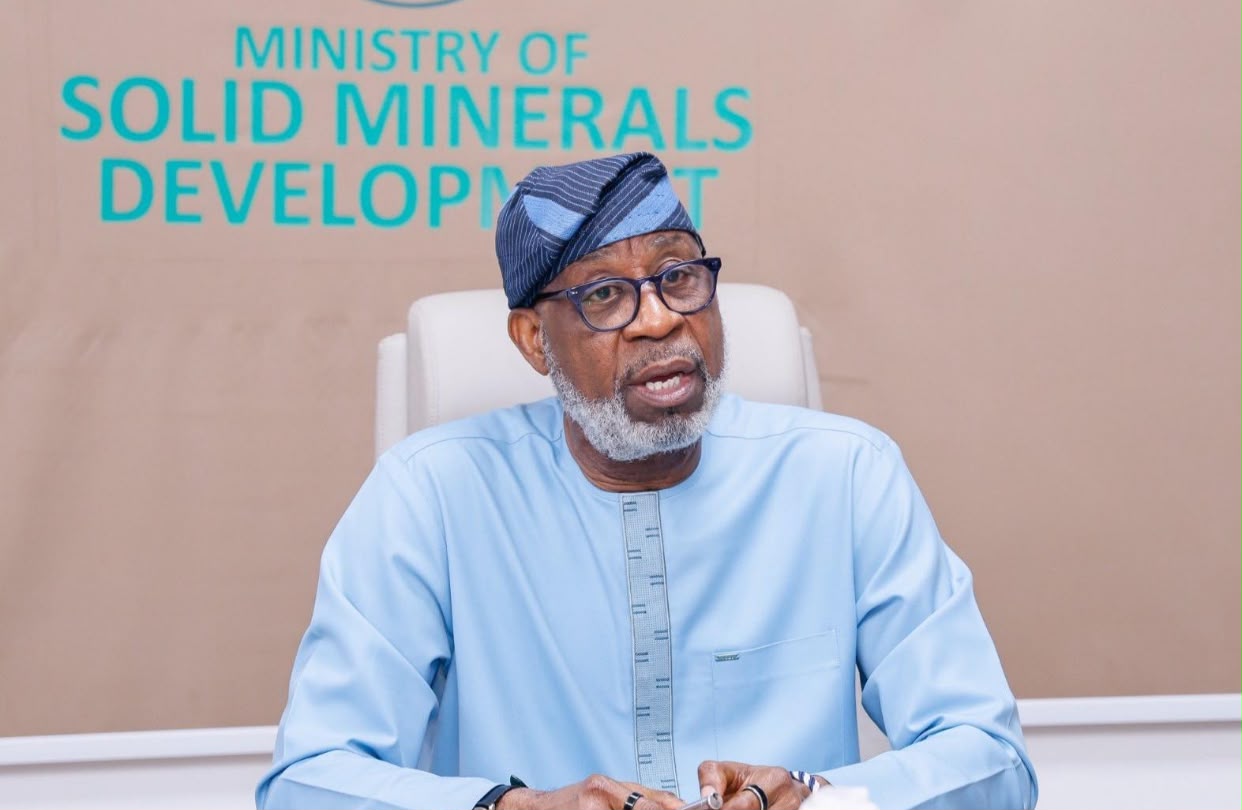
The Minister of Solid Minerals Development, Dele Alake, has repeatedly attributed improvements in the sector’s revenue performance to government efforts aimed at strengthening regulatory enforcement, improving licensing procedures and formalising mining operations.
The Federal Government has increasingly identified solid minerals as an important contributor to economic diversification, particularly as Nigeria seeks to reduce its dependence on crude oil revenue.
The mining sector possesses substantial deposits of minerals including lithium, gold, limestone, iron ore and lead-zinc, which are used in manufacturing, construction, technology and industrial production.
Despite the revenue increase, the sector continues to face challenges, including illegal mining, insecurity in mining communities, inadequate infrastructure and limited local processing capacity.
The latest figures indicate stronger government revenue collection from solid minerals, although sustained growth will depend on improved mining operations, investment in processing facilities and the ability to translate mineral resources into broader economic benefits.


-

 Featured1 week ago
The cost of Renewed Hope: How Nigeria’s economic reforms are reshaping everyday family life
-

 Crime4 days ago
Kwara bandit deal under scrutiny as footage shows security operatives negotiating with terrorists [VIDEO]
-

 Business1 week ago
NCC plans spectrum incentives to push telecom operators into more network investment
-

 Business1 week ago
CBN forex reforms under scrutiny as Nigeria’s reserves drop $300m in 10 days
-

 Entertainment6 days ago
2027 Grammys: Asake, Wizkid, Tems, Ayra Starr lead Nigerian nominees in African music category
-

 Latest1 week ago
Nigeria’s security crisis deepens as October death toll hits 835, highest in 2026
-

 Latest5 days ago
2027 Elections: 66% of Nigerians feel no connection to political parties, 89% fear vote-buying – Survey
-

 Football4 days ago
Argentine teen footballer Abel Nunez dies after suffering head injury during match