
Business
NNPC works on new initiative to curtail cross border fuel smuggling

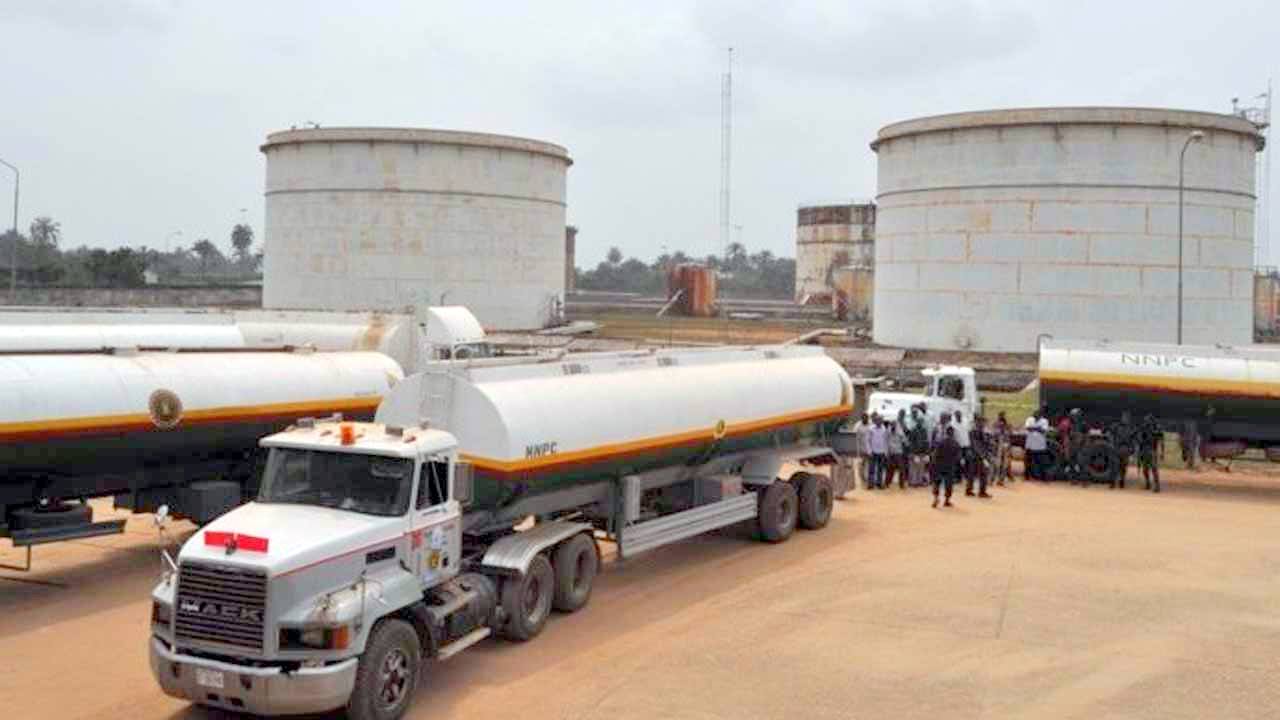
The Nigerian National Petroleum Corporation (NNPC) has said there is an ongoing initiative to put electronic monitors on tank and fuel stations that would monitor the distribution of fuel in the country.
This disclosure was made by the Group Managing Director of NNPC, Mele Kyari while speaking at the public hearing by the House of Representatives Committee on finance on 2022 to 2024 Medium Term Expenditure Framework (MTEF) and Fiscal Strategy Paper (FSP).
He said that with the electronic monitoring, every truck carrying fuel would be visible as they discharged their load and would see all the fuel stations as they discharged.
The NNPC boss disputed the fuel consumption level in the country saying that the national fuel consumption per day may not be above 60 million litres as is being speculated. He, however, said that anytime NNPC supplies less than that, there would be problems.
He also said that President Muhammadu Buhari had personally directed him to take steps that would curtail cross border smuggling, while also admitting the challenges posed by land borders, aiding activities of smugglers.
READ ALSO: NNPC hails appeal court’s judgment on OML 11
He pointed out that it is quite unlikely that the country will stop the petrol subsidy in 2022, but may do so in 2023 when the Petroleum Industry Act (PIA) would likely be fully activated.
He stated that the decision of the NNPC to take a board position on Dangote Refinery was a calculated attempt, adding that as of today Nigeria does not have strategic storage.
He said that Dangote had a choice to buy crude oil from anywhere in the world, but we insisted that he must buy from the country, stressing that it was a good deal the NNPC was proud to enter into.
Kyari said that contrary to insinuation, the NNPC had not abandoned the country’s refineries and it was not about taking a $500 million loan to repair them.
The NNPC had earlier revealed that the country’s economy had been losing N2 billion daily after the federal government closed land borders and fuel stations around border communities.
READ ALSO: NNPC to develop comprehensive divestment policy for IOCs
It can be recalled that the Federal Government had renewed the fight against the smuggling of petroleum products out of the country with a new technology commissioned by the Department of Petroleum Resources (DPR).
The new technology called Downstream Remote Monitoring System (DRMS) is aimed at checking illegal activities in the downstream sector of the oil and gas industry, determining illegal petrol stations actors and providing accurate data on the industry.
The DRMS would reduce smuggling and provide credible information on how the products are being taken out of the borders, adding that the country would also be able to determine its consumption level and actual products required in the country.


-

 Latest4 days ago
Full List: Meet the 2026 Nobel Prize winners across six categories
-
 Featured1 week ago
103 Million Voters: What does INEC’s new register say about Nigeria’s population?
-

 Football3 days ago
Premier League Matchweek 7: Five Fixtures That Could Shape the Weekend
-

 Latest3 days ago
Umahi defends Lagos-Calabar highway route changes amid public outcry
-

 Business1 week ago
The Ministry of Commerce of Loveworld gets a $1 million boost for new investment fund at LTIF 2026 to promote Trade in Ghana
-

 Features1 week ago
Edo’s 2.5 million vote promise: Can the numbers match the politics?
-
 Business3 days ago
Dangote Refinery IPO Extension: Was the 70% subscription report overhyped?
-
Business2 days ago
Dangote Refinery IPO: 70% Subscription claim meets fourfold demand assertion as investors seek clarity