
News
No Gender-Based Violence in custodial centres nationwide – NCoS

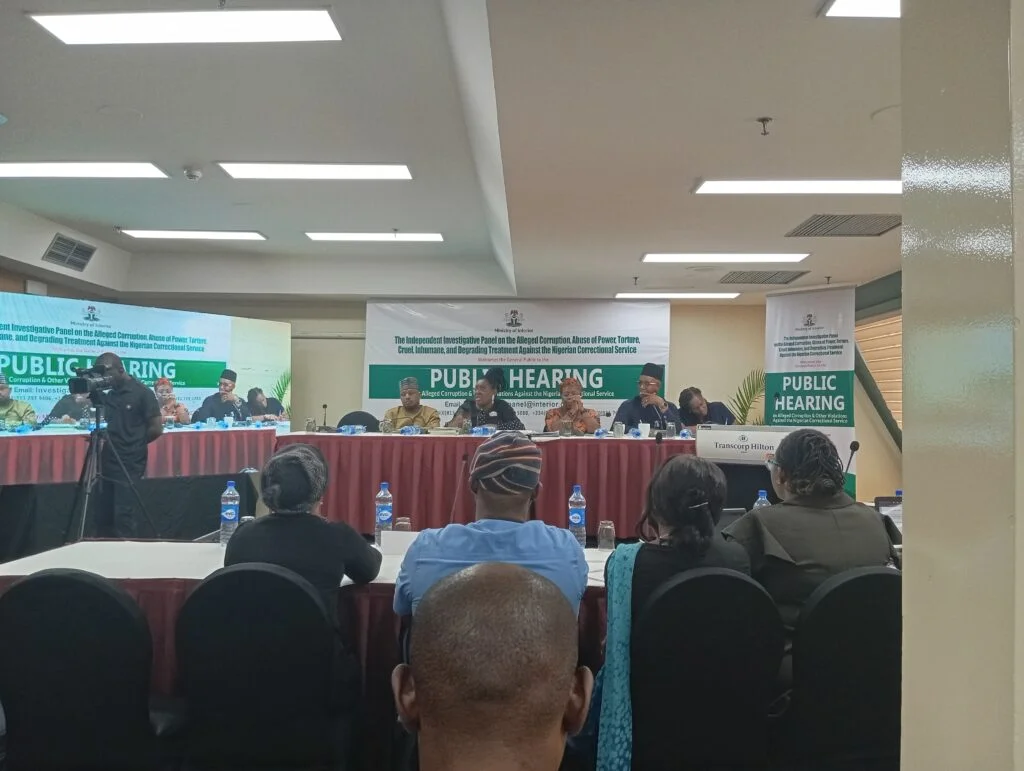
The Nigerian Correctional Service (NCoS) on Tuesday said that there is no record of Gender-Based Violence (GBV) in custodial centres across the country.
Ibrahim Idris, Deputy Controller General (DCG) of the Legal Department at the Service, said this on Tuesday in Abuja at the ongoing 3rd public hearing on alleged corruption and other violations within the service.
The Ministry of Interior had earlier established an Independent Investigative Panel on allegations of corruption, abuse of power, torture, and cruel, inhumane and degrading treatment against the NCoS.
Speaking during the hearing, Idris stated that in recent years, there had been no incidents, or even consideration, of physical assault against inmates.
“Even the decision of possibly touching an inmate has never come up. So, it is not there. Such things don’t happen,” he insisted.
He described such reports as unfounded and often sensationalised on social media.
Idris encouraged Non-Governmental Organisations (NGOs) visiting custodial centres to freely engage with inmates on the matters.
“I encourage NGOs that visit the Correctional Centres to feel free with the inmates and interview them on these issues.
“If there is any proven issue with evidence, the Controller General of Corrections, Sylvester Nwakuche, welcomes such reports and will take immediate action,” he said.
Idris also highlighted that Section 34 of the relevant law, as cited during the hearing, was not merely a guideline but a legal mandate that must be followed when handling imprisonment cases.
He further emphasised that the NCoS was committed to inmate empowerment, especially for women.
According to him, female inmates who are discharged receive starter packs, including hairdressing tools, knitting materials, and other vocational kits, every quarter to help their reintegration into society.
“This is always televised across the country. Anyone who follows our activities can attest to that. We empower not only men but particularly female inmates,” he added.
Idris reaffirmed that the NCoS operates an open-door policy for complaints and urged anyone with evidence of staff misconduct, especially concerning female inmates, to report directly to the Controller-General or designated officers for prompt action.
Meanwhile, the Regy & Henry Amazing Grace Foundation, has called for urgent reforms to address the plight of women in custody and tackle gender-related issues across Nigeria.
Dr Regina Duru, National Coordinator of the Foundation, made the appeal in a position paper titled Women in Custody and Gender-Related Issues in Nigeria.
Duru stated that the foundation was committed to promoting the rights and dignity of women and girls, particularly those affected by poverty, violence, and exploitation.
She noted that women in Nigerian prisons faced several challenges, including poor living conditions, inadequate healthcare, and separation from their families.
“Many women are incarcerated for minor offences, and some are victims of circumstance rather than hardened criminals,” she said.
Duru identified gender-based violence (GBV) as a widespread problem in Nigeria, which disproportionately affected women and girls.
According to her, GBV takes multiple forms, including physical, emotional, and economic abuse, as well as sexual exploitation.
She also pointed out that Nigerian women face significant barriers to economic empowerment, including limited access to education, employment, and land ownership.
On healthcare, Duru stressed that women’s health remained a critical concern, particularly in maternal health, reproductive rights, and hygiene.
The Foundation made four key recommendations, including reforming the prison system to prioritise the rehabilitation and reintegration of women offenders.
“Implement policies and programmes to prevent and respond to GBV, including awareness campaigns, survivor support services, and strict prosecution of perpetrators.
“Support women’s economic empowerment through vocational training, microfinance, and advocacy for equal land access.
“Strengthen healthcare systems to ensure access to quality maternal care, reproductive health services, and GBV response services.”
Duru called on the Nigerian government, civil society, and individuals to work together to tackle these pressing issues. (NAN)


-

 Latest7 days ago
US Immigration fees rise from October 16 as USCIS announces new charges
-
 Latest2 days ago
Israel marks 3 years since October 7 Hamas attack amid Gaza strikes, election debate
-

 Business6 days ago
Nigeria’s $55bn reserves raise fresh questions over naira value
-
 Health6 days ago
Florida sues Pfizer over deceptive COVID-19 vaccine marketing
-

 Business1 week ago
Tuoyo Erikowa wins digital marketing personality of the Year at 2026 EDGE awards
-

 Crime6 days ago
From camp to captivity: How kidnappers now target NYSC Corps members on highways
-

 Featured6 days ago
2027: Can Nigeria’s opposition still unite behind a single presidential candidate?
-

 Crime6 days ago
Fulani Militia leader linked to Christian killings arrested in Plateau