
Latest
Obi says high interest rates crippling SMEs, promises cheaper credit

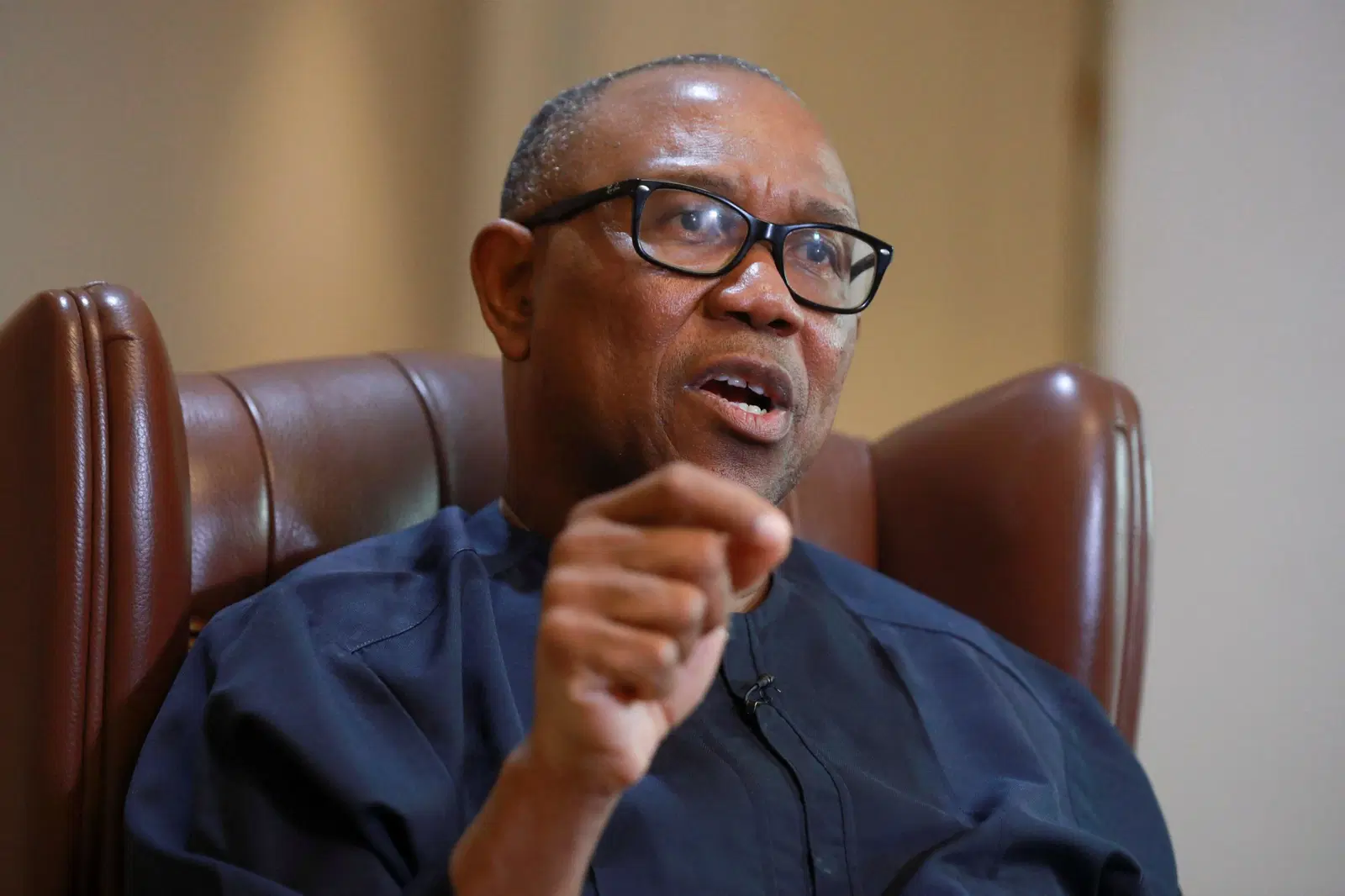
The presidential candidate of the Nigeria Democratic Congress (NDC), Peter Obi, has pledged to reduce interest rates if elected president in 2027, arguing that Nigeria’s current lending rates are crippling small businesses and slowing economic growth.
Obi made the promise during an appearance on Politics Today on Channels Television on Sunday, where he outlined his economic blueprint, focusing on cheaper access to credit, increased investment in agriculture and manufacturing, and support for small and medium-sized enterprises (SMEs).
His remarks came less than a week after the Central Bank of Nigeria (CBN) retained the Monetary Policy Rate (MPR) at 26.5 percent following the 306th meeting of its Monetary Policy Committee (MPC), maintaining its tight monetary policy stance aimed at curbing inflation and preserving macroeconomic stability.
Speaking during the interview, Obi said high borrowing costs have made it nearly impossible for entrepreneurs to grow businesses in Nigeria.
“The biggest problem for manufacturers today in Nigeria is interest rate,” he said.
Drawing comparisons with countries such as Indonesia, Obi argued that governments that have successfully developed their economies deliberately provide affordable financing, training and technical support for small businesses.
“The government supports them with training and loans at less than 10 percent—actually about 5 percent. How can you do small business in Nigeria with no support, no training, and interest rates at 35 percent? It is impossible,” he said.
READ ALSO: Peter Obi calls for full investigation into Enugu Air runway excursion at Benin Airport
Asked whether he would lower interest rates if elected president, Obi responded in the affirmative.
“Of course, yes,” he said, adding that his experience in business and the corporate sector gives him the knowledge needed to create policies that would reduce borrowing costs while stimulating production.
According to him, government should concentrate on creating an enabling environment for businesses rather than directly engaging in commercial activities.
He maintained that thriving small businesses remain the backbone of successful economies because they generate the highest levels of employment and stimulate industrial growth.
Obi also identified agriculture as a critical sector capable of transforming Nigeria’s economy if properly developed.
He said Nigeria possesses enough arable land to achieve food security and become a leading agricultural exporter, insisting that agriculture could ultimately generate more revenue than crude oil.
“This country can produce enough of what we can eat. We can actually make more money from agriculture than we make from oil because we have vast uncultivated land,” he said.
The former Anambra State governor lamented Nigeria’s relatively low rice production, saying the country currently produces less than 10 million tonnes of paddy rice annually, a figure he described as inadequate for its population.
He blamed the influx of cheap imports for discouraging local farmers and reducing agricultural productivity.
Obi cited Bangladesh as an example, noting that despite having significantly less land than Nigeria, the South Asian nation now produces between 50 million and 60 million tonnes of paddy rice every year.
He also pointed to the Netherlands, which generates more than €120 billion annually from agricultural exports despite its relatively small landmass.
READ ALSO: Kwankwaso reveals written one-term deal with Obi for 2027 presidency
According to him, insecurity has prevented states with vast agricultural potential, including Niger, Taraba and parts of the North-East, from fully utilizing their fertile land for commercial farming.
He argued that expanding agricultural production would not only boost food security but also create jobs, reduce poverty and address insecurity by providing sustainable livelihoods for millions of young Nigerians.
“The only way you can pull Nigeria out of poverty and increase GDP is through production, not consumption. Production in agriculture gives you food, gives raw materials for factories, and gives export value. It is a win-win,” Obi said.
Obi’s comments come after the CBN decided to retain the benchmark interest rate at 26.5 percent, saying the move was necessary to sustain the moderation in inflation, stabilize the foreign exchange market and consolidate recent macroeconomic gains.
According to the apex bank, Nigeria’s headline inflation eased slightly to 15.91 percent in June 2026 from 15.93 percent in May, although food inflation continued to rise on a monthly basis.
Obi, who served as Governor of Anambra State from 2006 to 2014, has declared his intention to contest the 2027 presidential election.
He recently announced former Kano State Governor, Senator Rabiu Musa Kwankwaso, as his running mate, setting the stage for what is expected to be a keenly contested race involving President Bola Tinubu of the All Progressives Congress (APC) and former Vice President Atiku Abubakar of the African Democratic Congress (ADC).


-
 Business1 week ago
Dangote Refinery IPO: 70% Subscription claim meets fourfold demand assertion as investors seek clarity
-
 Featured4 days ago
Inside INEC’s race to prepare for Nigeria’s 2027 elections
-

 Latest6 days ago
UCTH faces morgue crisis as 50 unclaimed corpses await mass burial
-
 Featured4 days ago
2027: APC unveils nationwide campaign timetable, Tinubu to rally in 12 states
-
 Business6 days ago
BREAKING: Nigeria’s Inflation Rate Drops to 14.63% in September
-

 Aviation1 week ago
Germany opens online application route for student, EU Blue Card and other long-stay visas
-
 Business5 days ago
President Tinubu and the Low Transport Fares Fiasco
-
 Business4 days ago
Court dismisses ₦170m Trade Fair contract claim, says Zenith Bank was not a party