
Latest
One year after, Tinubu’s $1 economy still a mirage, says analysts

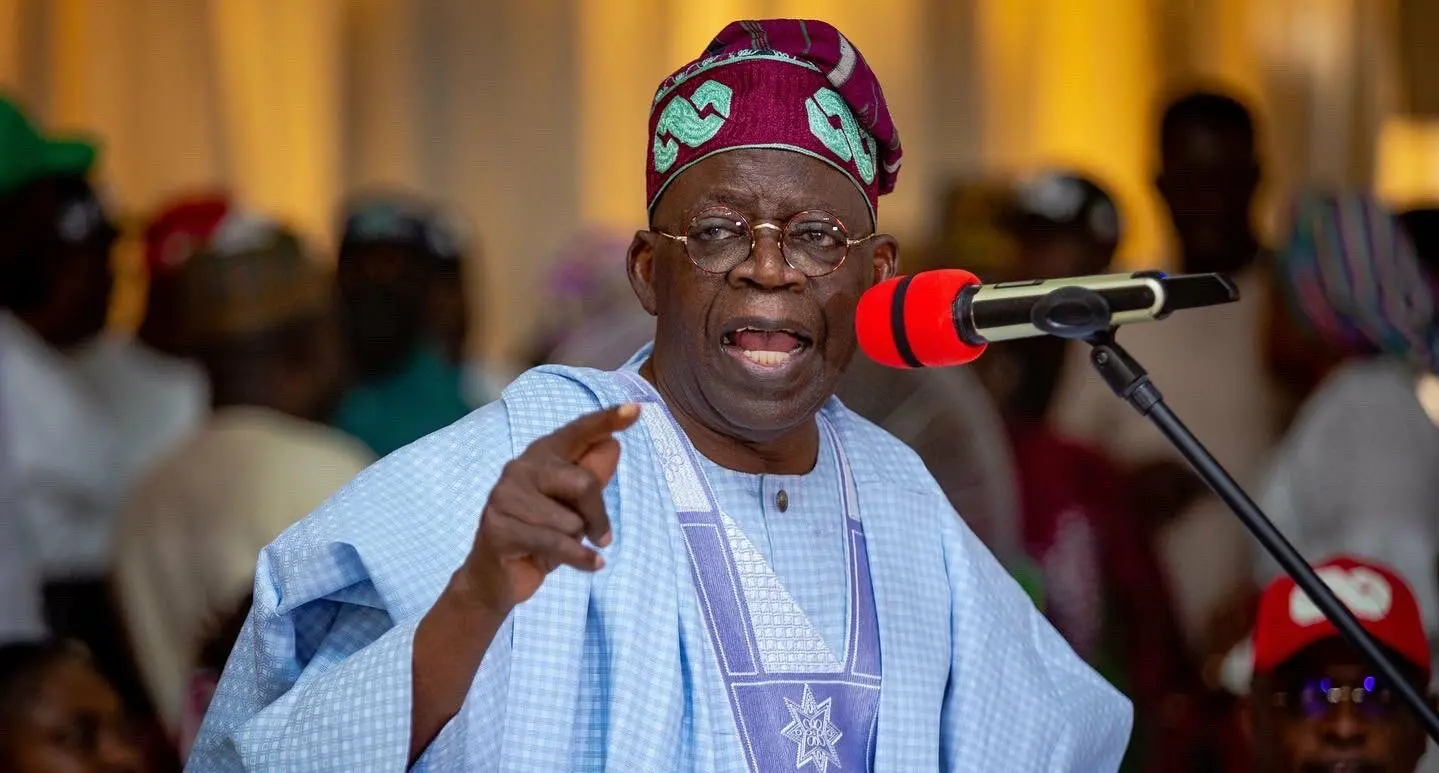
Almost a year after President Bola Tinubu told business leaders at the 29th Nigeria Economic Summit in Abuja, economists have argued that instability in the forex exchange market and the weakness of the naira pose a significant threat to Nigeria’s ambition of becoming a $1 trillion economy.
According to the analysts, for Nigeria to hit the $1 trillion economy by 2026 at a GDP of N237.53 trillion, the naira must appreciate to N237.53/$ which is highly unlikely given the current macroeconomic conditions.
Using the official rate at the end of March 2024 which was N1,303.84/$1, Nigeria’s GDP stands at approximately $182.18bn, but using the forex rate before the unification in 2023 at $462.88/$, Nigeria’s GDP would have been at approximately $513.16 billion.
The current exchange rate, however, implies that Nigeria’s economy will need to quadruple in growth over the next three years if it is to reach $1 trillion in GDP, assuming the exchange rate remains unchanged, which is highly improbable.
READ ALSO: State House lists Tinubu’s major road projects in 1 year
According to the Director of Research and Strategy at Chapel Hill Denham, Tajudeen Ibrahim, the chances of achieving a $1 trillion economy is very slim based on the volatility in the exchange rate market.
“If we can fix our challenges by addressing the fundamental issues that have been the major challenges, then we can be talking about the relative stability of the currency over the medium to long term. By then, we can be thinking or talking about something that is even more than the $1 trillion economy in terms of size.”
Professor of Development Economics at Babcock University, Prof Adegbemi Onakoya, said that the trillion-dollar economy for Nigeria is an aspirational target, advising the government to leverage the oil and gas sector as well as the solid mineral sector by increasing local output to earn more forex.
“We are endowed with all mineral resources you can speak about in Nigeria. The government should ensure that the sector is organised, and the money being realized is not going into the public pocket,” he added.
READ ALSO: First year anniversary: ‘It is time to publish your assets’, SERAP tells Tinubu
Meanwhile some economists argued that the economy needs to be rebased because the economy’s form has evolved and the existing method of calculating GDP may not be reflecting its true size, particularly in areas such as healthcare, real estate, fintech, and trade.
Justifying the need for the rebasing, Former Chief Executive of National Planning, Ode Ojowu, said that since the last rebasing in 2014, Nigeria has experienced significant structural changes in various sectors.
These include the rapid growth of technology and digital sectors, such as fintech, e-commerce, digital services and the emergence of new value chains, including agribusiness, processing, commodity exchanges, and export activities, as well as the growth of renewable energy sources like solar power.
In his own submission, Chief Executive Officer, Centre for the Promotion of Private Enterprise (CPPE), Dr Muda Yusuf said that the rebasing will provide “a clearer picture” of the true value of Nigeria’s GDP.


-

 Latest5 days ago
Full List: Meet the 2026 Nobel Prize winners across six categories
-

 Football5 days ago
Premier League Matchweek 7: Five Fixtures That Could Shape the Weekend
-

 Latest4 days ago
Umahi defends Lagos-Calabar highway route changes amid public outcry
-
 Business3 days ago
Dangote Refinery IPO: 70% Subscription claim meets fourfold demand assertion as investors seek clarity
-
Business4 days ago
Dangote Refinery IPO Extension: Was the 70% subscription report overhyped?
-

 Latest2 days ago
UCTH faces morgue crisis as 50 unclaimed corpses await mass burial
-

 Featured4 days ago
El-Rufai, ADC governorship candidate’s court appearance puts Kaduna opposition politics in focus
-
 Latest5 days ago
Makinde’s Chief of Staff, Segun Ogunwuyi, resigns