
Features
Overseas study as elite kiss of death for local varsities

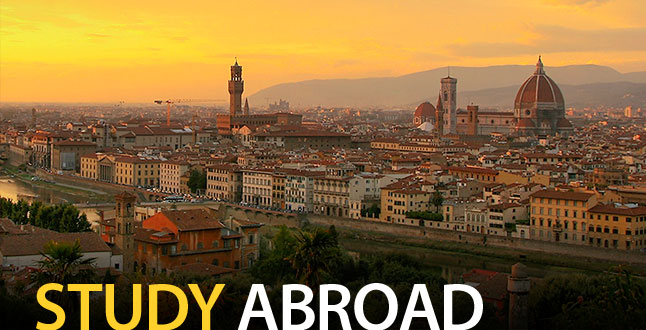
Ever wonder why political leaders and elite will rather send their wards to foreign schools? So long as our leaders can buy bottled water for themselves, they won’t be motivated enough to clean the rivers, Odunewu Segun writes
For very long time, Nigerians have blamed the woes of Nigeria, particularly that of the public educational system, to the many years of military misrule.
But with the re-emergence of civil rule the nation’s educational institutions are still in shambles today, with political leaders preferring to send their wards abroad while little is done to improve the quality at home.
According to stakeholders, when those responsible for managing schools that cater to 90 percent of the children send their own kids to private institutions, would they be motivated to improve the shabby state of government-run schools.
A cursory glance at the profiles of kids of some of our political leaders shows their penchant for elite universities in the UK and US.
Only recently, Governor of Sokoto, Aminu Waziri Tambuwal beamed with smiles as his son, Najib Waziri graduated from a school in the United Kingdom. Senate President, Bukola Saraki also flew to the UK as his son, Seni Saraki graudated from the London School of Economics.
ALSO SEE: NANS urges Buhari to subsidise education
Princess Fulani Siddika Sanusi, daughter of Emir of Kano, Muhammadu Sanusi Lamido, a former governor of the Central Bank of Nigeria recently graduated from the University of Buckingham, United Kingdom with the Oni of Ife, Adeyeye Enitan Ogunwusi attending the graduation in the UK.
The list is endless.
What is unsurprisingly evident is that the children of our leaders, in most cases, do not face JAMB, WAEC and several other examinations! The excruciating race, synonymous with Nigeria’s higher education is not endured by the children of those who created this mess.
There are questions we will have to ask. If our leaders do indeed understand the failings of Nigerian public schools, why haven’t they done enough to improve them?
Although Nigeria’s educational institutions in general are in dire need, the most troubled of the three tiers is the primary education sector. Some of the loans received from the World Bank toward education during the 1990s were used to purchase unnecessary, and “expensive equipment” that “could not be properly installed or maintained, and many institutions received irrelevant and useless books and journals.
With the news of corruption still filling the pages of Nigeria newspapers and magazines, the apparent war on corruption in the society seem an impossible task, since those wagging the corruption-war are themselves as corrupt as a parrot.
So long as our leaders can buy bottled water for themselves, they won’t be motivated enough to clean the rivers.




-
 Latest5 days ago
Israel marks 3 years since October 7 Hamas attack amid Gaza strikes, election debate
-

 Energy5 days ago
Fuel Battle: Dangote, marketers and government clash over petrol imports
-

 Energy6 days ago
Petrol, diesel prices rise 86% in 2026 as costs hit fresh highs
-
 Energy7 days ago
Has Iran lost control of the Strait of Hormuz? Oil flows rebound as war disruptions persist
-

 Football6 days ago
Nigeria’s World Cup exit under spotlight as FIFA’s DR Congo files emerge
-

 Latest6 days ago
US Court set to rule on release of FBI, DEA records on Tinubu
-
 Business6 days ago
Nigerian investors at a crossroads as fixed-income yields slide
-

 Business7 days ago
LoveWorld Trade and Investment Forum to Convene Business Leaders in Accra