
Latest
Presidency defends Tinubu’s economic reforms, rebuts Atiku’s criticism

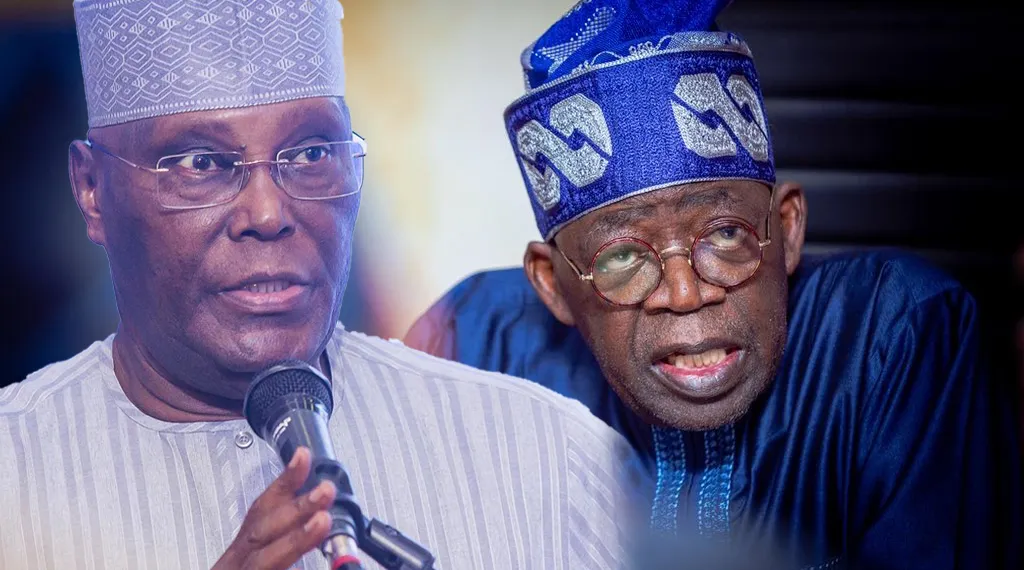
The Presidency has dismissed criticisms by former Vice President Atiku Abubakar over the state of Nigeria’s economy, insisting that the reforms introduced by President Bola Ahmed Tinubu are yielding positive results and laying the foundation for long-term economic growth.
In a statement issued on Sunday, Special Adviser to the President on Information and Strategy, Bayo Onanuga, said Atiku’s assessment of the administration was based on outdated 2024 economic data and failed to reflect improvements recorded since then.
According to Onanuga, the economy has recovered significantly since the initial adjustment period that followed key reforms, including the removal of fuel subsidy and the unification of the foreign exchange market.
He said Nigeria’s dollar-denominated Gross Domestic Product (GDP), which fell to about $253 billion after the exchange rate reset, has risen to approximately $377 billion, while the country’s naira GDP has grown from about ₦314 trillion in 2024 to around ₦530 trillion.
Responding to allegations of excessive borrowing, the Presidency argued that Nigeria’s debt profile remains sustainable, noting that the country’s debt-to-GDP ratio stands at about 40 per cent, lower than those of several emerging and advanced economies.
READ ALSO; Obasanjo revisits fallout with Atiku, raises new questions over 2003 politics
Onanuga also said the government’s debt service-to-revenue ratio had declined from nearly 100 per cent in December 2022 to below 60 per cent, attributing the improvement to stronger revenue generation and prudent debt management.
Defending the removal of fuel subsidy, the Presidency maintained that the policy had strengthened the finances of states and local governments by increasing allocations from the Federation Account, enabling greater investment in infrastructure, healthcare, education and social services.
On tax reforms, the statement rejected claims that the administration was imposing heavier taxes on Nigerians, explaining that the reforms were designed to reduce the burden on low-income earners and small businesses while improving compliance among higher-income individuals and profitable companies.
The Presidency also highlighted achievements in healthcare, stating that more than 3,000 primary healthcare centres had been upgraded, over 78,000 frontline health workers retrained, and more than 100 public hospitals were now providing free caesarean sections for indigent mothers. It added that three world-class cancer centres had become operational in Kubwa, Enugu and Katsina.
In the education sector, Onanuga said over 11,000 projects had been executed through the Universal Basic Education Commission (UBEC), while the Nigerian Education Loan Fund (NELFUND) had supported more than 1.64 million students with tuition and upkeep loans valued at over ₦303 billion.
The statement further cited ongoing investments in roads, railways, power infrastructure, housing, gas development and digital connectivity as evidence of the administration’s commitment to expanding economic productivity.
Addressing Atiku’s claim of an unaccounted N7.98 trillion oil windfall, the Presidency described the allegation as unfounded. It explained that although global oil prices exceeded budget benchmarks, crude oil production remained below projected levels, while part of Nigeria’s crude output had been committed to servicing existing loan obligations.
According to Onanuga, government oil revenue cannot be determined simply by multiplying crude oil prices by production volumes because production costs, profit-sharing arrangements with oil companies and forward crude sale agreements must also be considered.
While acknowledging that the reforms had imposed short-term economic hardship, the Presidency argued that they were necessary to correct longstanding structural distortions and improve fiscal sustainability.
The statement added that the Federal Government had launched several intervention programmes, including the NG-CARES, HOPE and SOLID initiatives valued at over $3 billion, alongside cash transfers to 15 million vulnerable households, to cushion the impact of the reforms.
The Presidency maintained that although Nigeria’s economy still faces challenges, the country has moved beyond the most difficult phase of the reform process and is on a path toward stronger institutions, improved public finances and sustainable economic growth.


-

 Crime5 days ago
Kwara bandit deal under scrutiny as footage shows security operatives negotiating with terrorists [VIDEO]
-

 Business3 days ago
NGX loses N3trn in three days as Dangote Cement, Aradel, Banks lead sell-off
-

 Entertainment1 week ago
2027 Grammys: Asake, Wizkid, Tems, Ayra Starr lead Nigerian nominees in African music category
-

 Football5 days ago
Argentine teen footballer Abel Nunez dies after suffering head injury during match
-
 Latest3 days ago
Tinubu’s 2027 re-election bid: New promises, old questions and an unfinished record
-
 Latest3 days ago
2027: Dele Momodu predicts Peter Obi will defeat Soludo’s Tinubu mobilisation in Anambra
-

 Latest6 days ago
2027 Elections: 66% of Nigerians feel no connection to political parties, 89% fear vote-buying – Survey
-

 Football1 week ago
Portugal gives iconic No. 7 a new look to immortalise Cristiano Ronaldo’s legacy