
Business
Tinubu stops electricity tariff hike


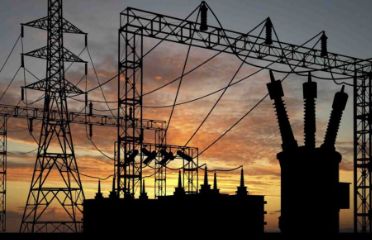
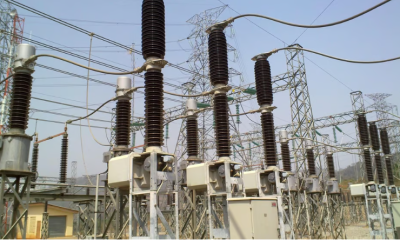
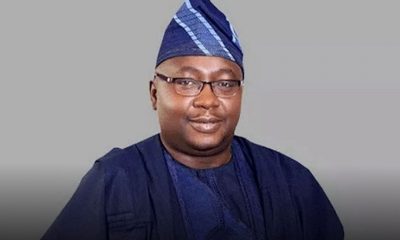
President Bola Tinubu recently stopped the implementation of a hike in electricity tariff and insisted that subsidy be paid on power consumed nationwide, the Minister of Power, Adebayo Adelabu, revealed on Wednesday.
Adelabu also stated that the Federal Government would investigate the legality of the five-year licence extension given to privatised power distribution and generation companies, stressing that the operating licences of the firms would have expired on October 31, 2023.
The minister, who spoke at a press briefing in Abuja, further stated that he would sack any non-performing chief executive in agencies under the power ministry, if their non-performance would make him lose his job as minister.
Speaking on the call for a cost reflective tariff, which would lead to a hike in the amount payable for power, Adelabu said, “The power sector is an industry that is very sensitive to any leader.
READ ALSO: Labour shuts down flights, power supply in Imo
“You cannot jump overnight and implement the cost reflective tariff. I can tell you that till today the government still subsidises power. Tariffs should have been raised months back, but Mr President said until we are able to achieve regular and incremental power supply we can’t touch the tariff.
“So the there is a gap between the cost reflective tariff that we are supposed to charge and the allowed tariff. That huge gap the government is still handling as subsidy. This affects liquidity in the system, investments and causes so many constraints.”
He noted that the non-implementation of this was actually causing a liquidity crisis in the sector, but stressed that the President had refused to allow a raise in electricity rate.
“Now, I never said that it is not yet time to charge a cost reflective tariff. Rather, I said the cost reflective tariff is supposed to have been implemented months ago because it is the source of liquidity to the system.
“But for political reasons and empathy, you cannot cause additional burden on Nigerians. We just had the removal of fuel subsidies, we are talking about skyrocketing exchange rates, galloping inflation and so many others that bring hardship to the people.
READ ALSO: Group empowers 88 Badagry women in vocational skills, targets economic self-reliance
“We are now paying about N70 (per kilowatt-hour), and it can never be less than N130 or N140 at the exchange rate of today if we are to implement a cost reflective tariff. Because part of the reasons for an increased tariff is the price of gas, which is paid in dollars,” Adelabu stated.
He explained that as at today, 75 to 80 percent of Nigeria’s power was from gas power plants, and their raw material is gas. So, once the exchange rate goes up, the cost of gas also goes up and it affects the tariff.”
He, however, pointed out that tariff would be increased at the appropriate time, which would be after a lot of sensitisation and communication with the public, adding that there must also be an assured incremental and regular supply.
The minister maintained that the privatisation of the power sector in 2013 was a mistake, stressing that commercialization should have been better.








-
 Featured1 week ago
Tinubu’s Renewed Hope: Reforms, hardship and the unanswered question of a second term
-
 Featured1 week ago
The cost of Renewed Hope: How Nigeria’s economic reforms are reshaping everyday family life
-
 Crime4 days ago
Kwara bandit deal under scrutiny as footage shows security operatives negotiating with terrorists [VIDEO]
-
 Business1 week ago
CBN forex reforms under scrutiny as Nigeria’s reserves drop $300m in 10 days
-
 Business1 week ago
NCC plans spectrum incentives to push telecom operators into more network investment
-

 Entertainment6 days ago
2027 Grammys: Asake, Wizkid, Tems, Ayra Starr lead Nigerian nominees in African music category
-
 Latest1 week ago
Nigeria’s security crisis deepens as October death toll hits 835, highest in 2026
-

 Sports1 week ago
Kenya’s Timothy Kibii wins Port Harcourt International Marathon