
ICT
Why digital economy needs strong 5G foundation – Expert

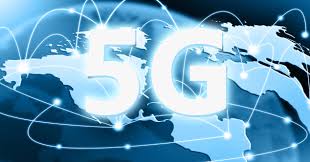
5G will position service providers at the center of the digital ecosystem, said President and CEO Börje Ekholm in a keynote fireside chat at the 2018 Mobile World Congress.
Ekholm talked with Karen Tso, co-anchor of Squawk Box Europe on CNBC, during the day’s first keynote session called The Foundations of The Digital Economy.
He reinforced many of the same messages from his press conference on Monday – that 5G has moved from buzzword to a commercial reality, highlighting the company’s 38 MoUs and several commercial contracts with service providers.
“We see 5G as a way to show the value of the network,” he said. “A lot of technology depends on a strong mobile infrastructure.”
He added that while increased speed will be important with 5G, lower latency and longer battery life could be even more so.
5G has been designed to be the industrial internet, with remote control of machinery and maintenance with augmented reality as two prime examples.
“At the same time, the consumer will see this too, for instance, in health care and autonomous vehicles where low latency will be a critical factor,” Ekholm said.
Ekholm addressed the need for the right regulatory regime, emphasized deregulation in Europe and easier site permitting processes, which will allow for the rapid build out of sites necessary for 5G.
“It’s important for governments to see networks as critical natural resources,” he said. “100 years ago, we built out railways and roads. The future roads are digital highways.”
Tso and Ekholm finished by looking ahead to the future on several levels – commercially, in terms of new devices and in how 5G will dramatically change our lives.
“5G will be a commercial reality for a couple reasons,” he said. “The first is data traffic. We need 5G to bring cost per gigabyte down. We also see that early movers in new technology gain a benefit. We saw that with early movers in 4G – they get higher average revenue per user and higher market share.”
Ericsson predicts there will be a billion 5G devices on the market by 2023, and they could likely shift how we interact with our connected devices.
“We’ll see more wearables,” Ekholm said. “And fragmentation on the device side will be larger. Today the smartphone is the center of ecosystem. That could look different in a 5G world.”
But it’s also about opening up possibilities.
“Think about the smartphone,” he said. “Did we think that we would use it to stream video and music, order food and order a cab? No. The new use cases will come as the technology matures.”


-

 Featured1 week ago
Inside INEC’s race to prepare for Nigeria’s 2027 elections
-

 Featured1 week ago
2027: APC unveils nationwide campaign timetable, Tinubu to rally in 12 states
-
 Business4 days ago
Naira faces exchange rate gap as Dollar hits N1,380 on parallel market
-
 Business1 week ago
Court dismisses ₦170m Trade Fair contract claim, says Zenith Bank was not a party
-

 Latest1 week ago
Breaking: NNPCL raises petrol price to ₦1,405 per litre amid discount controversy
-

 Featured1 week ago
From kitchen to Supreme Court: Nigerian’s fight over alleged support for terrorists
-

 Business6 days ago
NCC launches Internet Governance Working Group to tackle AI risks, boost online safety
-

 Football1 week ago
Maresca reveals Guardiola’s reaction to Man City’s 4-2 defeat to PSG