
News
We are committed to revamping Nigeria’s economy – Buhari

By Odunewu Segun
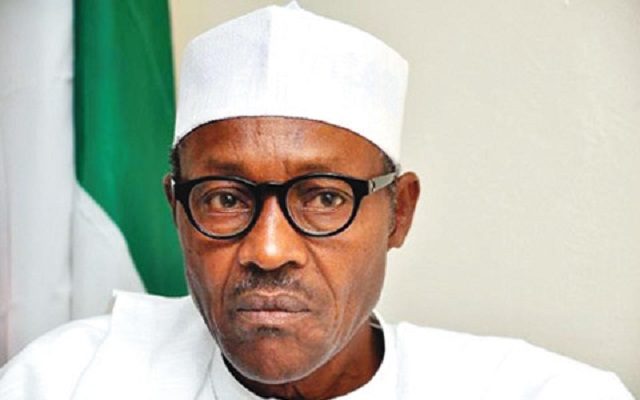
The Federal Government has reinstated its commitment at making the naira steady in the face of rising inflations plaguing the country. President Muhammadu Buhari stated this resolve in his democracy day address to the nation on Sunday, May 29th.
According to the President, devaluation of the nation’ currency had done dreadful harm to the Nigerian economy. “We shall keep a close look on how the recent measures affect the Naira and the economy. But we cannot get away from the fact that a strong currency is predicated on a strong economy. And a strong economy pre-supposes an industrial productive base and a steady export market.”
He said the Central Bank of Nigeria would offer more fiscal incentives for business that prove capable of manufacturing products that are internationally competitive. “We remain committed to reforming the regulatory framework, for investors by improving the ease of doing business in Nigeria.
The latest remarks by Buhari, who once likened a move to weaken the currency to “murder,” suggested to some analysts that he may be changing tack.
“Nigeria has been compelled to make a currency adjustment because of market forces and the deteriorating state of the economy,” Bismarck Rewane, chief executive officer of Lagos-based consultancy Financial Derivatives Co., said by phone on Sunday. “The anti-devaluation lobby has succumbed to the reality of the day.”
ALSO SEE: The Buhari administration: one year after
Falling prices and production of crude, from which the country derives as much as 70 percent of state revenue, have caused the nation’s economic outlook to deteriorate as the government struggles to pay salaries and stimulate growth, forcing it to increase borrowing.
Nigeria’s gross domestic product fell by about 0.4 percent in the three months through March from a year earlier — the first quarterly contraction since 2004 — as oil output slumped amid militant attacks on pipelines and as the central bank’s FX restrictions led to shortages of imported goods, including fuel.
President Buhari in his address said Nigeria needs a strong economy, and “a strong economy pre-supposes an industrial productive base and a steady export market.”
He stated that Nigeria would fast-track repairs of its four state-owned refineries and seek to grow more rice, wheat and produce more sugar locally as part of plans to “save billions of dollars in foreign exchange and drastically reduce our food import bill.”
Buhari also said he aims to curb attacks in the delta region through steps including a revamped amnesty program for ex-fighters and talks with leaders in the region. A Nigerian militant group said on Saturday that it blew up three pipelines in the oil-rich Niger River delta, the third attack in as many days, as it steps up an offensive to cripple the West African nation’s oil and gas industry.





-
 Featured5 days ago
Inside INEC’s race to prepare for Nigeria’s 2027 elections
-

 Latest1 week ago
UCTH faces morgue crisis as 50 unclaimed corpses await mass burial
-
 Featured5 days ago
2027: APC unveils nationwide campaign timetable, Tinubu to rally in 12 states
-
 Business1 week ago
BREAKING: Nigeria’s Inflation Rate Drops to 14.63% in September
-

 Business6 days ago
President Tinubu and the Low Transport Fares Fiasco
-
 Business5 days ago
Court dismisses ₦170m Trade Fair contract claim, says Zenith Bank was not a party
-
 Business2 days ago
Naira faces exchange rate gap as Dollar hits N1,380 on parallel market
-
 Latest5 days ago
Breaking: NNPCL raises petrol price to ₦1,405 per litre amid discount controversy