
Latest
21 years lost: How withheld evidence changed the fate of prisoner

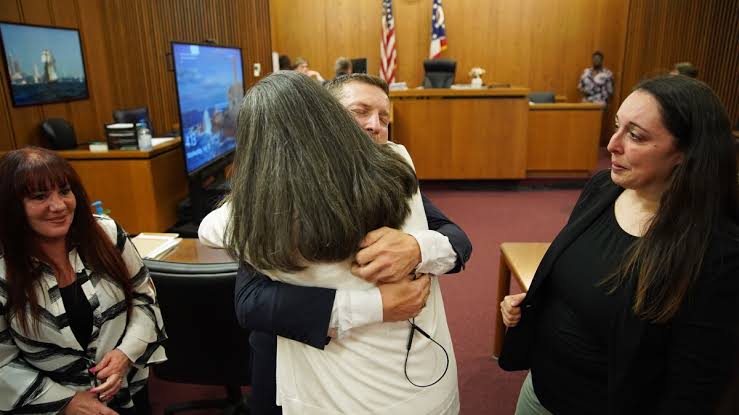
An Ohio man spent 21 years in prison and faced a 67-year sentence for a home invasion and robbery before an undisclosed police report helped unravel the case against him. More than two decades after his conviction, Ralph Blaine Smith was released after a judge granted him a new trial, prosecutors abandoned the case, and the state agreed to pay him $1.3 million in compensation.
Smith was 24 when he was convicted in 2000 over the alleged incident in Pickerington, Ohio. Despite maintaining his innocence, he remained incarcerated for more than two decades while pursuing legal avenues to overturn his conviction.
The turning point came when previously undisclosed police records emerged, raising questions about the evidence used to secure his conviction and whether the alleged crime had unfolded as prosecutors originally presented it.
According to court records, a police officer who visited the property after the reported incident documented observations that appeared inconsistent with aspects of the account given to investigators.
One significant detail concerned the snow outside the house. The officer reportedly found no fresh footprints or tyre tracks, despite claims that intruders had entered the property and fled.
The officer also questioned the condition of the house, noting that the interior did not appear to have been ransacked to the extent expected given the reported circumstances.
READ ALSO; Lagos court sentences teacher to life imprisonment for defiling 8-year-old pupil
These observations raised questions about the reliability of the prosecution’s account. Yet the police report was not provided to Smith’s defence lawyer before trial, meaning the defence did not have access to potentially significant evidence that could have been used to challenge the allegations.
The failure to disclose the report later became central to the legal fight that ultimately secured Smith a new trial.
In June 2021, Fairfield County Common Pleas Judge Richard E. Berens granted Smith a new trial after determining that the undisclosed evidence was significant and could have raised reasonable doubt about his guilt.
The ruling undermined the finality of a conviction that had kept Smith behind bars for 21 years and opened the way for his release.
Rather than proceed with another trial, Fairfield County Prosecutor Kyle Witt moved in September 2021 to dismiss the charges. The court subsequently dismissed the case, ending the prosecution and Smith’s prolonged legal battle.
The decision meant that the state would no longer pursue the case against him, following years of incarceration and a judicial finding that the withheld evidence warranted a new trial.
Smith’s release marked the end of a legal ordeal that had consumed much of his young adulthood. Convicted at 24, he emerged from prison after spending 21 years separated from ordinary life, family and friends.
The case returned to public attention in February 2023, when Ohio agreed to pay Smith $1.3 million to settle his wrongful-imprisonment claim.
The settlement provided financial compensation for the years he spent incarcerated. However, the payment was subject to an arrangement under which Smith would share the proceeds with his lawyers.
Although the compensation offered some financial redress, it could not return the years he had lost or reverse the consequences of spending more than two decades in prison.
Smith’s case illustrates the lasting effects of wrongful convictions and the importance of ensuring that defendants have access to evidence that could support their defence.
At the centre of the case was not simply the question of what investigators believed had happened at the property, but whether potentially exculpatory information was made available to the defence before trial.
The police report’s observations about the absence of fresh tracks in the snow and the condition of the house became important because they offered grounds to question aspects of the alleged home invasion and robbery.
The judge’s decision to grant a new trial established that the undisclosed evidence was sufficiently significant to warrant reconsideration of Smith’s conviction.
The case underscores the importance of evidence disclosure in criminal proceedings. When information that could assist an accused person is withheld, the defence may be unable to challenge the prosecution’s account effectively, potentially undermining the fairness of the trial.
It also highlights the role of courts in reviewing convictions when new evidence or previously undisclosed records raise serious concerns about the original proceedings.
For Smith, the consequences were profound: a conviction that carried a 67-year prison sentence was followed by a successful bid for a new trial, the dismissal of the charges and a $1.3 million settlement.
His experience stands as a reminder that the integrity of criminal justice depends not only on investigating allegations and prosecuting offences, but also on disclosing relevant evidence, testing claims thoroughly and correcting errors when they come to light.


-
 Latest7 days ago
Israel marks 3 years since October 7 Hamas attack amid Gaza strikes, election debate
-

 Energy6 days ago
Fuel Battle: Dangote, marketers and government clash over petrol imports
-

 Energy1 week ago
Petrol, diesel prices rise 86% in 2026 as costs hit fresh highs
-

 Football1 week ago
Nigeria’s World Cup exit under spotlight as FIFA’s DR Congo files emerge
-

 Latest1 day ago
Full List: Meet the 2026 Nobel Prize winners across six categories
-

 Latest1 week ago
US Court set to rule on release of FBI, DEA records on Tinubu
-

 Business1 week ago
Nigerian investors at a crossroads as fixed-income yields slide
-

 Latest1 week ago
Oyo APC crisis deepens as Oluyole reconciliation meeting ends in brawl