
News
Reps pass bill to break monopoly of DSTV

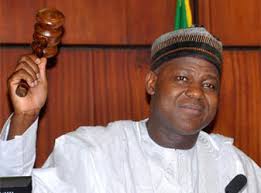
A bill meant to make broadcasting more competitive in the country was passed through second reading in the House of RepresentativesThursday.
The bill sponsored by Chairman of the House Committee on Foreign Affairs, Nnena Elendu- Ukeje is titled ” a bill for an Act to amend the National Broadcast Commission Act cap N11, laws of the federation of Nigeria, 2014, to provide for competition in Nigeria, promote efficiency and Expand opportunities for Nigerians’ participation in world markets while at the same time recognize the role of foreign completion in Nigeria, and for other matters related thereto.”
Elendu- Ukeje while speaking on the bill said it is meant to strengthen the National Broadcast Commission as an independent regulator.
According to her, the bill will also create room for competition through deregulation, liberalization, privatization, ensuring free market operation and also enforce penalty(s) to parties that go against the provisions of the law.
The piece of legislation, she said, will prevent price or rate fixing, price discrimination , restrictive exclusive content, abuse of dominant market position, and unconstitutional boycotting.
The proposed law, she said, is a remedy to the obvious lacuna in the NBC Act and strengthens the NBC as Nigeria has no set of codified laws that speaks to the subject matter.
Her words: “this is one sector that does not suffer from customer ignorance as this sector has been subject to motions/ petitions on the floor of parliament and litigations in the court of law.
“Justice Chukwujeku Aneke of the a federal High Court had on May 28th 2015 dismissed a suit against DSTV over increase in subscription fees as Nigeria is yet to have a codified set of rules promoting competition in that market.
“Competition laws exist under different names in different climes. From antitrust law in the US to anti monopoly laws in China and Russia, and Trade law in the UK and Australia, the underlying factor for these laws us consumer protection.”
According to her, Fourth Schedule, Section 39(1) of the constitution of the federal republic of Nigeria states expressly that every person shall be entitled to own, establish and operate any medium for the dissemination of information.
She said the institution went further in Section 16(2c) that “the state shall direct its policy towards ensuring that the economic system is not operated in such a manner as to permit the concentration of wealth or the means of production and exchange in the hands of few individuals or groups.
“The intendment of these two provisions is that by liberalizing communication and media, that the sector be competitive in line with our economic policies.”
The bill passed through second reading without debate when the Speaker, Hon. Yakubu Dogara called for a voice vote.









-
 Latest5 days ago
Israel marks 3 years since October 7 Hamas attack amid Gaza strikes, election debate
-

 Energy5 days ago
Fuel Battle: Dangote, marketers and government clash over petrol imports
-

 Energy6 days ago
Petrol, diesel prices rise 86% in 2026 as costs hit fresh highs
-

 Energy7 days ago
Has Iran lost control of the Strait of Hormuz? Oil flows rebound as war disruptions persist
-

 Football6 days ago
Nigeria’s World Cup exit under spotlight as FIFA’s DR Congo files emerge
-
 Latest6 days ago
US Court set to rule on release of FBI, DEA records on Tinubu
-
 Business6 days ago
Nigerian investors at a crossroads as fixed-income yields slide
-

 Business7 days ago
LoveWorld Trade and Investment Forum to Convene Business Leaders in Accra