
Business
UNCTAD expresses worry over Nigeria’s economic recovery


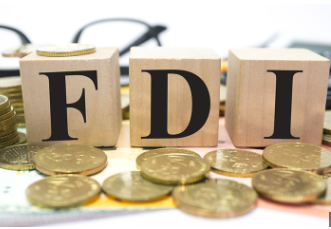
Despite a slump in the nation’s capital imports to a nine-year low in 2016 to $5.12 billion from $9.64 billion in 2015, there are indications that 2016 may not be entirely bad in the area of foreign direct investments for the country as it is for other countries as inflows hit $1.044 billion.
According to the National Bureau of Statistics (NBS), capital importation into Nigeria fell 47 percent last year to $5.12 billion, largely because the weak currency meant fewer dollars were required for the same naira investment from $9.64 billion imported in 2015.
Capital Importation comprises of three main investment types, namely Foreign Direct Investment (FDI), Portfolio Investment and other investments. Corroborating this fact, latest report of the Global Investment Trends Monitor of United Nations Conference on Trade and Development (UNCTAD) showed that despite a 13 per cent drop in global foreign direct investments flows in 2016, inflows to Nigeria recorded an uptick closing the year at $4 billion from $3.1 billion.
UNCTAD however warned that there are significant uncertainties that could have a material impact on the scale and contours of any FDI recovery in 2017. “Rising cost of capital may hinder investment by multinational enterprises which have taken on significant levels of corporate debt in recent years. There is also substantial uncertainty about the shape of economic policies in the near-future, especially in developed economies, which may serve to dampen FDI”, UNCTAD added.
The NBS said portfolio investments fell the most in 2016, deterred by the recession and the currency, down by 69.8 per cent from 2015, as investors weighed market conditions relative to expected returns.
Nigeria’s stock market fell 6.2 per cent last year while the naira lost a third of its official value against the dollar. In 2017, stocks have continued to fall, down 3.1 per cent so far, while the naira is almost 40 per cent weaker on the black market.
The NBS said Nigeria imported the bulk of its capital from Britain, the U.S. and Netherland, with the telecoms, banking and oil sectors the main beneficiaries.
For UNCTAD however, global FDI flows fell by 13 per cent in 2016, reaching an estimated $1.52 trillion, in a context of weak global economic growth and a lacklustre increase in the volume of world trade.
Equity investments at the global level were boosted by a 13 per cent increase in the value of cross-border mergers and acquisitions (M&As), which rose to their highest level since 2007, reaching $831 billion.










-

 Football5 days ago
Banda, Chawinga make 2026 Women’s Ballon d’Or top 30 shortlist
-

 Featured5 days ago
Peter Obi, Makinde and the 2027 elections: Can unity really challenge APC?
-

 Business6 days ago
Nigerian Breweries’ H1 profitability strengthens as revenue hits N804bn
-
 Business6 days ago
Nigeria records N12.59trn trade surplus in Q2 2026 — NBS
-

 Latest7 days ago
Tinubu’s US legal battle: Group questions silence of elder statesmen
-

 Energy4 days ago
Brent crude tops $100: What higher oil prices mean for Nigeria
-

 Latest6 days ago
Akpabio courts northern youths for Tinubu’s reforms ahead of 2027
-

 Featured6 days ago
2027: Rivers ADC fires back at Wike, says boasts won’t decide elections