
News
US Surgeons perform first pig to human kidney transplant

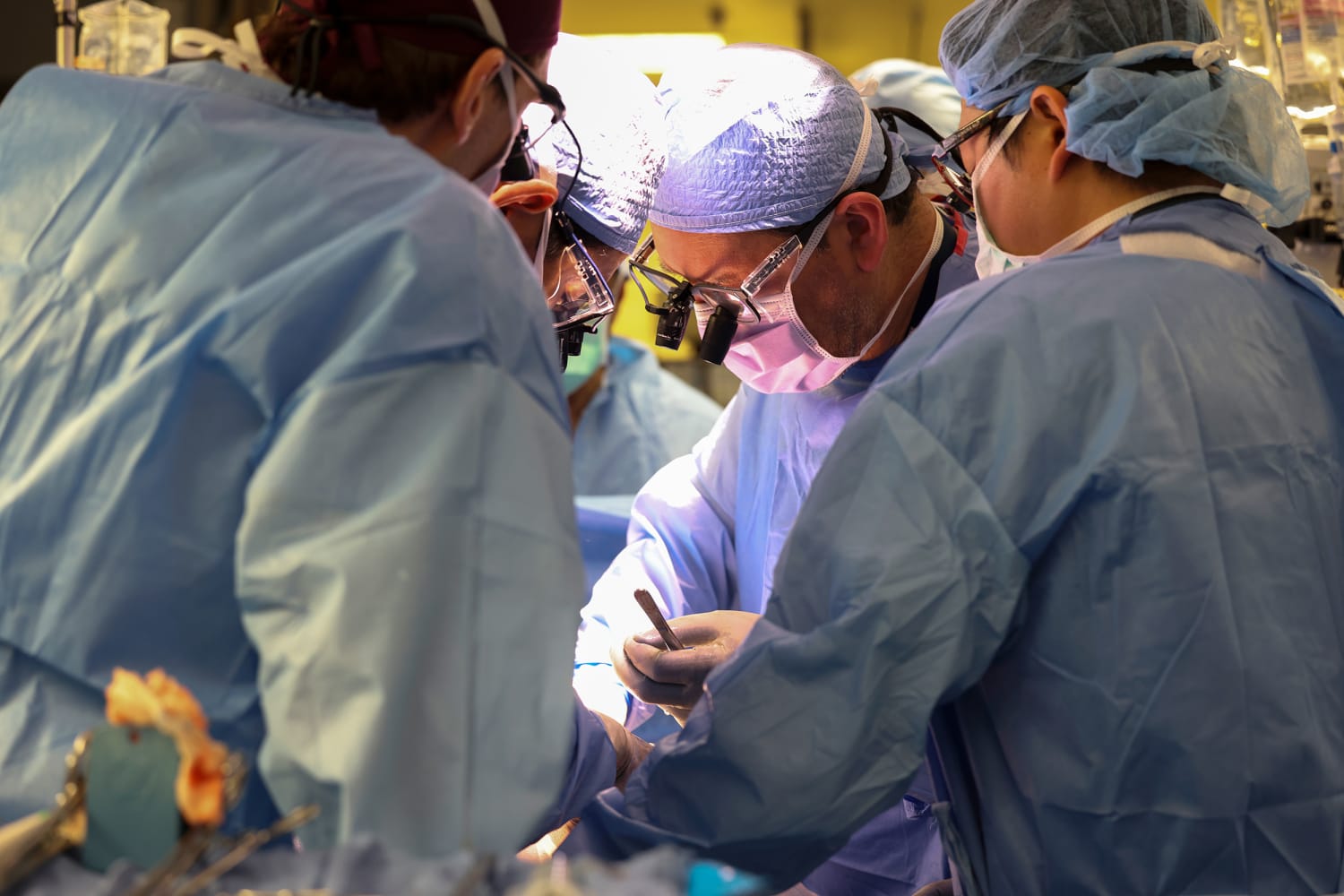
Doctors at Massachusetts General Hospital in Boston announced the successful transplantation of a kidney from a genetically modified pig into a 62-year-old man with end-stage renal disease.
This groundbreaking surgery, conducted on March 16, signifies a significant step forward in providing more readily available organs to patients, the hospital disclosed in a statement.
The recipient, Richard Slayman of Weymouth, Massachusetts, is reported to be recovering well following the four-hour surgery and is expected to be discharged soon, according to hospital officials.
Dr. Jim Kim, director of kidney and pancreas transplantation at the USC Transplant Institute in Los Angeles, highlighted the immense interest among experts in the long-term outcomes of this pioneering animal-to-human transplant.
Slayman, who had previously received a human kidney transplant in 2018 after seven years on dialysis, experienced organ failure after five years, leading to a resumption of dialysis treatments.
The kidney used in the transplantation was sourced from eGenesis, a company based in Cambridge, Massachusetts, which specializes in genetically editing pigs to remove genes harmful to human recipients and enhance compatibility by adding certain human genes.
READ ALSO: Man who got pig heart transplant dies after 2 months
Additionally, eGenesis inactivated viruses inherent to pigs that have the potential to infect humans.
Previous studies had demonstrated promising results with kidneys from similarly edited pigs transplanted into monkeys, with survival periods ranging from an average of 176 days to over two years, researchers reported in October in the journal Nature.
The transplantation involved the use of experimental antibody tegoprubart, developed by Eledon Pharmaceuticals, to help prevent rejection of the pig organ by the patient’s immune system.
Dr. Robert Montgomery, director of the NYU Langone Transplant Institute, hailed the surgery’s significance in advancing xenotransplantation, emphasizing its potential to serve as an alternative source of organs for the hundreds of thousands suffering from kidney failure.
Currently, more than 100,000 people in the U.S. await organ transplants, with kidneys being in high demand.
Montgomery noted that transplant centers are exploring various approaches in gene editing and medications, awaiting authorization from the FDA to conduct clinical trials for further insights into optimizing treatments for patients on waiting lists.
While previous attempts, such as the University of Maryland’s transplant of a genetically modified pig heart into a terminally ill patient in January 2022, have faced challenges, the successful kidney transplant represents a significant advancement in the quest to address the organ shortage crisis and improve patient outcomes in transplantation.




-
 Featured1 week ago
Tinubu’s Renewed Hope: Reforms, hardship and the unanswered question of a second term
-

 Featured7 days ago
The cost of Renewed Hope: How Nigeria’s economic reforms are reshaping everyday family life
-

 Crime3 days ago
Kwara bandit deal under scrutiny as footage shows security operatives negotiating with terrorists [VIDEO]
-

 Business7 days ago
CBN forex reforms under scrutiny as Nigeria’s reserves drop $300m in 10 days
-

 Business7 days ago
NCC plans spectrum incentives to push telecom operators into more network investment
-

 Entertainment5 days ago
2027 Grammys: Asake, Wizkid, Tems, Ayra Starr lead Nigerian nominees in African music category
-

 Latest7 days ago
Nigeria’s security crisis deepens as October death toll hits 835, highest in 2026
-

 Sports1 week ago
Kenya’s Timothy Kibii wins Port Harcourt International Marathon