
News
NNPC Ltd is not paying subsidy – Ajiya

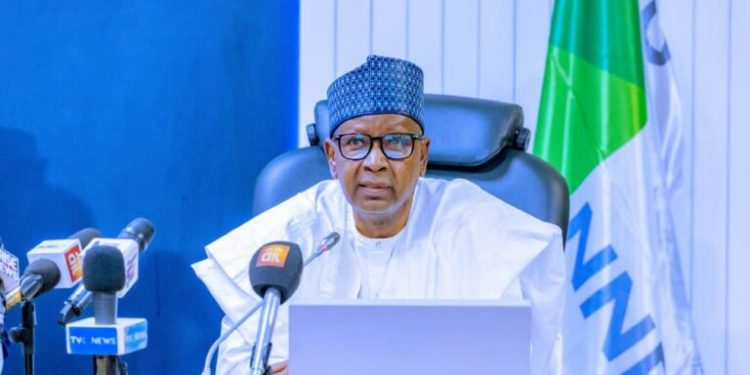
The Nigerian National Petroleum Company Limited (NNPC Ltd.), says it has not paid fuel subsidy to anybody in the last nine years.
Chief Financial Officer of the company, Alhaji Umar Ajiya made the clarifications on Monday in Abuja.
Ajiya said the NNPC Ltd. was only taking care of Premium Motor Spirit (PMS) importation shortfalls between the company and the federation.
“In the last eight to nine years the NNPC Ltd., has not paid anybody a dime as subsidy, no one has been paid kobo by the NNPC Ltd. in the name of subsidy.
“No marketer has received any money from us by way of subsidy.
“What has been happening is that we have been importing PMS, which has been landing at a certain cost price and government tells us to sell it at half price.
“So the difference between the landing price and that half price is what we call shortfall.
“And the deal is between the Federation and NNPC Ltd., to reconcile, sometimes they give us money, so there is no money exchanging hands with any marketer in the name of subsidy,” he said.
According to him, credit lines are prevalent in the downstream business based on the world wide commercial system, adding that the company was in an open credit agreement with PMS suppliers in the past, with term lines agreement for payment.
ALSO READ: Tinubu approves NNPC’s request to use dividends for subsidy payments
Also, Dapo Segun the Executive Vice President, Downstream, NNPC Ltd., said that establishing an open credit agreement with suppliers spoke volume of the credibility which the national oil company had built over a period of time.
“Concerning the outstanding to the suppliers, it is not in that magnitude that has been put out, it is actually lower than the N6.8 billion.
“What matters really is the relationship between us and our suppliers to ensure that we keep faith in making these payments to our suppliers which we have done overtime.
“You would understand that it is not a static figure and I wouldn’t want to be quoting any figure, when we make payments it goes down, when they supply products it goes up.
“It is a dynamic way, but the most important thing is to ensure that we continue to make PMS available across the country,” he said.


-
 Latest7 days ago
Israel marks 3 years since October 7 Hamas attack amid Gaza strikes, election debate
-

 Energy7 days ago
Fuel Battle: Dangote, marketers and government clash over petrol imports
-

 Energy1 week ago
Petrol, diesel prices rise 86% in 2026 as costs hit fresh highs
-

 Latest2 days ago
Full List: Meet the 2026 Nobel Prize winners across six categories
-

 Football1 week ago
Nigeria’s World Cup exit under spotlight as FIFA’s DR Congo files emerge
-

 Latest1 week ago
US Court set to rule on release of FBI, DEA records on Tinubu
-

 Business1 week ago
Nigerian investors at a crossroads as fixed-income yields slide
-

 Latest1 week ago
Oyo APC crisis deepens as Oluyole reconciliation meeting ends in brawl