
Business
CBN retains interest rate at 26.5% as MPC prioritises inflation control, FX stability

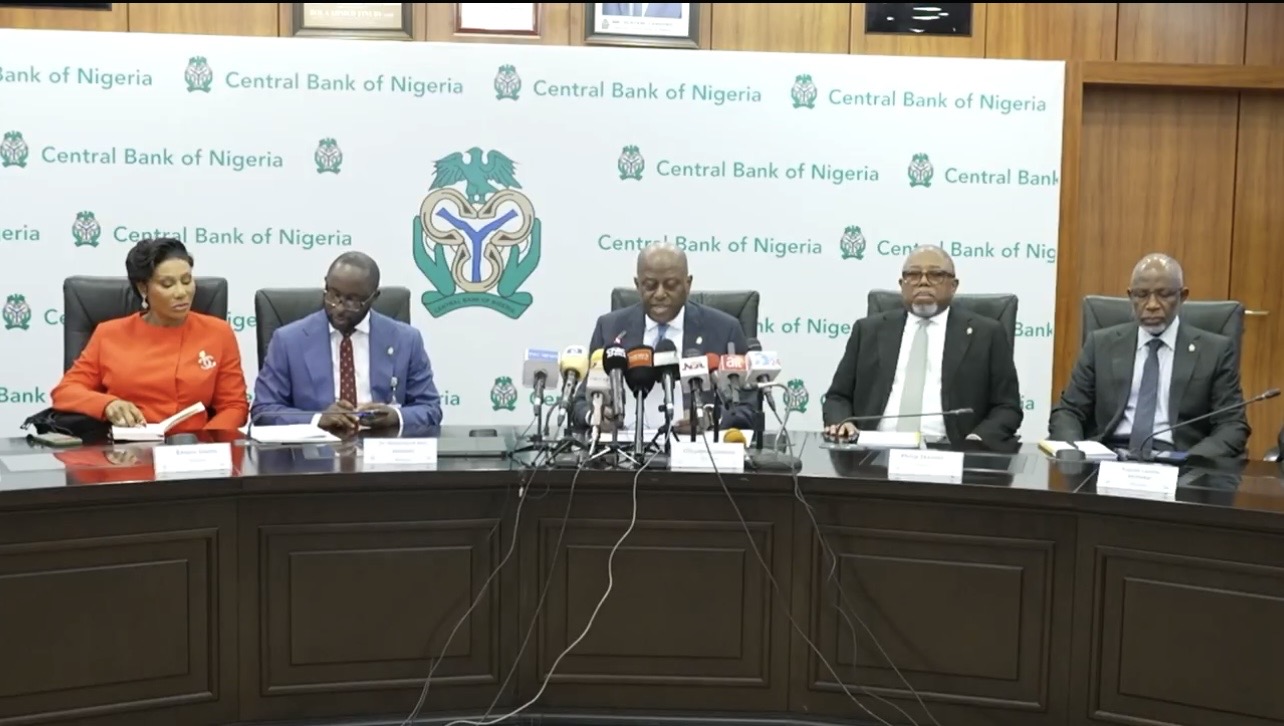
The Monetary Policy Committee (MPC) of the Central Bank of Nigeria (CBN) has retained the Monetary Policy Rate (MPR) at 26.5 per cent, maintaining its tight monetary policy stance as the apex bank continues efforts to tame inflation, stabilise the foreign exchange market and preserve macroeconomic stability.
The decision was announced at the conclusion of the 306th MPC meeting, held in Abuja on July 20 and 21, 2026, with all 11 committee members in attendance.
By leaving the benchmark lending rate unchanged, the committee signalled its preference for policy continuity while monitoring the impact of previous rate hikes on inflation, liquidity conditions, exchange rate stability and economic growth.
The MPC also retained other key monetary policy parameters, including the asymmetric corridor around the MPR, the Cash Reserve Ratio (CRR) and the Liquidity Ratio, pending further assessment of evolving domestic and global economic conditions.
The latest decision marks another pause in the CBN’s aggressive monetary tightening cycle, reflecting the committee’s confidence that existing policy measures are beginning to yield results, even as inflationary pressures remain elevated.
Inflation, Exchange Rate Remain Key Concerns
The committee’s decision comes amid signs of gradual moderation in headline inflation, improved foreign exchange liquidity and relative stability in the naira following recent reforms in the foreign exchange market.
READ ALSO: CBN targets $12bn annual Diaspora inflows to boost FX liquidity
However, policymakers remain cautious over persistent food inflation, high energy costs, global commodity price volatility and geopolitical developments that continue to pose upside risks to inflation.
Economists say maintaining the benchmark rate allows the CBN to consolidate recent gains while avoiding premature policy easing that could reverse progress in price stability.
Financial analysts broadly described the MPC’s decision as expected, noting that the current macroeconomic environment still requires a cautious monetary policy approach.
Managing Director and Chief Executive Officer of Financial Derivatives Company, Bismarck Rewane, said retaining the policy rate reflects the central bank’s desire to evaluate the full impact of previous tightening measures before making further adjustments.
According to him, inflation remains above the CBN’s comfort level, making it difficult to justify an immediate reduction in interest rates.
“The MPC appears to be balancing inflation control with economic growth. Holding rates allows policymakers to observe whether recent improvements in inflation and exchange rate stability are sustainable before changing direction,” Rewane said.
Chief Executive Officer of the Centre for the Promotion of Private Enterprise (CPPE), Dr. Muda Yusuf, also described the decision as consistent with prevailing economic realities.
He noted that while high interest rates continue to increase borrowing costs for businesses, maintaining policy stability provides investors with greater confidence and supports ongoing efforts to stabilise the foreign exchange market.
“The priority at this stage is sustaining macroeconomic stability. Although businesses would prefer lower borrowing costs, easing monetary policy too early could reignite inflationary pressures and weaken the gains already achieved in the foreign exchange market,” Yusuf said.
Stakeholders in the manufacturing sector acknowledged the importance of inflation control but urged the CBN to complement monetary tightening with measures that support productive sectors of the economy.
The Director-General of the Manufacturers Association of Nigeria (MAN), Segun Ajayi-Kadir, said high interest rates continue to constrain access to affordable credit for manufacturers, limiting investment and expansion.
He stressed that while price stability remains important, policymakers should also prioritise economic growth by ensuring manufacturers have access to concessionary financing.
According to him, elevated borrowing costs have increased production expenses and reduced the competitiveness of local industries.
Market analysts believe the decision provides certainty for financial markets, particularly investors in fixed-income securities, who have benefited from relatively high yields over the past year.
They noted that retaining the benchmark rate could help sustain foreign portfolio investment inflows by preserving attractive real returns, provided inflation continues to moderate.
Investment analysts also expect the decision to support stability in Nigeria’s bond and treasury bills markets while helping maintain investor confidence in the country’s monetary policy framework.
Economic experts said the decision presents both opportunities and challenges for different segments of the economy.
While a stable policy rate may help anchor inflation expectations and support exchange rate stability, businesses—particularly small and medium-sized enterprises (SMEs)—are expected to continue facing high borrowing costs.
Commercial lending rates remain elevated, making it more expensive for businesses to finance expansion, purchase equipment and increase production.
Consumers are also likely to continue facing expensive credit conditions, although sustained moderation in inflation could gradually improve purchasing power if price increases continue to slow.
Analysts noted that the MPC’s decision was also influenced by uncertainties in the global economy, including fluctuating oil prices, geopolitical tensions, tighter monetary policies in advanced economies and persistent inflationary pressures across several emerging markets.
These external risks, they argued, make it prudent for Nigeria to maintain a cautious monetary stance while safeguarding foreign exchange reserves and macroeconomic stability.


-

 Featured6 days ago
Ranking the seven greatest World Cup finals of all time
-

 Business7 days ago
OPay breaks silence on viral September shutdown claim
-

 Latest7 days ago
Tinubu’s FBI records: Omokri challenges claims, cites 2003 Embassy reply
-

 Business5 days ago
X3M Ideas donates 50 Walkie-Talkies to strengthen security operations in Onigbongbo
-

 Latest6 days ago
2027: Atiku vows direct payment of local government funds if elected president
-

 Latest6 days ago
2027: Atiku, Obi absent as opposition begins talks on single presidential candidate
-

 Latest2 days ago
Cole-Alegbe unveils memoir, urges leaders to harness technology for lasting impact
-

 Latest7 days ago
Anambra 2027: INEC, NDC clash over 10 disputed Assembly candidates