
Trending Stories
The human cost of Nigeria’s internal displacement crisis

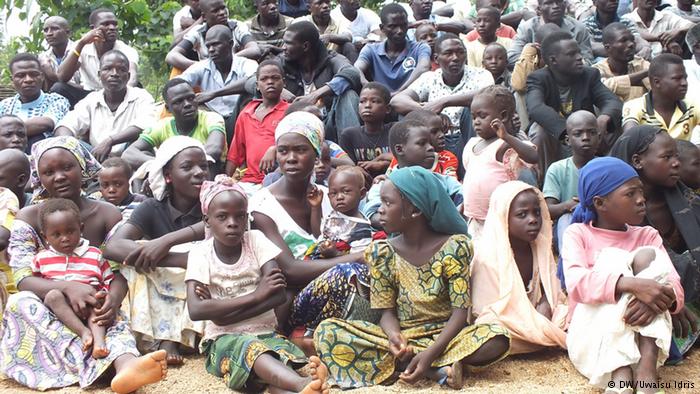
While Nigeria’s migration debate is often dominated by the “Japa” phenomenon and the growing number of citizens leaving the country in search of better opportunities, a quieter and more desperate migration crisis is unfolding within the country’s borders.
Across parts of the North-East, North-West, North-Central and other vulnerable regions, families are being forced to abandon their homes, farms and communities as insecurity, environmental pressures, communal conflicts and economic hardship make it increasingly difficult to remain.
For many of these families, internal migration is not a lifestyle decision or a search for better opportunities. It is a survival strategy.
From farming communities in the Middle Belt to flood-prone settlements along major river basins and drought-affected areas in the North, multiple pressures are reshaping where Nigerians can safely live and earn a living.
Armed attacks can force entire communities to flee within hours, while the destruction or loss of farmland can make it impossible for agricultural households to remain economically viable.
Climate-related disasters have added another layer of vulnerability. Flooding, drought and desertification continue to damage homes, farmland and traditional sources of livelihood, leaving affected families with few options other than relocation.
The result is a growing movement from rural communities towards safer towns, state capitals and major commercial centres, placing additional pressure on already stretched urban infrastructure.
Banditry, insurgency, kidnapping and communal violence have disrupted economic activity across several parts of Nigeria.
Farmers in affected communities face the loss of crops, livestock and property, while restrictions on movement can prevent them from accessing their farms. In some areas, residents have abandoned cultivated fields because travelling to them has become too dangerous.
For households whose livelihoods depend almost entirely on agriculture, losing access to farmland often means losing their primary source of income.
The consequences extend beyond individual families. When farmers cannot cultivate their land, local food production suffers, rural markets weaken and communities become increasingly dependent on external supplies.
Environmental pressures are also contributing to population displacement.
Flooding can destroy homes, roads, schools and farmland, while prolonged drought and desertification threaten agricultural production and traditional grazing routes.
For communities with limited access to insurance, irrigation, flood-control infrastructure or alternative employment, a major climate event can wipe out years of accumulated household assets.
The economic impact can persist long after floodwaters recede. Families may return to communities where farmland has been damaged, businesses destroyed and infrastructure disrupted, leaving them with limited means of rebuilding their lives.
Competition over land and water has also intensified tensions between farming and pastoral communities in some parts of the country.
As access to fertile land and water becomes increasingly difficult, disputes can escalate into violence and force residents to seek safety elsewhere.
The displacement of farming communities has consequences far beyond the affected households, particularly in regions that serve as important sources of food for urban markets.
When farmers abandon their fields, agricultural production can decline, potentially increasing pressure on food prices and disrupting supply chains.
Not all internal migration is directly caused by violence or natural disasters. Economic hardship is also pushing Nigerians away from rural communities.
Limited access to electricity, healthcare, quality education, financial services, transportation and formal employment leaves many young people with few economic opportunities outside major towns and cities.
Without affordable credit, modern agricultural technology, processing facilities and local industries, rural economies struggle to retain their younger populations.
Many eventually move to state capitals and commercial centres in search of work, only to encounter overcrowded housing, informal employment and inadequate public services.
This creates a cycle in which rural communities lose productive young people while urban centres absorb growing numbers of economically vulnerable migrants.
Nigeria’s international migration debate largely centres on professionals and young people leaving the country for higher salaries, better career opportunities and improved living conditions.
Internal displacement presents a fundamentally different reality.
A professional relocating abroad may have the financial resources and freedom to decide where to go. A family fleeing an armed attack, destroyed farmland or a devastating flood may have no comparable choice.
Their movement is dictated by circumstances beyond their control.
The distinction is important because displacement can result in the loss of homes, livelihoods, social networks and access to essential services. For children, repeated displacement can interrupt education and expose families to prolonged economic hardship.
In many cases, displaced families arrive in new locations without adequate savings, employment or housing, leaving them dependent on relatives, humanitarian assistance or informal work.
The consequences of internal displacement extend beyond the immediate humanitarian crisis.
When farming communities are abandoned, agricultural output can fall. When rural workers move into already overcrowded cities, pressure increases on housing, transportation, healthcare, education and employment.
Nigeria can also lose productive capacity as experienced farmers, artisans, traders and rural entrepreneurs abandon their businesses and assets.
Internal migration is therefore not merely a population movement. It is also an economic issue.
The continued displacement of productive households could weaken rural economies, deepen urban poverty and create additional challenges for Nigeria’s food security.
Humanitarian assistance remains essential for people who have already been displaced, but emergency relief alone cannot address the conditions forcing Nigerians from their communities.
A sustainable response would require greater attention to security, rural development, climate adaptation and economic opportunity.
Protecting agricultural communities, particularly along major farming corridors, would enable farmers to return to their fields and restore disrupted food production.
Investment in flood-control systems, irrigation, drainage, drought-resistant agriculture and land restoration could reduce the number of families displaced by environmental disasters.
Revitalising rural economies through affordable credit, agricultural technology, storage facilities, processing industries and better market access could create employment and reduce the pressure on young people to leave.
Improved roads, electricity, healthcare, education and telecommunications would also make rural communities more economically viable and reduce the concentration of opportunities in major cities.
For families that have already been displaced, authorities and development partners would need to strengthen access to housing, education, healthcare, livelihoods and eventual reintegration.
Nigeria’s internal migration challenge is ultimately a reflection of deeper problems involving insecurity, poverty, climate vulnerability and uneven economic development.
For millions of affected families, the question is no longer simply where they want to live.
It is whether they can afford to remain where they were born.
Until communities can provide basic security and sustainable livelihoods, migration will continue to be a survival response rather than a matter of choice.
And unlike the widely discussed “Japa” phenomenon, this migration often happens without passports, without savings and without the promise of a better destination.
I can also make it more investigative and human-interest driven, with a stronger opening centred on a displaced Nigerian family.


-

 Latest1 day ago
Pastor Chris Oyakhilome announces mother’s passing at 88 [VIDEO]
-

 Football5 days ago
Saka: England still carry World Cup scar
-

 Comments and Issues6 days ago
Sometimes, goodwill finds us through the people we love
-

 Business5 days ago
CBN reduces MPR by 350bps to 23% in major monetary policy shift
-

 Latest3 days ago
Arsenal eye €70-80m move for Real Madrid star
-

 Business1 week ago
Jetour takes T1 adventure SUV experience to Abuja, targets growing Nigerian market
-

 Football1 week ago
Nigeria vs Colombia: Falconets battle for U-20 World Cup semi-final ticket
-

 Crime2 days ago
Police arrest suspect, launch manhunt for 2 others over Delta Education Director’s death