
Business
SMEs under pressure as high interest rates stall investment, job creation

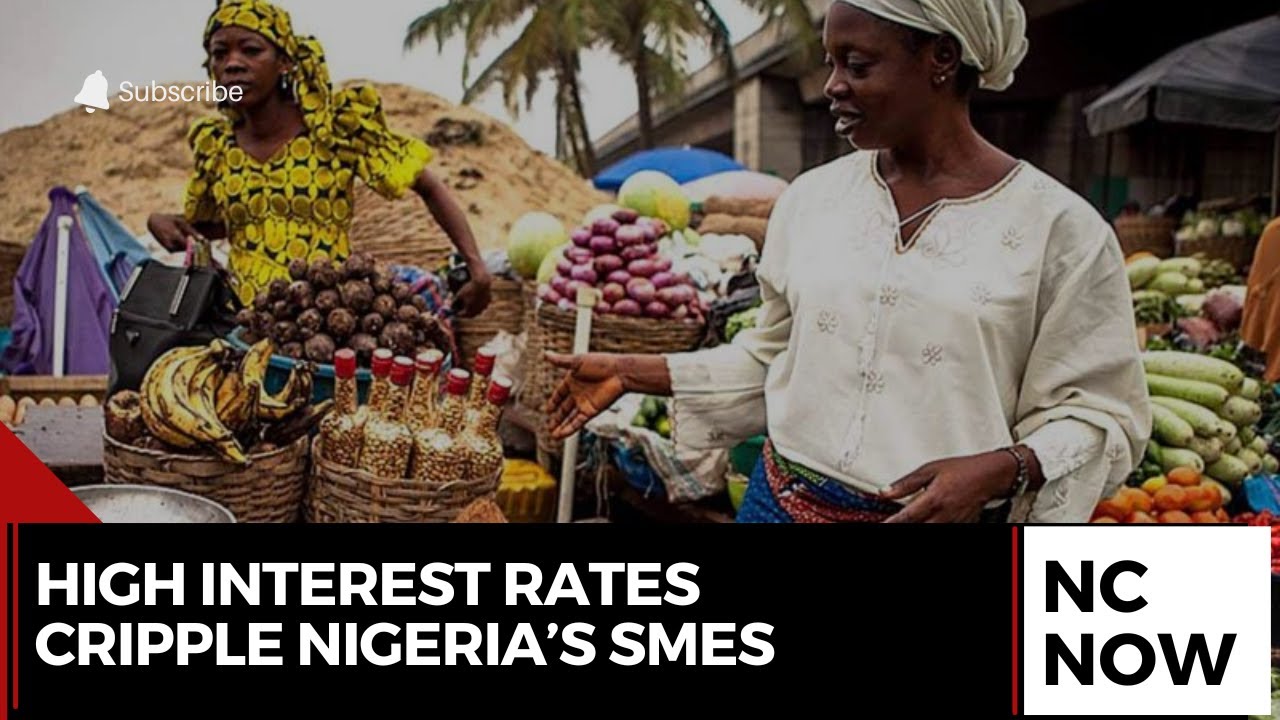
Small and Medium Enterprises (SMEs) are increasingly struggling to survive under lending rates exceeding 30 per cent, prompting economists, financial analysts and business leaders to urge the Central Bank of Nigeria (CBN) to begin easing its tight monetary policy.
Analysts argue that the prolonged high-interest-rate environment is constraining access to affordable credit, discouraging investment, slowing business expansion and job creation, even as inflation shows signs of moderation.
The renewed appeal follows the decision of the Monetary Policy Committee (MPC) to retain the Monetary Policy Rate (MPR) at 26.5 per cent at the conclusion of its 306th meeting held in Abuja on July 20 and 21, 2026.
By maintaining the benchmark lending rate, the apex bank effectively kept commercial lending rates above 30 per cent for many businesses; a level many operators say is increasingly unsustainable for investment and expansion.
Chief Executive Officer of Kwik Consulting, Thomas Amusan, said recent inflation trends suggest the CBN should begin preparing for a measured shift toward monetary easing.
“The direction of inflation is becoming more encouraging. While caution remains necessary, the monetary authorities should begin discussing when and how to gradually reduce interest rates if inflation continues to decelerate,” he said.
Amusan noted that prolonged high borrowing costs could undermine economic recovery by discouraging investment across key sectors.
READ ALSO: Manufacturers, SMEs hit by rising costs as power crisis persists despite tariff hike
“When interest rates remain elevated for an extended period, businesses postpone expansion, manufacturers face higher financing costs and private sector investment slows. At some point, monetary policy has to balance inflation control with economic growth,” he added.
Similarly, Sharon Nwosu, Chief Executive Officer of a manufacturing company based in Abuja, warned that the current interest rate environment is imposing enormous costs on businesses, particularly manufacturers, farmers and small enterprises.
According to her, many Small and Medium Enterprises (SMEs) have effectively been shut out of formal credit markets because of prohibitively high lending rates.
“Most SMEs cannot access loans at interest rates above 30 per cent. Businesses are spending more on servicing debt than investing in production, innovation and employment.”
“We need affordable financing for agriculture, manufacturing, technology and other productive industries. Without that, SMEs will continue to struggle despite improvements in headline macroeconomic indicators.”
Economic analyst Hassan Oyeleke argued that maintaining price stability should remain the CBN’s overriding priority.
“I think the priority now should remain price stability. Once inflation shows a convincing downward pattern, then monetary easing becomes feasible.”
Oyeleke added that keeping the benchmark rate unchanged could further strengthen investor confidence and support exchange-rate stability at a time of continued global economic uncertainty.
“Maintaining the rate could reinforce investor confidence, support exchange-rate stability and provide a clear signal of policy discipline.”
Investment banker Tunde Adeyemi also supported the MPC’s decision, describing policy consistency as a positive signal to investors.
According to him, retaining the current monetary stance offers greater predictability for both domestic and foreign investors, even though the private sector continues to express concerns over borrowing costs.
“While businesses have been worried about continuous tightening, retaining the rate provides predictability and may encourage investors who have been sitting on the sidelines.”
Interestingly, the latest CBN monetary statistics indicate that bank lending has continued to expand despite the high-interest-rate environment.
Credit extended to the private sector increased to N81.04 trillion in May 2026, up from N80.59 trillion in April. Similarly, credit to the government rose to N40.37 trillion from N39.60 trillion during the same period.


-

 Featured5 days ago
Inside INEC’s race to prepare for Nigeria’s 2027 elections
-

 Latest1 week ago
UCTH faces morgue crisis as 50 unclaimed corpses await mass burial
-

 Featured5 days ago
2027: APC unveils nationwide campaign timetable, Tinubu to rally in 12 states
-

 Business1 week ago
BREAKING: Nigeria’s Inflation Rate Drops to 14.63% in September
-

 Business6 days ago
President Tinubu and the Low Transport Fares Fiasco
-
 Business5 days ago
Court dismisses ₦170m Trade Fair contract claim, says Zenith Bank was not a party
-
 Business2 days ago
Naira faces exchange rate gap as Dollar hits N1,380 on parallel market
-

 Latest5 days ago
Breaking: NNPCL raises petrol price to ₦1,405 per litre amid discount controversy