
Latest
Nigeria’s 17-region plan: Path to true federalism or recipe for fresh divisions?

By Andra Oriyomi
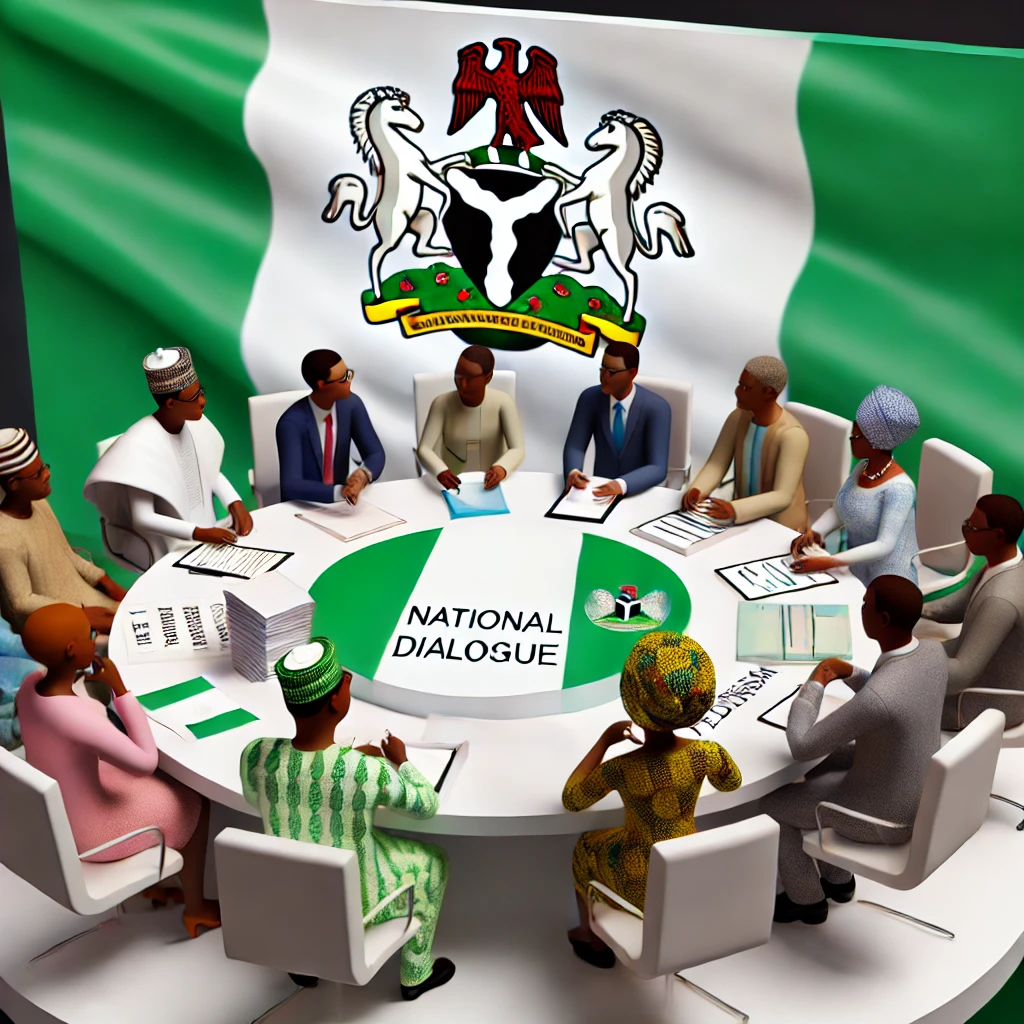
Nigeria’s long-running debate over restructuring has returned to the national stage following a proposal by the Concerned Citizens Assembly (CCA) to reorganise the country into 17 autonomous federated regions.
Unveiled at a national restructuring conference in Abuja, the proposal has reopened fundamental questions about Nigeria’s political architecture, fiscal arrangements, security, development and national unity.
For supporters, the proposal offers an opportunity to decentralise power, reduce dependence on Abuja and allow regions to determine their own development priorities. Critics, however, fear that without strong institutions, restructuring could simply relocate existing problems from the federal level to regional governments.
From Four Regions to 36 States
Nigeria’s present 36-state structure is the product of decades of political and administrative restructuring.
READ ALSO; Tax Reform Bill sparks debate on federalism, revenue decentralization
At independence in 1960, Nigeria operated under three regions—Northern, Western and Eastern. The Mid-Western Region was created in 1963, bringing the number to four.
The regions enjoyed significant autonomy and controlled important areas of development, including education, agriculture, infrastructure and public administration.
The Western Region, for instance, introduced free primary education under Chief Obafemi Awolowo, while agriculture and regional enterprise flourished in other parts of the country.
The regional system was dismantled in 1967 when the military government of General Yakubu Gowon created 12 states. Successive administrations subsequently increased the number to the present 36.
Restructuring advocates argue that the fragmentation of the regions and increasing concentration of powers at the centre weakened competition among federating units and created excessive dependence on federal allocations.
What the 17-Region Proposal Seeks
The CCA’s proposed model seeks to create autonomous regions with greater control over internal affairs, while the Federal Government would retain responsibility for defence, foreign affairs, customs, immigration and monetary policy.
The recommendations include regional policing, fiscal federalism, devolution of powers, regional constitutions and greater control of natural resources.
Proponents contend that such an arrangement could make governments more responsive and encourage regions to develop according to their economic and geographical strengths.
But the central question remains whether a new political structure would actually improve the lives of ordinary Nigerians.
Can Restructuring Bring Peace?
Nigeria’s insecurity and longstanding grievances have strengthened calls for constitutional reform. Advocates believe that greater regional autonomy could reduce the intense competition for federal power and give communities more control over security and development.
READ ALSO; Fiscal Federalism: Sanwo-Olu reacts to northern governors
However, restructuring experts have repeatedly cautioned that constitutional engineering alone cannot solve Nigeria’s political and security problems.
Political scientist Prof. Jibrin Ibrahim has stressed the importance of institutional reform, credible elections and accountable leadership, while former INEC chairman Prof. Attahiru Jega has similarly emphasised electoral integrity and responsible institutions.
Prof. Rotimi Suberu, a leading scholar of Nigerian federalism, has also argued that the effectiveness of federal systems depends less on the number of administrative units than on fiscal responsibility, strong institutions and accountability.
Could Tribalism Simply Move Closer to Home?
This is one of the strongest arguments against assuming that restructuring would automatically eliminate nepotism and ethnic politics.
Nigeria’s experience shows that discrimination can occur at federal, state and local levels. Ethnic, religious and political considerations often influence appointments, access to opportunities and resource allocation.
Consequently, a regional government could become more accountable and efficient—or it could simply create a smaller arena for the same patronage politics.
For restructuring to succeed, analysts say it would need to be accompanied by merit-based appointments, independent institutions, judicial reforms, transparent recruitment, credible elections and stronger civic identity.
The Real Test
Ultimately, the restructuring debate is about more than the number of regions Nigeria should have.
For millions of Nigerians, the real questions are straightforward: Will farmers become safer? Will young people find jobs? Will businesses face fewer regulatory obstacles? Will infrastructure improve? Will citizens feel fairly represented?
These are the outcomes by which any new constitutional arrangement will eventually be judged.
The 17-region proposal is therefore unlikely to settle Nigeria’s restructuring debate. It may, however, force the country to confront a question it has repeatedly postponed: how can power be distributed in a way that makes government more accountable, development more balanced and citizens more secure?
Restructuring should not be viewed as a magic wand capable of instantly solving Nigeria’s challenges. Neither should it be dismissed as an unrealistic political slogan.
If carefully designed and implemented alongside judicial reform, electoral credibility, institutional independence and accountable leadership, greater devolution of powers could stimulate regional development and reduce some of the tensions that have long characterised Nigerian politics.
But the future of Nigeria will depend less on whether it has four, six, 17 or 36 administrative units than on whether its leaders—and its citizens—choose fairness over favouritism, competence over nepotism, justice over impunity and unity over division.
Ultimately, the strength of a federation lies not in the number of its regions, but in the character of those who govern them. That is the enduring lesson of Nigeria’s past—and perhaps the clearest guide to its future.


-
 Featured6 days ago
Inside INEC’s race to prepare for Nigeria’s 2027 elections
-
 Latest1 week ago
Global excitement builds as Healing Streams Live Services returns October 23
-
 Featured6 days ago
2027: APC unveils nationwide campaign timetable, Tinubu to rally in 12 states
-
 Business1 week ago
President Tinubu and the Low Transport Fares Fiasco
-
 Business4 days ago
Naira faces exchange rate gap as Dollar hits N1,380 on parallel market
-
 Business6 days ago
Court dismisses ₦170m Trade Fair contract claim, says Zenith Bank was not a party
-

 Latest6 days ago
Breaking: NNPCL raises petrol price to ₦1,405 per litre amid discount controversy
-

 Business1 week ago
Rite Foods targets beverage market growth with LIDA Malt