
Latest
SERAP, Editors’ Guild reject foreign aid bill, warn of threat to media freedom

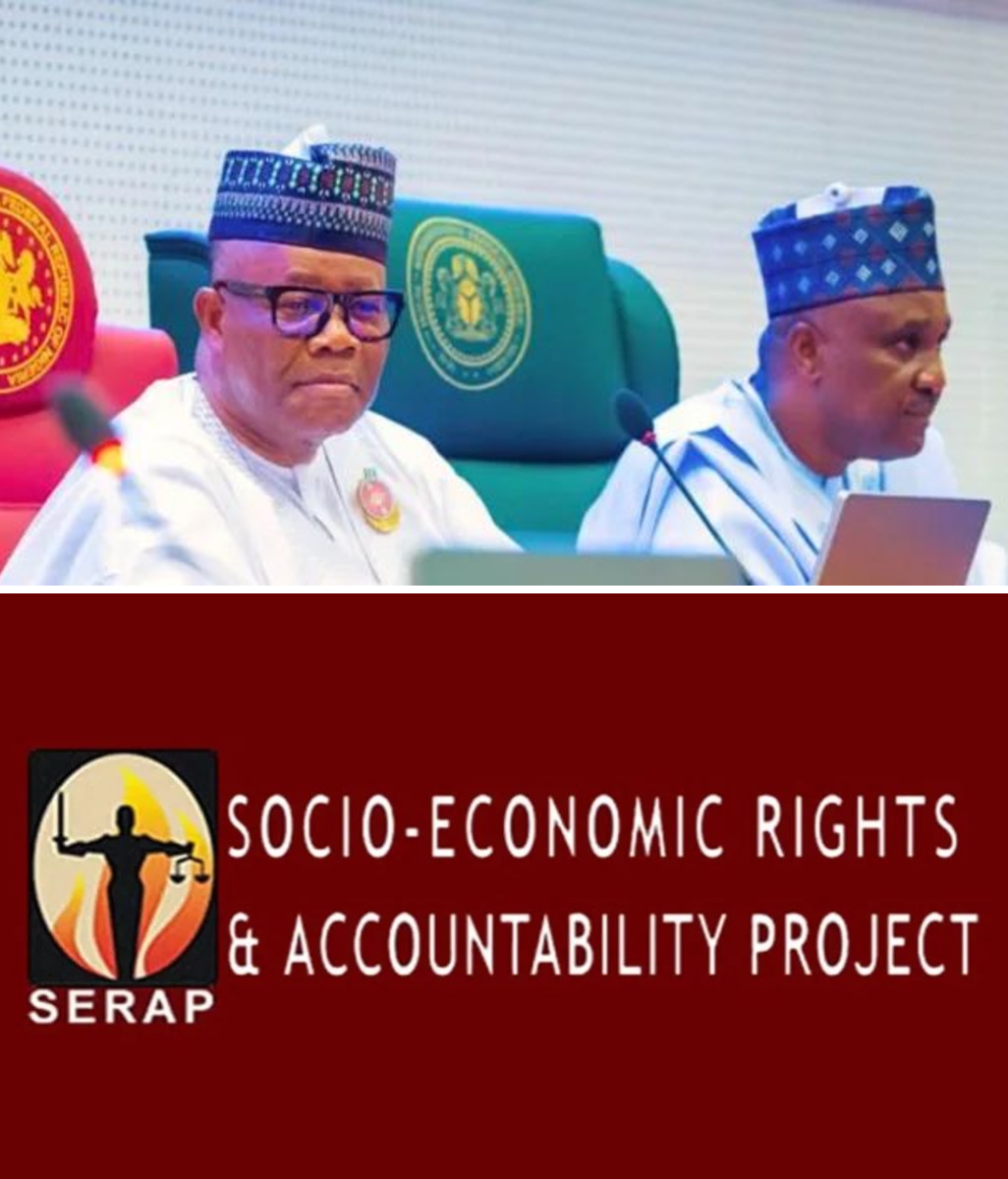
The Socio-Economic Rights and Accountability Project (SERAP) and the Nigerian Guild of Editors (NGE) have called on the National Assembly to immediately withdraw and reject the proposed Foreign Aids (Regulation, Transparency and Disclosure) Bill, 2026 (SB.1034), warning that it could undermine civic space, media freedom and democratic participation ahead of the 2027 general elections.
In a joint open letter dated August 29, 2026, and signed by SERAP Deputy Director, Kolawole Oluwadare, and NGE General Secretary, Onuoha Ukeh, the organisations described the bill as “unnecessary, unlawful and unconstitutional.”
The bill, sponsored by Senator Ibrahim Dankwambo (PDP, Gombe North), proposes mandatory registration and disclosure requirements for organisations and private entities receiving foreign assistance. It also provides for sanctions, including fines of at least N20 million for civil society organisations and private entities, as well as possible suspension or revocation of operating licences.
SERAP and NGE argued that although the bill is presented as a measure to promote transparency, it would create an extensive framework for government control over civil society organisations, independent media, religious bodies, humanitarian organisations and other entities receiving foreign funding.
They particularly criticised provisions establishing a proposed Foreign Aid Regulatory Commission (FARC), which would have powers to register organisations, compel information, inspect records, conduct audits, monitor foreign-funded projects, issue directives and impose administrative sanctions.
According to the organisations, such powers could expose legitimate organisations to intrusive government supervision and create pressure that may encourage self-censorship among journalists, activists and civic groups.
READ ALSO; 2027 presidency: SERAP Challenges Tinubu, Atiku, Obi, 16 others to declare assets
They also questioned the necessity of establishing another regulatory body, noting that Nigeria already has institutions including the Corporate Affairs Commission (CAC), Economic and Financial Crimes Commission (EFCC), Special Control Unit against Money Laundering (SCUML), Nigerian Financial Intelligence Unit (NFIU) and Federal Inland Revenue Service (FIRS) with responsibilities covering financial reporting, taxation, anti-money laundering and anti-corruption enforcement.
SERAP and NGE further argued that vague terms contained in the bill, including “foreign aid,” “national priorities” and “public interest,” could create opportunities for arbitrary or selective enforcement.
They warned that the proposed legislation could have serious consequences for organisations that depend on foreign grants for investigative journalism, fact-checking, journalist safety, media development, research, humanitarian work and other public-interest activities.
The groups said the bill could also affect labour unions, professional associations, universities, research institutions, technology hubs, religious organisations and charitable bodies receiving foreign grants, donations or technical assistance.
They maintained that the proposed restrictions could violate constitutional protections for freedom of expression and association, citing Sections 39 and 40 of the Nigerian Constitution, as well as provisions of the African Charter on Human and Peoples’ Rights and the International Covenant on Civil and Political Rights.
SERAP and NGE urged Senate President Godswill Akpabio and House Speaker Tajudeen Abbas to reject the bill and ensure that future legislation does not unnecessarily restrict civic participation, media freedom or the legitimate activities of civil society.
They also called on the National Assembly to prioritise laws that strengthen transparency, accountability, democracy, human rights and an enabling environment for independent media and civic organisations.
The organisations warned that if the bill is passed despite the constitutional and human rights concerns raised, they would consider taking legal action in the public interest to challenge it and protect freedom of association, media freedom and civic participation.


-
 Health4 days ago
ISRT 2026: Global experts converge in Lagos to advance cancer care across Africa
-

 Football4 days ago
Ballon d’Or 2026: The key rules shaping the race for football’s biggest prize
-

 Entertainment7 days ago
Miss World 2026: Four Continental winners battle for automatic top 20 spot (VIDEO)
-

 Business4 days ago
Versat Automobile to launch Chery’s EXEED premium brand in Nigeria
-

 Entertainment6 days ago
Miss World 2026: Meet 24 African Contestants Flying Continent’s Flag in Vietnam(VIDEO)
-
 Comments and Issues5 days ago
Digital Rights and the 2027 Poll in Nigeria
-

 Football4 days ago
Yaya Touré makes history as Slovan Bratislava reaches Champions League league phase
-

 Energy5 days ago
Petrol Price War: Where are Nigerians getting the cheapest fuel?