
Latest
Falana demands stronger citizen role in Africa’s anti-corruption drive

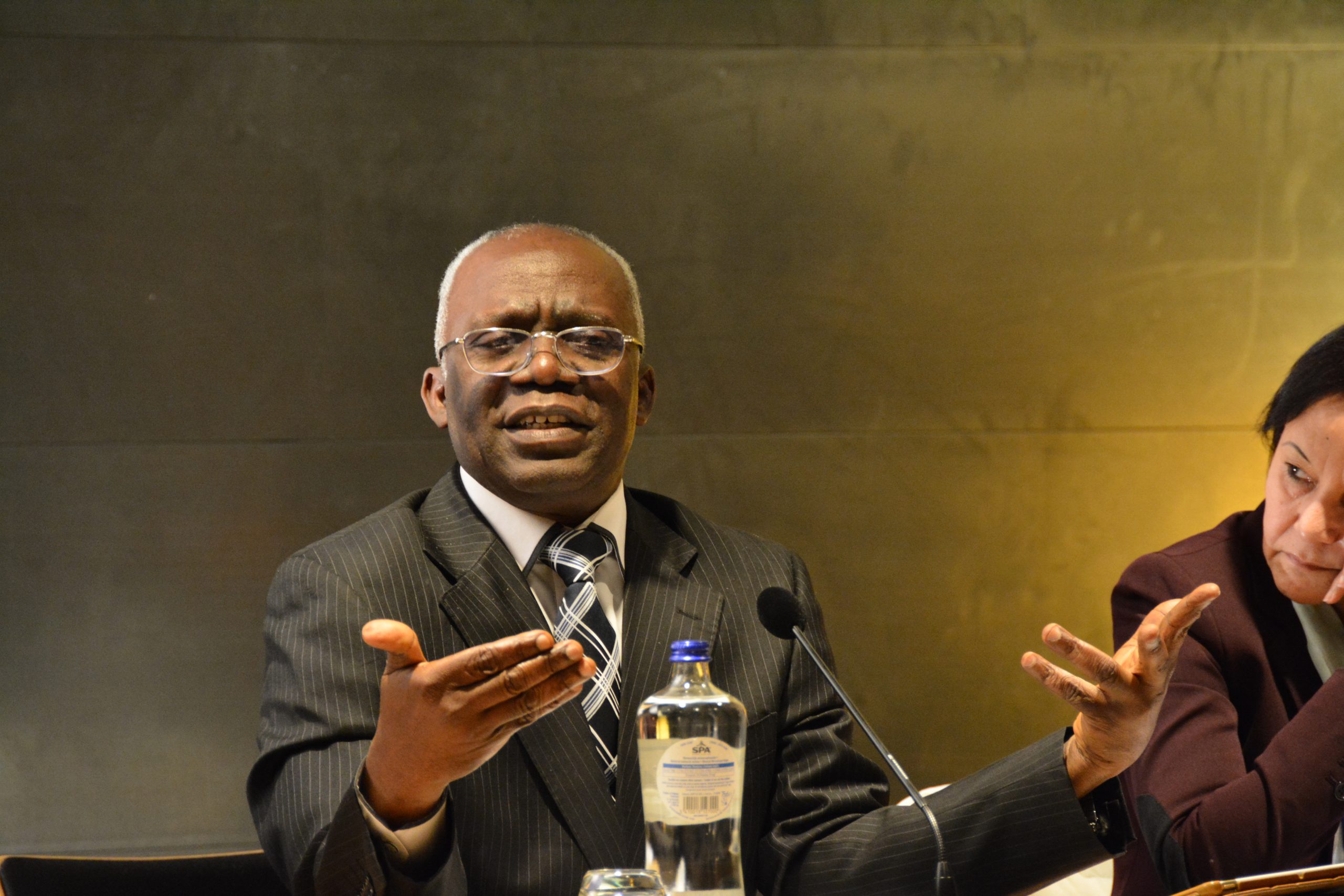
Human rights lawyer and Senior Advocate of Nigeria (SAN), Femi Falana, has called for a fundamental shift in Africa’s anti-corruption campaign, arguing that accountability must be reclaimed by citizens rather than left primarily to government institutions.
Falana made the call in a keynote address at the Pan-African High-Level Dialogue on Accountability held in Lagos on September 10–11, 2026, organised by the African Centre for Leadership, Strategy & Development (Centre LSD) in partnership with the Centre on African Philanthropy and Social Investment (CAPSI), Wits Business School, University of the Witwatersrand, and Open Society Foundations.
Speaking on the theme, “Have We Lost the Accountability Debate? Reflections on Three Decades of Anti-Corruption Work in Africa,” Falana said Africa had not lost the debate but had lost sight of the meaning, purpose and ownership of accountability.
He noted that African countries had established anti-corruption agencies, enacted legislation and ratified international conventions, yet corruption remained deeply entrenched in the political and economic systems of many countries.
According to him, citizens, as the ultimate victims of corruption, must become central actors in demanding accountability.
“When public money is stolen, it is the citizen who loses the hospital that should have been built,” Falana said, stressing that corruption directly affects healthcare, education, employment, housing and infrastructure.
Falana also drew attention to illicit financial flows (IFFs), describing grand corruption, illegal extraction of natural resources and financial outflows as major obstacles to Africa’s development.
Citing the Economic Commission for Africa, he said the continent loses an estimated $40 billion annually through illicit financial flows in the extractive sector.
READ ALSO;Falana aks EFCC to probe N33.75bn unaccounted cash transfers to poor Nigerians
He also referenced United Nations estimates putting Africa’s total illicit financial flows at about $88.6 billion annually, saying the losses deprive governments of resources needed for development.
Falana called on African governments to enforce Article 21 of the African Charter on Human and Peoples’ Rights, which provides for peoples’ rights to freely dispose of their wealth and natural resources and to recover property in cases of unlawful dispossession.
He further urged African countries to pursue the recovery of stolen assets held abroad, while ensuring that repatriated funds are transparently managed.
The legal practitioner said the effectiveness of anti-corruption efforts depended not only on legislation but also on the independence of institutions responsible for enforcing the law.
He warned that accountability suffers when anti-corruption agencies, legislatures and other institutions become vulnerable to political influence.
Falana also defended the role of investigative journalism and civil society, citing historical examples in Nigeria and Ghana where journalists and activists helped expose alleged corruption.
He argued that citizens should be able to provide information, demand investigations and monitor how public complaints are handled.
“The people are the victims of corruption. The people are the owners of public resources. The people therefore have a right, and indeed a duty, to demand accountability,” he said.
He also called for protection of journalists and whistleblowers, warning against the misuse of cybercrime laws to suppress investigative reporting and criticism of public officials.
Falana said the next phase of Africa’s anti-corruption campaign should combine the roles of citizens, civil society, the media, lawmakers, anti-graft agencies, prosecutors and the judiciary.
“Citizens must generate scrutiny and provide information; the media must bring matters of public interest into the open; civil society must sustain public pressure; the legislature must exercise effective oversight; anti-corruption agencies must investigate; prosecutors must present credible evidence; and the judiciary must determine guilt or innocence according to law,” he said.
He urged African countries to strengthen judicial independence, reduce delays in corruption trials and prevent procedural obstacles from frustrating legitimate accountability efforts.
Concluding, Falana said the continent did not need merely more anti-corruption institutions or laws, but stronger institutions, effective enforcement and an empowered citizenry.
“The accountability debate is not lost. It is waiting to be reclaimed. And the people must reclaim it,” he said.


-

 News6 days ago
UK, Canada pledge closer cooperation on trade, defence and AI
-

 Business1 week ago
Abuja gears up for Jetour T2’s rugged-luxury experience
-
 Business1 week ago
Tinubu’s economic reforms face public confidence test as cost-of-living crisis persists
-

 Business5 days ago
Dangote Refinery IPO: Can small investors really make money from the shares?
-

 Business1 week ago
Dangote: Petrol price gap fuels smuggling as Nigeria faces fresh pump price surge
-

 Comments and Issues6 days ago
Wavy fuel prices and deepening cost-of-living crises in Nigeria
-

 Football5 days ago
FULL LIST: Eight stadiums to host 2027 Women’s World Cup in Brazil
-

 Business3 days ago
Jetour takes T1 adventure SUV experience to Abuja, targets growing Nigerian market