
Latest
103M Registered Voters: Where are Nigeria’s new voters coming from?

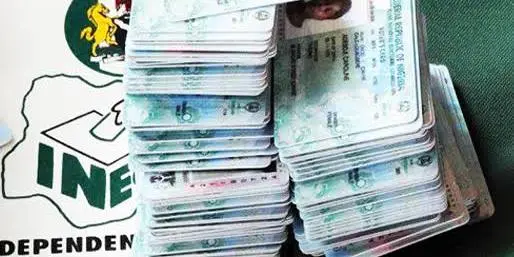
Nigeria’s voter register has crossed the 103 million mark ahead of the 2027 general elections, adding more than 10.7 million new registrants to the electoral roll following the completion of the latest Continuous Voter Registration exercise.
The increase represents one of the most significant expansions of Nigeria’s potential electorate since the 2023 general elections and raises an important question: who are the new voters, and where are they coming from?
The Independent National Electoral Commission (INEC) said its three-phase CVR exercise recorded 10,772,421 new registrations nationwide before the commission completed its final biometric verification and clean-up of the register.
The presidential and National Assembly elections are scheduled for January 16, 2027, while the governorship and State House of Assembly elections will follow on February 6.
More than 10.7 million added through CVR
The latest increase did not occur through a single registration exercise.
INEC conducted the CVR in three phases between August 2025 and July 2026.
The first phase, conducted from August 25 to December 10, 2025, produced 2,611,266 registrations.
The second phase, which ran from January 5 to April 17, 2026, recorded 4,121,835 registrations.
The third phase, conducted between May 11 and July 26, added another 3,867,997 registrants.
Together, the three phases produced the 10,772,421 new registrations that subsequently went through the commission’s biometric verification and clean-up process.
INEC has now said the final Automated Biometric Identification System (ABIS) clean-up has been completed and that the national register contains more than 103 million voters.
Lagos, Kano and Kaduna dominate the register
The new national figure is not evenly distributed across Nigeria.
Lagos has the largest number of registered voters, with 7,488,633, followed by Kano with 6,570,276 and Kaduna with 4,662,640, according to figures released by INEC Chairman Joash Amupitan.
Katsina ranks fourth with 3,876,051 voters, while Rivers has 3,736,434.
Oyo, Delta, Benue, Ogun and Bauchi complete the top 10 states by registered voters.
The concentration of voters in these states means that changes in voter registration can have significant political implications, particularly in closely contested elections.
However, a large voter register does not automatically translate into a large number of actual votes. Turnout, voter mobility, PVC collection, accreditation and participation on election day will ultimately determine how much influence the expanded register has.
Young Nigerians remain a major factor
The expansion also reflects continuing efforts to bring eligible Nigerians into the formal electoral process.
INEC’s latest figures show that the voter register includes a substantial population of working-age Nigerians, with voters aged 35 to 49 forming the largest age group, according to the commission’s latest demographic breakdown.
The presence of millions of relatively young and middle-aged voters could become important in 2027, particularly because issues such as employment, the cost of living, education, insecurity and economic opportunity are likely to influence voting decisions.
But age alone does not determine political participation. The crucial question will be whether newly registered voters actually collect their PVCs and turn up at polling units.
Registration does not mean every new voter will vote
The more than 10.7 million new registrations should not be interpreted as 10.7 million guaranteed additional votes.
INEC’s registration process is only one stage of the electoral cycle.
Newly registered voters must collect their PVCs, confirm their registration and polling-unit details and subsequently undergo BVAS accreditation before casting their ballots.
INEC has scheduled nationwide collection of newly produced PVCs to begin on October 9, 2026, with cards being distributed through designated Local Government Area collection centres.
The commission has also introduced printable PVC technology, which it says is intended to reduce waiting times and assist eligible voters who need replacement cards.
Why the numbers matter for 2027
The expansion of the register gives political parties a larger pool of eligible voters to target, but it also increases the logistical burden on INEC.
More than 103 million voters must be accommodated across the country’s polling units, with election officials, accreditation equipment and sensitive materials deployed before voting begins.
INEC has already acquired 57,000 additional BVAS devices as part of its preparations for the 2027 elections.
The commission says it is also improving its electronic results-management infrastructure and strengthening cybersecurity ahead of the polls.
The size of the electorate therefore presents both an opportunity and a challenge: a larger registered electorate could mean broader participation, but it also requires more effective logistics, technology, security and voter education.
The real story may be turnout
For political parties, the most important number may ultimately not be 103 million.
It could be the number of those voters who actually turn up.
Nigeria’s previous elections have demonstrated that registration figures and election-day participation can be very different. Millions of registered voters may remain inactive because of logistical difficulties, lack of interest, insecurity, migration, illness or other personal circumstances.
The 2027 election will therefore provide a test of whether the latest expansion of the register translates into greater democratic participation.
INEC has completed the registration phase and final biometric clean-up. The next challenge is ensuring that eligible voters can collect their cards, reach their polling units and participate without intimidation or unnecessary barriers.
With more than 103 million people now on the register, the question for Nigeria’s political class is no longer simply where the new voters came from.
It is what these voters will do with their votes when the country goes to the polls in 2027.


-

 Latest6 days ago
US Immigration fees rise from October 16 as USCIS announces new charges
-
 Latest1 day ago
Israel marks 3 years since October 7 Hamas attack amid Gaza strikes, election debate
-

 Business6 days ago
Nigeria’s $55bn reserves raise fresh questions over naira value
-

 Health5 days ago
Florida sues Pfizer over deceptive COVID-19 vaccine marketing
-

 Business1 week ago
Tuoyo Erikowa wins digital marketing personality of the Year at 2026 EDGE awards
-

 Crime5 days ago
From camp to captivity: How kidnappers now target NYSC Corps members on highways
-

 Featured6 days ago
2027: Can Nigeria’s opposition still unite behind a single presidential candidate?
-

 Crime5 days ago
Fulani Militia leader linked to Christian killings arrested in Plateau