
Featured
The commuter’s 90-day test: Is Nigeria’s CNG promise delivering cheaper transport?

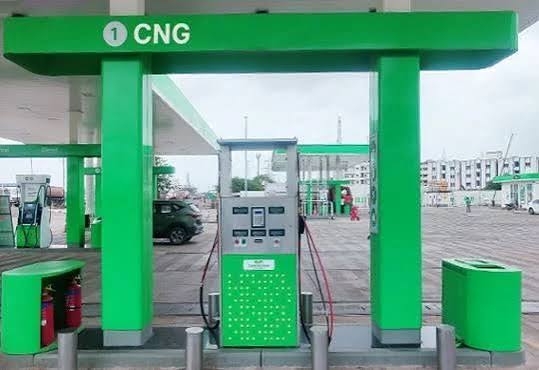
For millions of Nigerians who depend on public transport to get to work, the cost of commuting is measured not only in fares but also in the money left for food, rent, school fees and other household expenses.
The Federal Government’s push for compressed natural gas (CNG) and electric vehicles is intended to ease that burden by reducing the cost of operating public transport. But as alternative-energy buses enter service on selected routes, an important question remains: are commuters consistently paying less to get to work?
President Bola Tinubu set October 1, 2026, as a target for Nigerians to begin experiencing measurable reductions in transport costs following discussions with state governors and other stakeholders. The administration has promoted CNG-powered buses and electric vehicles as alternatives that can help lower fares.
Yet, reports from different parts of the country suggest that the benefits remain uneven.
The Presidential Initiative on Compressed Natural Gas and Electric Vehicles says lower fares have already been introduced on several routes.
In an update published on October 1, the initiative reported that CNG-supported services between Enugu and Nsukka had reduced fares from between ₦3,000 and ₦4,000 to ₦1,600. It also cited subsidised fares on selected routes in Lagos and the Federal Capital Territory.
In Lagos, the initiative said fares on the Ikorodu–Fadeyi route had fallen from ₦1,200 to ₦680, while Ikorodu–Maryland had dropped from ₦1,000 to ₦570. These figures were presented by the initiative as evidence of the programme’s impact.
However, the experience reported by commuters elsewhere has been different.
A report published by The Guardian on October 3 found that commuters interviewed in Lagos, Abuja, Kaduna, Oyo and other areas said they had not noticed reductions in the fares they paid after the government’s October 1 target date.
The difference between official figures and passengers’ experiences raises questions about the programme’s reach, the availability of supported buses and whether lower operating costs are consistently passed on to customers.
CNG can cost less to use than petrol, but the savings do not automatically translate into lower fares.
In a report published on October 17, TheCable found that some CNG-powered buses and tricycles in Lagos charged the same fares as petrol-powered vehicles operating on the same routes.
One CNG-powered bus driver interviewed by the publication said reducing fares independently could put him at a disadvantage against other operators using the same motor parks. Transporters also cited park charges, ticket fees and limited access to refuelling stations as factors affecting their operations.
These challenges suggest that the affordability question extends beyond the price of fuel. The number of alternative-energy vehicles available, the routes they serve, the cost of maintaining them and the rules governing fares can all influence what passengers pay.
For a worker who must take two or three vehicles each way, a reduction on only one leg of the journey may offer limited relief. Equally, a cheaper bus that operates infrequently or does not reach a commuter’s neighbourhood may not be a practical alternative.
A 90-day examination of one worker’s commute could provide a clearer picture of whether the programme is changing household transport costs.
The exercise would begin by recording the worker’s usual route, the fares paid for each leg of the journey, daily waiting times and the total cost of commuting to and from work. The same information would be collected throughout the three-month period.
Where CNG or electric buses operate on the route, the investigation would compare their fares with those of conventional vehicles. It would also record how often the alternative-energy services run, whether passengers can board without excessive delays and whether the worker must pay for additional connections.
The findings would then be compared with the worker’s starting position. Any changes in fares would need to be distinguished from fluctuations caused by traffic, route changes, fuel prices, weather or other factors.
Interviews with drivers, transport unions, government officials and passengers would help explain the figures. The investigation would also seek evidence of the number of buses actually operating on the selected route, rather than relying solely on announcements about vehicles delivered or planned.
Such a test would not establish the experience of every Nigerian commuter. It would, however, offer a documented account of how the policy affects one worker’s daily expenses and whether the savings, if any, are sustained.
The Federal Government has continued to promote the expansion of CNG infrastructure and alternative-energy transport. But the programme’s success for ordinary passengers will ultimately depend on what happens after the announcements: whether affordable buses are available, whether they serve the routes people need and whether the fares remain within reach.
For workers already spending a substantial share of their income on transport, even a modest and reliable reduction could make a difference. But where fares remain unchanged, cheaper fuel alone may not be enough.
The 90-day test is therefore a proposed reporting exercise, not a completed study. No individual commuter’s diary, verified starting fares or three-month results have been supplied for this story. Those records would be needed before drawing a firm conclusion about the policy’s effect on a worker’s household budget.
Until then, the central question remains open: will Nigeria’s CNG and electric-vehicle drive deliver sustained savings to the people who need them most, or will the benefits remain limited to selected routes and services?


-

 Featured6 days ago
Inside INEC’s race to prepare for Nigeria’s 2027 elections
-

 Latest7 days ago
Global excitement builds as Healing Streams Live Services returns October 23
-
 Featured6 days ago
2027: APC unveils nationwide campaign timetable, Tinubu to rally in 12 states
-
 Business7 days ago
President Tinubu and the Low Transport Fares Fiasco
-

 Business1 week ago
BREAKING: Nigeria’s Inflation Rate Drops to 14.63% in September
-
 Business6 days ago
Court dismisses ₦170m Trade Fair contract claim, says Zenith Bank was not a party
-
 Business3 days ago
Naira faces exchange rate gap as Dollar hits N1,380 on parallel market
-
 Latest6 days ago
Breaking: NNPCL raises petrol price to ₦1,405 per litre amid discount controversy