
Latest
HURIWA demands withdrawal of Nutritionists Council Bill over threat to indigenous food knowledge

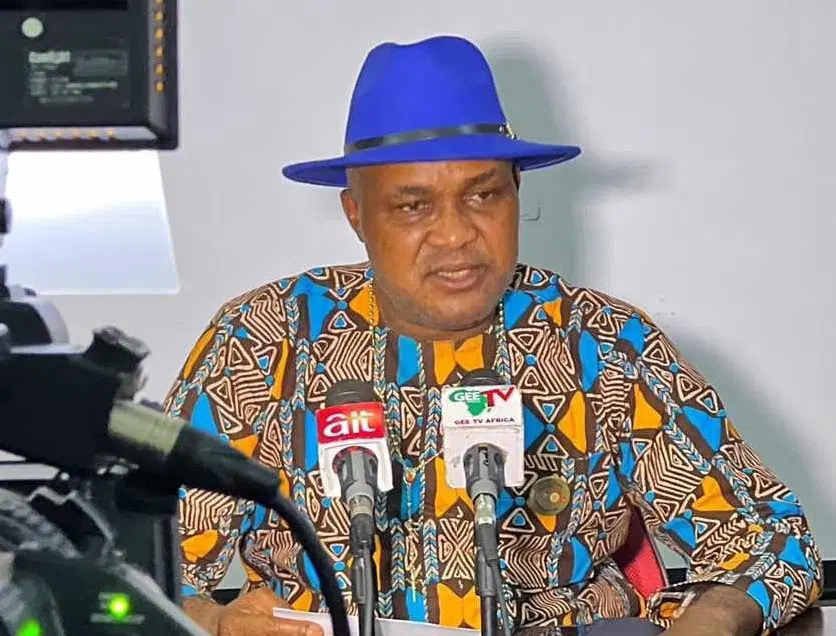
The Human Rights Writers Association of Nigeria (HURIWA) has called for the immediate withdrawal of the proposed Nutritionists Registration Council of Nigeria Bill, 2025, warning that its provisions could expose traditional food knowledge and indigenous nutritional practices to excessive regulation.
The rights group also urged the National Assembly to suspend further consideration of the Bill pending transparent and inclusive consultations with relevant stakeholders.
In a statement issued on Friday and signed by its National Coordinator, Comrade Emmanuel Nnadozie Onwubiko, HURIWA endorsed concerns raised by the Centre for African Policy Research and Advisory (CAfPRA) over the proposed legislation, sponsored by Hon. Chike John Okafor, representing Ehime Mbano/Ihitte Uboma/Obowo Federal Constituency.
The association said its opposition was not against professional standards or the regulation of qualified nutritionists but against the possibility of granting a statutory council extensive powers without adequate safeguards for Nigeria’s cultural heritage and traditional knowledge systems.
According to HURIWA, Nigerian communities have developed generations of knowledge about local foods, seasonal diets, fermentation, food preservation, medicinal plants, breastfeeding and complementary feeding long before the emergence of formal nutritional science.
READ ALSO; HURIWA slams Oyedele over Tinubu’s 2027 bid, urges FG to tackle economic hardship
It warned that the absence of explicit exemptions for family-based and community-transmitted knowledge could create legal uncertainty over activities considered regulated nutritional practice.
“A grandmother advising her family on traditional foods, a community elder transmitting knowledge about local diets, or a household maintaining inherited food preparation practices must not be placed under a cloud of legal uncertainty,” the statement said.
HURIWA, however, acknowledged that not all traditional practices are scientifically validated, noting that cultural protection should not prevent public health interventions against demonstrably harmful practices or fraudulent health claims.
The group expressed particular concern over Sections 23, 27, 28 and 30 of the Bill, which it said prescribe penalties for certain forms of unapproved training, unregistered practice and the employment of unregistered persons.
It cited Section 23 as providing for a fine of up to N5 million, imprisonment for up to five years, or both, in specified cases involving unapproved training and certification.
The association argued that unclear definitions of nutritional practice, combined with inadequate protection for indigenous knowledge, could encourage excessive discretion and selective enforcement. It called for precise definitions of regulated professional activities and penalties proportionate to the offences.
HURIWA also demanded greater transparency concerning international partnerships, foreign qualifications, technical assistance and funding arrangements under the proposed law.
Citing Sections 3, 14, 17 and 32, including Section 32(2)(c) on grants, endowments and donations to the proposed Council, it urged lawmakers to introduce comprehensive disclosure and accountability requirements.
The group stressed that international cooperation and foreign funding were not inherently improper but said the public deserved transparency about interests that could influence professional standards, educational curricula and nutritional guidance.
Beyond professional regulation, HURIWA argued that Nigeria’s food security challenges required sustained investment in agriculture, support for smallholder farmers, improved food processing and storage, nutrition education, biodiversity protection and access to affordable locally produced foods.
It also questioned the financial implications of establishing the Council, including the costs of its governing board, registrar, offices, staffing, accreditation and disciplinary structures.
The association called for an independent assessment of the institution’s necessity, cost and expected public benefits, as well as its relationship with existing regulatory bodies.
Among its demands are the withdrawal of the Bill in its present form, public disclosure of consultations and research informing its drafting, explicit legal protection for traditional food knowledge, and meaningful representation for farmers and indigenous knowledge holders.
HURIWA urged Okafor, the relevant National Assembly committee and legislative leaders to ensure that any future legislation emerges from broad public consultation.
“The National Assembly must put Nigerians before institutional interests,” the statement said, insisting that scientific nutrition and reasonable professional regulation must respect cultural heritage and serve the public interest.


-

 Featured6 days ago
Inside INEC’s race to prepare for Nigeria’s 2027 elections
-
 Latest7 days ago
Global excitement builds as Healing Streams Live Services returns October 23
-
 Featured6 days ago
2027: APC unveils nationwide campaign timetable, Tinubu to rally in 12 states
-
 Business7 days ago
President Tinubu and the Low Transport Fares Fiasco
-

 Business1 week ago
BREAKING: Nigeria’s Inflation Rate Drops to 14.63% in September
-

 Business3 days ago
Naira faces exchange rate gap as Dollar hits N1,380 on parallel market
-

 Business6 days ago
Court dismisses ₦170m Trade Fair contract claim, says Zenith Bank was not a party
-

 Latest6 days ago
Breaking: NNPCL raises petrol price to ₦1,405 per litre amid discount controversy