
Business
$21.7bn loan plan will drive growth, not burden Nigerians — Oyedele

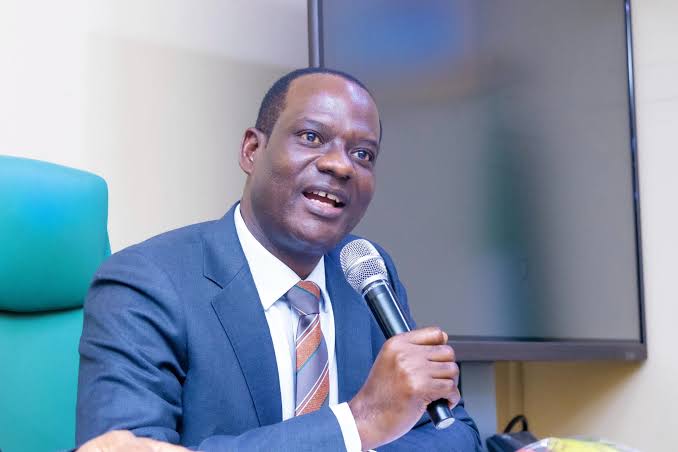
Taiwo Oyedele, Minister of Finance and Coordinating Minister of the Economy, has defended the Federal Government’s proposed $21.7 billion external borrowing plan, describing it as an investment strategy aimed at stimulating economic growth rather than imposing additional burdens on Nigerians.
Oyedele spoke on Wednesday while responding to questions from State House correspondents after the Federal Executive Council (FEC) meeting presided over by President Bola Tinubu at the Presidential Villa in Abuja.
The minister said the proposed loans would finance productive investments capable of improving infrastructure, strengthening national productivity and raising living standards.
“This is investment, not borrowing,” he said.
His comments came a day after Tinubu asked the National Assembly to approve external borrowing of $20.52 billion and €1.04 billion to finance projects and programmes across various sectors of the economy.
In a letter read by Senate President Godswill Akpabio during plenary on Tuesday, the president said the proposed financing would support infrastructure, agriculture, healthcare, education, water supply, security, employment generation and financial management reforms.
The administration said the borrowing plan was designed to accelerate economic growth and address Nigeria’s infrastructure funding deficit.
However, the proposal has drawn criticism from Atiku Abubakar, presidential candidate of the African Democratic Congress (ADC), who urged lawmakers to withhold approval until the government provides more details about the projects and how the funds would be spent.
In a statement issued on Tuesday by Phrank Shaibu, Director of Strategic Communication of the ADC presidential campaign council, Atiku questioned the timing and purpose of the proposed borrowing.
The former vice-president said the request supported his October 12 warning that the Tinubu administration was preparing to borrow up to $20 billion for the Lagos-Calabar coastal highway.
READ ALSO; Atiku challenges Tinubu, demands daily videos of Umrah pilgrimage
He argued that the government had not provided sufficient information about the projects’ locations, costs and contractors to allow Nigerians to scrutinise the proposed expenditure.
Atiku also expressed concern that the funds could benefit political campaigners and favoured contractors, citing reports of changes to the alignment of the coastal highway.
Responding to concerns about the borrowing plan, Oyedele said the appropriate way to assess the financing was to consider the assets that would be created and their potential economic returns.
He maintained that the government was seeking funds for projects expected to deliver long-term value rather than simply increase the country’s debt obligations.
The minister also disclosed that the administration was targeting single-digit inflation by the end of 2027 or earlier, linking its economic agenda to efforts to improve stability and support growth.
Under the proposed borrowing programme, transportation infrastructure accounts for approximately $10.6 billion. The projects include the Sokoto-Badagry and Lagos-Calabar highways, as well as the Kano-Kaduna rail project.
Oyedele said the government planned to obtain financing from multilateral and bilateral development partners, alongside other sources, to execute the projects.
He disclosed that about $7.9 billion was expected from multilateral and bilateral partners, including the World Bank.
According to the minister, a $5 billion World Bank component would attract concessional financing at an average interest rate of approximately 2.1 per cent, while some loans for social-sector projects would carry interest rates of around two per cent.
He said the government was prioritising favourable financing terms to minimise borrowing costs and ensure that the investments generated sustainable economic benefits.
The proposed borrowing plan is expected to undergo legislative scrutiny, with the debate centred on the country’s infrastructure needs, the cost of financing and the transparency of project implementation


-

 Featured5 days ago
BREAKING NEWS: Shouts of joy rock the world as Pastor Chris opens final Healing Streams edition for 2026
-

 Football6 days ago
Man United shortlist Emery, Nagelsmann as potential replacements for Carrick
-

 Business6 days ago
Hoodlums raid JED Benue office, abduct 10 staff over power dispute
-

 Football6 days ago
Aston Villa ready to freeze out Garnacho to avoid £43m Chelsea transfer
-
 Latest6 days ago
Akpabio tasks Tompolo-backed movement with spreading Tinubu’s renewed hope message
-

 Business6 days ago
EV adoption: Roxettes seeks cheaper financing, local manufacturing incentives
-
 Business5 days ago
How Ethiopian Airlines is challenging Africa’s aviation narrative through self-reliance
-
 Latest6 days ago
2027: Adeyanju predicts Tinubu will defeat Atiku, win 25% votes in every state