
Comments and Issues
Africa’s universities are not future ready!

“However, in the 21st century, the true test of rigor is for students to be able to look at material they’ve never seen before and know what to do with it.”
― James A. Bellanca
Every day on African campuses, students keep hope alive that their university degrees will change their lives. This hope is dwindling admist the high unemployment figures across the continent. The reality is far less certain.
The British council estimated in 2014; Nigeria’s graduate unemployment at 23.1%. In Kenya, it takes an average of five years for a graduate to find a job.
Then there are conflicting statements by business owners who complain that there are jobs – just a dearth of skilled graduates. Yet, the study above is clear that jobs are scarce.
There are two often given reasons for these discrepancies; the first is that there are infrastructure constraints have a negative impact on the quality of skills students graduate with. The second is the disparity between what universities teach and the skills required in the employment market.
In my humble opinion, the logical explanation has to do with the way our students are being taught, regardless of the courses they are taking. Their learning is critical to employers because it determines how they think and what they do at work.
Things have shifted as employers are no longer looking for graduates with the most impressive degree certificates. It’s gotten so radical that firms such as Ernst & Young took off degree requirements from their entry requirements because they have to realize that academic success isnt an indicator of professional success.
As i stated in my book, Future readiness in education;
Employers are now looking for graduates who are critical thinkers, adaptable, creative and are problem solvers.
These skills depend more on how they were taught than what they learned. The status quo has changed; information was once limited but is readily available.
A shift has occurred regarding our understanding of how the brain works and how people learn in the last two decades.
ALSO SEE: How PDP swallowed up fPDP in Abuja
Previously learning meant access to information and knowledge, educational resources and teaching expertise. Technology has revolutionized getting access to information, knowledge and learning resources.
Academic researchers form a very small percentage of the knowledge workers needed in the digital age.
Universities need to rethink their way of dealing with learning to be able to produce people with the critical thinking, leadership, collaboration and problem solving skills needed for the future.
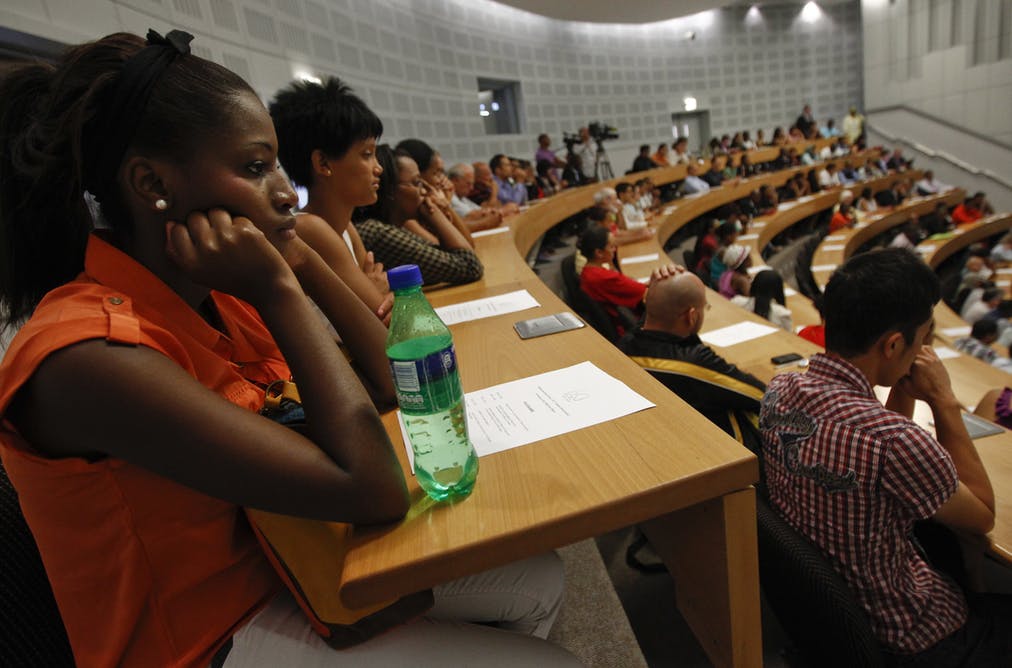
Unfortunately learning in lots of our African universities still occurs in large lecture halls and prizes the ability to regurgitate knowledge. Research from Nobel Prize winning physicist Carl Wieman shows that this is an ineffective way of learning.
Effective learning requures three conditions;
First, the ability of students to reflect upon what they are learning. Reflection aids in assessing students’ comprehension.
It also aids in infusing new ideas and concepts into their body of knowledge. When students reflect, they strengthen the neural pathways in their brain, and build new pathways that link information that wasn’t available. These links create the environment for critical thinking.
Second, true learning happens when students stop being passive recievers of information and become active explorers. When students are actively engaged, they are in charge of their learning and take responsibility for it. This leads to the desire from them for their learning to be relevant. They grow to be self regulated, motivated and curious. This ensures that they will be life long learners.
Third, learning occurs during applications of theories. I always tell people that I love project based learning to pieces because I have discovered that the best way to test a student’s comprehension of what they are doing. Actually working on an activity, receiving feedback about it, re-strategizing and re-doing it also builds neural pathways for retrieval and association.
Universities are the launching pad for a society’s aspirations. African universities must produce future ready leaders who will solve the continent’s problems
They need to redesign how learning is carried out within them.
Adetola Salau; Educator / Speaker / Author/ Social Entrepreneur / Innovator










-

 Featured1 week ago
Inside INEC’s race to prepare for Nigeria’s 2027 elections
-

 Featured1 week ago
2027: APC unveils nationwide campaign timetable, Tinubu to rally in 12 states
-

 Business4 days ago
Naira faces exchange rate gap as Dollar hits N1,380 on parallel market
-

 Business1 week ago
Court dismisses ₦170m Trade Fair contract claim, says Zenith Bank was not a party
-

 Latest1 week ago
Breaking: NNPCL raises petrol price to ₦1,405 per litre amid discount controversy
-

 Featured1 week ago
From kitchen to Supreme Court: Nigerian’s fight over alleged support for terrorists
-

 Business6 days ago
NCC launches Internet Governance Working Group to tackle AI risks, boost online safety
-

 Football1 week ago
Maresca reveals Guardiola’s reaction to Man City’s 4-2 defeat to PSG