
Business
After exiting Nigeria, Uber launches Robotaxi service in London with Wayve

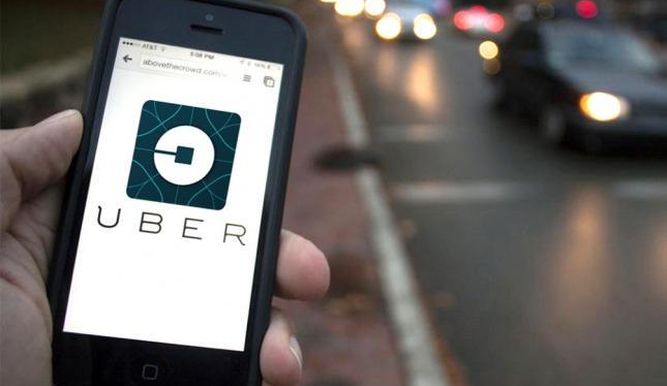
Uber has launched its first autonomous ride-hailing service in the United Kingdom through a partnership with British artificial intelligence company Wayve, introducing supervised self-driving rides on London’s streets.
The service, launched on Thursday, September 3, allows passengers requesting UberX, Uber Electric or Uber Comfort in London to be matched with a Wayve-powered electric Ford Mustang Mach-E at no additional cost. The launch marks the first time autonomous trips have been made available to the public in the UK and makes London the second European city where Uber offers autonomous rides, after Zagreb, Croatia.
The initial deployment involves a small fleet of fewer than 20 vehicles, with reports putting the number at 15 licensed cars. Each vehicle is equipped with Wayve’s AI Driver and sensors designed to enable autonomous navigation through London’s complex road environment.
However, the vehicles are not yet operating without human supervision. A trained, Transport for London-licensed private-hire driver will remain in the vehicle to monitor the journey and take control if necessary. Full driverless operations will require further regulatory approval in the UK.
Passengers cannot specifically request a robotaxi. Instead, customers booking an eligible Uber ride may be matched with a Wayve vehicle and will have the option to accept the autonomous ride or switch to a conventional Uber vehicle before the trip begins. Uber said the service initially covers London, excluding airports.
Wayve, which was founded in Britain and has developed and tested its autonomous-driving technology on London’s roads since 2018, uses an AI-based system designed to learn from driving experience rather than relying primarily on traditional high-definition maps and manually coded rules.
The launch comes as Uber increasingly expands its strategy around autonomous vehicles by partnering with specialist technology companies rather than relying solely on conventional ride-hailing with human drivers. Uber said it is working with more than 30 autonomous-vehicle partners globally and expects to facilitate autonomous trips in as many as 15 cities by the end of 2026.
The London launch also comes just one day after Uber ended its operations in Nigeria after 12 years in the country. The company said it made the decision following a review of its business, without giving a specific reason. Uber began operating in Nigeria in 2014, initially launching in Lagos before expanding to other Nigerian cities.
The timing has drawn attention as Uber simultaneously withdraws from one African market while expanding its investment and partnerships in autonomous mobility in major global cities.
For now, London’s robotaxi service represents a cautious first step towards fully autonomous commercial transport, with human safety drivers remaining an important part of the operation while regulators assess the technology and its readiness for driverless deployment.


-

 Latest1 week ago
Global excitement builds as Healing Streams Live Services returns October 23
-

 Featured6 days ago
Inside INEC’s race to prepare for Nigeria’s 2027 elections
-

 Featured6 days ago
2027: APC unveils nationwide campaign timetable, Tinubu to rally in 12 states
-

 Business1 week ago
President Tinubu and the Low Transport Fares Fiasco
-

 Business4 days ago
Naira faces exchange rate gap as Dollar hits N1,380 on parallel market
-
 Business6 days ago
Court dismisses ₦170m Trade Fair contract claim, says Zenith Bank was not a party
-
 Latest6 days ago
Breaking: NNPCL raises petrol price to ₦1,405 per litre amid discount controversy
-
 Business1 week ago
Rite Foods targets beverage market growth with LIDA Malt