
Business
All SIM cards used in Nigeria are locally manufactured–NCC

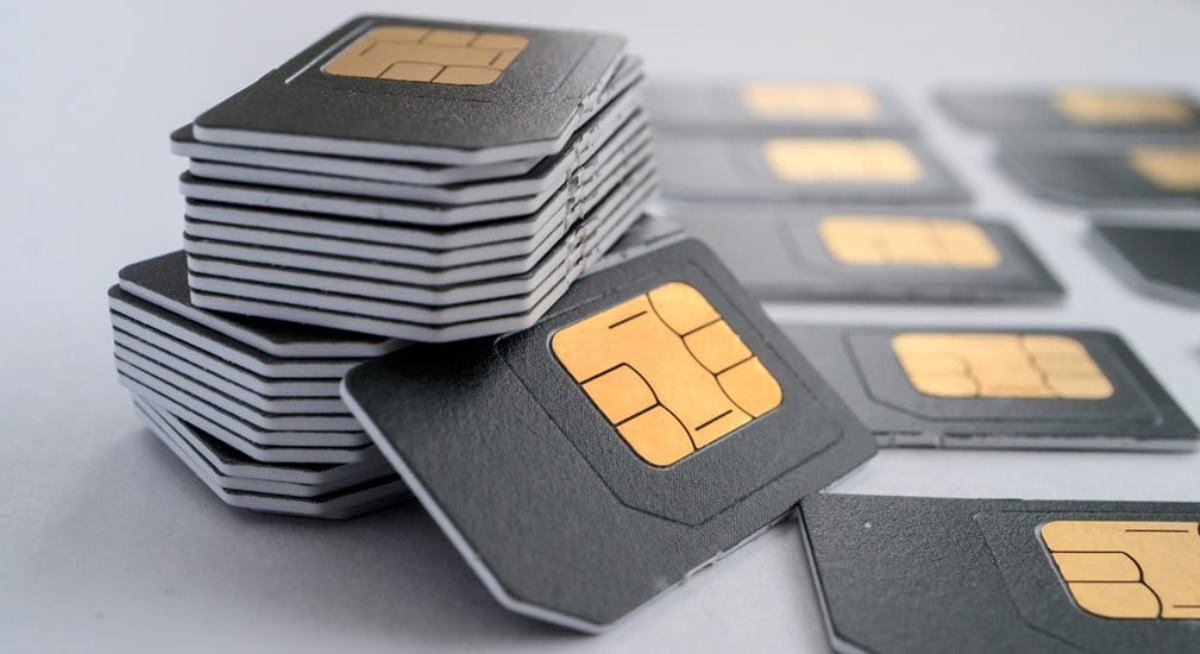
The Nigerian Communications Commission (NCC) has announced that all SIM cards used in Nigeria are now produced in the country.
The Head of New Media and Information Security at the NCC, Babagana Digima disclosed this development during a training session for media executives in Lagos.
According to reports, the two-day training event, “Upskilling Media Stakeholders on Trends in Telecommunications,” was aimed at enhancing the understanding of media professionals about current trends and advancements in the telecom sector.
Digima attributed this to the NCC’s major efforts to promote local content and indigenous participation in the telecommunications industry, spearheaded by the Nigeria Office for Development in the Indigenous Telecommunications Sector (NORDIT).
He highlighted that until recently, nearly all SIM cards in Nigeria were imported. “Before NORDIT’s intervention, 99% to 100% of SIM cards in Nigeria were imported. We set a goal to reverse this trend within five to six months. Now, 100% of all SIM cards used in Nigeria are manufactured locally, with no importation,” Digima stated.
READ ALSO: NCC identifies factors causing data depletion for mobile subscribers
Digima, who previously headed NORDIT, emphasized the commission’s advocacy efforts to boost Indigenous participation across all sectors of telecoms. He noted that NORDIT has provided grants and incentives to various companies to support industry development.
“For instance, we are currently sponsoring the manufacture of Corrugated Ordinal Duct, which will be the first of its kind in Africa. We also encourage the local production of telecom towers and fibre cables. Coleman Cables, a local manufacturer, has surpassed the only other producer in Egypt in terms of capacity and is continuing to expand,” he said.
The NCC under Sections 1D to F of its Act, is mandated to encourage the participation of indigenous telecom companies.
This national policy for promoting indigenous content in the telecommunications sector led to the establishment of the Nigerian Office for Developing the Indigenous Telecom Sector (NORDIT).
“One of NORDIT’s key areas of impact has been in fostering Indigenous participation,” explained Digima, a representative of the NCC.
Dr. Aminu Maida, the Executive Vice-Chairman of the NCC, also addressed the event. Represented by Engr. Abraham Oshadami, the Executive Commissioner for Technical Services at the NCC, Maida emphasized the importance of bridging the communication gap between the commission and the public.
He highlighted the pivotal role of the media, noting that the initiative includes executives from print, broadcast, and online media platforms.
READ ALSO: NCC Boss, Aminu Maida to chair SUPERNEWS Confab June 13
Maida further elaborated on the objectives of the training, stating that it aims to develop a reliable database of core media partners and foster strategic relationships with media stakeholders. “This will help shape the industry landscape and ensure that consumers are well-informed about developments within the sector,” he added.
The event concluded with a call to action for media professionals to collaborate with the NCC in disseminating accurate and comprehensive information about the telecommunications industry to the public.


-

 Featured6 days ago
Inside INEC’s race to prepare for Nigeria’s 2027 elections
-

 Latest1 week ago
Global excitement builds as Healing Streams Live Services returns October 23
-

 Featured6 days ago
2027: APC unveils nationwide campaign timetable, Tinubu to rally in 12 states
-
 Business1 week ago
President Tinubu and the Low Transport Fares Fiasco
-

 Business3 days ago
Naira faces exchange rate gap as Dollar hits N1,380 on parallel market
-
 Business6 days ago
Court dismisses ₦170m Trade Fair contract claim, says Zenith Bank was not a party
-

 Latest6 days ago
Breaking: NNPCL raises petrol price to ₦1,405 per litre amid discount controversy
-
 Business1 week ago
Rite Foods targets beverage market growth with LIDA Malt