
Latest
Army coup leaders in Guinea summon ministers after Conde’s ouster

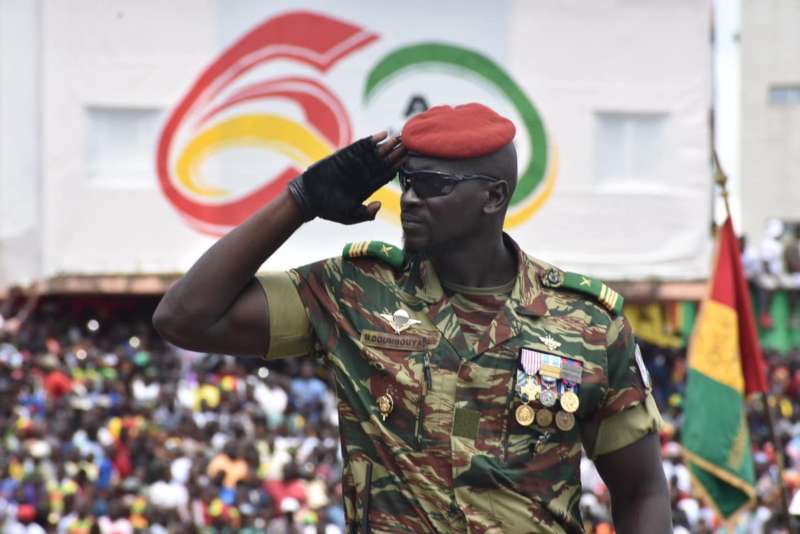
Soldiers who ousted Guinean President Alpha Conde summoned his ministers and top government officials to a meeting on Monday, a day after a coup that drew international condemnation.
A spokesman for the army unit told state television that failure to attend the 1100 GMT meeting would be considered a “rebellion”.
The takeover in the West African country that holds the world’s largest bauxite reserves, an ore used to produce aluminum, sent prices of the metal skyrocketing to a 10-year high on Monday over fears of further supply disruption in the downstream market.
There was no indication of such disruption yet.
Light traffic resumed, and some shops reopened around the main administrative district of Kaloum in Conakry which witnessed heavy gunfire throughout Sunday as the special forces battled soldiers loyal to Conde.
A military spokesman said on television that land air borders had also been reopened.
However, uncertainty remains. The elite unit appeared to have Conde in detention, telling the West African country on state television that they had dissolved the government and suspended the constitution.
Other branches of the army are yet to publicly comment.
The special forces unit is led by former French foreign legionnaire officer, Col. Mamady Doumbouya, who said on state television on Sunday that “poverty and endemic corruption” had driven his forces to remove Conde from office.
The apparent coup has been met by condemnation from some of Guinea’s strongest allies.
The United Nations quickly denounced the takeover, and both the African Union and West Africa’s regional bloc have threatened sanctions.
In an overnight statement, the U.S. State Department said that violence and extra-constitutional measures could erode Guinea’s prospects for stability and prosperity.
“These actions could limit the ability of the United States and Guinea’s other international partners to support the country,” the statement said.
Regional experts say, however, that, unlike landlocked Mali where neighbors and partners were able to pressure a junta thereafter a coup, leverage on the military in Guinea could be limited because it is not landlocked, also because it is not a member of the West African currency union.
Although mineral wealth has fuelled economic growth during Conde’s reign, few citizens significantly benefited, contributing to pent-up frustration among millions of jobless youths.
Despite an overnight curfew, the headquarters of Conde’s presidential guard was looted by people who made off with rice, cans of oil, air conditioners, and mattresses, a Reuters correspondent said.


-
 Latest6 days ago
Israel marks 3 years since October 7 Hamas attack amid Gaza strikes, election debate
-
 Energy6 days ago
Fuel Battle: Dangote, marketers and government clash over petrol imports
-
 Energy7 days ago
Petrol, diesel prices rise 86% in 2026 as costs hit fresh highs
-
 Energy1 week ago
Has Iran lost control of the Strait of Hormuz? Oil flows rebound as war disruptions persist
-

 Football7 days ago
Nigeria’s World Cup exit under spotlight as FIFA’s DR Congo files emerge
-

 Latest6 days ago
US Court set to rule on release of FBI, DEA records on Tinubu
-
 Business7 days ago
Nigerian investors at a crossroads as fixed-income yields slide
-

 Business1 week ago
LoveWorld Trade and Investment Forum to Convene Business Leaders in Accra