
Business
Banks pass stress tests amid decline in Capital Adequacy Ratio

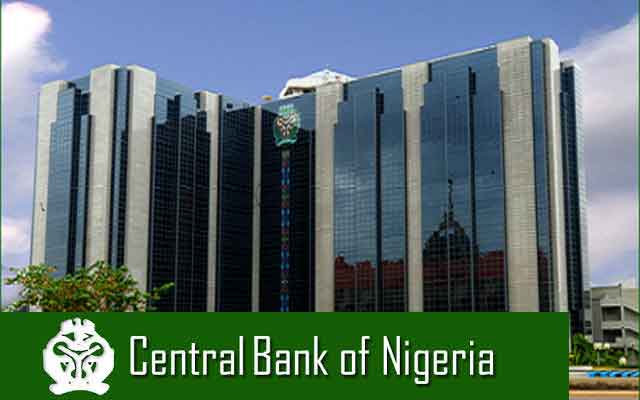
- Non-Performing Loans hit N2.1 trn
By Odunewu Segun
Despite the Non-Performing Loans (NPLs) challenges, Nigerian banks have been adjudged stable in a six-month financial stability test, amid declining economic growth, rising credit risks and default that have affected their operations.
National Daily gathered that the stress tests evaluated 23 commercial and merchant banks, testing their resilience to credit, liquidity, interest rate and contagion risks. The results showed that capital adequacy indicators declined marginally, but remained above the regulatory thresholds.
The baseline CAR for the industry, large, medium, and small banks stood at 14.78 per cent, 15.47 per cent, 12.75 per cent and 3.14 per cent, representing 0.04 per cent, -0.18 per cent, 0.76 per cent and -0.02 per cent change from June 2016 record for each category.
A further breakdown of the stress test on the assumption that there is a 100 per cent increase in NPLs, showed that this will lead to a CAR of 10.55 per cent, 12.01 per cent, 10.34 per cent and -27.03 per cent for the banking industry, large, medium and small banks.
ALSO SEE: CBN’s forex regime creating more crisis for Buhari
This means that in such a situation, all the small banks will not stand, while no bank will stand the impact of the most severe shock of a 200 per cent increase in NPLs, as their post-shock CARs fell below the 10 per cent minimum prudential requirement.
However, the decline of the CAR of small and medium banks did not weigh significantly on the industry CAR because large banks hold a significant proportion (88.02 per cent) of total banking industry loans.
Meanwhile, the banking industry Non-Performing Loans (NPLs) moved up from 11.7 per cent to 12.8 per cent at the end of 2016 to N2.1 trillion at the end of December 2016 from N1.67 trillion in June of the same year.
National Daily gathered that with about 50 debtors accounting for N5.59 trillion (34%) of total financial institutions credit exposure of N16.29 trillion, additional provisioning by banks and consequent reduction in banks’ Capital Adequacy Ratio (CAR), has been blamed for the default.
Commenting on the development, the Managing Director of First Registrar, Bayo Olugbemi, said the problem of credit was not about the volume, but the level of performance. He sees nothing to worry about in the number of people involved in the debt but cautioned that financial institutions no longer have excuse for not checking up the background of creditors before proceeding, as it has become easier with emerging policies and technologies.
Frontline economist, Bismarck Rewane, said it was not totally unexpected given the challenging macroeconomic situation in the country, but admitted that increase in industry NPL, with such debt concentration, must be watched.














-

 Latest7 days ago
US Immigration fees rise from October 16 as USCIS announces new charges
-
 Latest2 days ago
Israel marks 3 years since October 7 Hamas attack amid Gaza strikes, election debate
-

 Business7 days ago
Nigeria’s $55bn reserves raise fresh questions over naira value
-

 Health6 days ago
Florida sues Pfizer over deceptive COVID-19 vaccine marketing
-

 Crime6 days ago
From camp to captivity: How kidnappers now target NYSC Corps members on highways
-

 Featured7 days ago
2027: Can Nigeria’s opposition still unite behind a single presidential candidate?
-

 Crime6 days ago
Fulani Militia leader linked to Christian killings arrested in Plateau
-

 Business1 week ago
PalmPay upgrades security centre as digital fraud risks evolve in Nigeria