
Latest
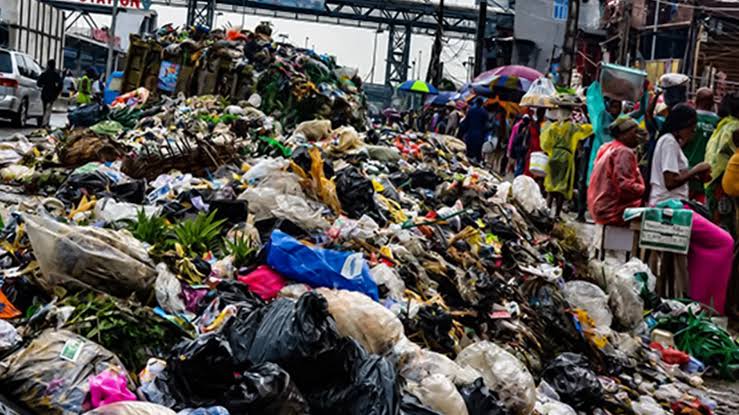
Beyond the stench: Poor waste disposal raises environmental concerns in Lagos

By Diden Abigail owuntarose
Blocked drainage channels, overflowing refuse points and indiscriminate dumping highlight the continuing challenge of keeping Lagos clean as the state grapples with the environmental demands of a growing urban population.
The sight of refuse accumulating around some streets, markets and residential areas raises important questions about waste collection, public sanitation and the responsibility of residents to protect their immediate environment.
As one of Nigeria’s most densely populated urban centres, Lagos generates substantial quantities of household, commercial and industrial waste. Managing this waste requires an effective collection system, adequate disposal infrastructure and consistent public cooperation.
When waste is not removed promptly, it can accumulate in public spaces, create unpleasant surroundings and obstruct drainage channels.
The consequences can become more serious during periods of heavy rainfall, when plastic materials and other refuse may block water channels and interfere with the movement of stormwater.
Poor waste management can also create conditions that attract pests and contribute to unsanitary surroundings, increasing environmental health concerns for communities.
Markets and commercial areas face particular pressure because daily business activities generate different forms of refuse, including food remnants, packaging materials, plastic containers and other discarded items.
Residential neighbourhoods also require dependable waste collection arrangements to prevent rubbish from accumulating near homes, roadsides and public facilities.
However, maintaining a clean environment cannot depend entirely on government agencies. Residents, market operators, landlords and business owners also have a role to play by disposing of refuse properly and avoiding unauthorised dumping.
Public education can help encourage responsible waste disposal, while accessible collection services can make it easier for residents to comply with sanitation requirements.
Authorities also need effective monitoring and enforcement to discourage indiscriminate dumping, alongside reliable waste collection and disposal systems.
Recycling presents another opportunity to reduce the volume of refuse requiring final disposal. Separating recyclable materials such as plastics, metals and paper can support waste recovery while creating opportunities for businesses operating in the recycling sector.
For such measures to produce lasting results, however, they must be supported by practical infrastructure, consistent implementation and public participation.
Keeping Lagos clean is therefore not merely an aesthetic concern. It is connected to public health, flood prevention, environmental protection and the overall quality of life in the state.
As the city continues to expand, improving waste management will remain an important part of building cleaner, healthier and more resilient communities


-
 Latest5 days ago
Israel marks 3 years since October 7 Hamas attack amid Gaza strikes, election debate
-

 Energy5 days ago
Fuel Battle: Dangote, marketers and government clash over petrol imports
-

 Energy6 days ago
Petrol, diesel prices rise 86% in 2026 as costs hit fresh highs
-

 Energy7 days ago
Has Iran lost control of the Strait of Hormuz? Oil flows rebound as war disruptions persist
-

 Football6 days ago
Nigeria’s World Cup exit under spotlight as FIFA’s DR Congo files emerge
-

 Latest6 days ago
US Court set to rule on release of FBI, DEA records on Tinubu
-

 Business6 days ago
Nigerian investors at a crossroads as fixed-income yields slide
-

 Business7 days ago
LoveWorld Trade and Investment Forum to Convene Business Leaders in Accra