
Latest
BREAKING: Kaduna approves, begin payment of minimum wage September


The Kaduna State Executive Council has risen from its Monday meeting to approve that payment of the new national minimum wage and consequential adjustments to civil servants begins from 1st September, 2019.
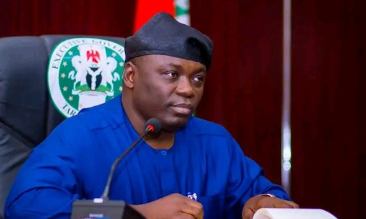
The Executive Council meeting, chaired by the Deputy Governor, Dr. Hadiza Balarabe, noted the commitment of Governor Nasir El-Rufai to strengthen the public service and its capacity to deliver quality and responsive public service.
The council according to a statement issued Special Adviser to the Governor on Media & Communication, Muyiwa Adekeye, deliberated on the minimum wage memo and unanimously approved commencement of the implementation in September 2019.
According to Adekeye, “The Executive Council stated it’s that commitment to the public service includes a desire to improve the standard of living of workers in the state.
“Pursuant to that, the Kaduna State Government launched a pay review process early in 2018. A cabinet committee was charged with exploring how the Kaduna State Government can sustainably improve public sector salaries.
“Guided by the twin principles of ability to pay and sustainability, the government considered several scenarios, bearing in mind the trend of internally generated revenues and allocations from the federation account.
“Several salary scenarios were considered, and one option was identified as most prudent. A final decision was suspended as negotiations for a new national minimum wage appeared to gather momentum. It was reactivated after the Federal Government announced the new national minimum wage in April 2019.
“Paying the new national minimum wage and consequential adjustments will increase the wage bill of the Kaduna State Government by 33%. Gross monthly salary outlay will rise to N3.759bn from the current N2.827bn.
“This almost N1bn monthly increase in the wage bill means that salary and pension commitments will take the lion’s share of state government expenditure. Meeting these salary obligations while meeting development objectives for citizens will further raise the pressure to expand and deepen revenue sources and collections.
“According to the new wage structure, the lowest paid workers in the civil service enjoyed increments of as much as 67%. Middle-ranking officers from Grade 10 to 14 were awarded increments of 60%,” he said.







-
 Featured1 week ago
Tinubu’s Renewed Hope: Reforms, hardship and the unanswered question of a second term
-

 Featured1 week ago
The cost of Renewed Hope: How Nigeria’s economic reforms are reshaping everyday family life
-
 Crime4 days ago
Kwara bandit deal under scrutiny as footage shows security operatives negotiating with terrorists [VIDEO]
-
 Business1 week ago
NCC plans spectrum incentives to push telecom operators into more network investment
-
 Business1 week ago
CBN forex reforms under scrutiny as Nigeria’s reserves drop $300m in 10 days
-

 Entertainment6 days ago
2027 Grammys: Asake, Wizkid, Tems, Ayra Starr lead Nigerian nominees in African music category
-
 Latest1 week ago
Nigeria’s security crisis deepens as October death toll hits 835, highest in 2026
-

 Sports1 week ago
Kenya’s Timothy Kibii wins Port Harcourt International Marathon