
Crime
Citizens’ right to record police fuels debate over recording judges, public officials

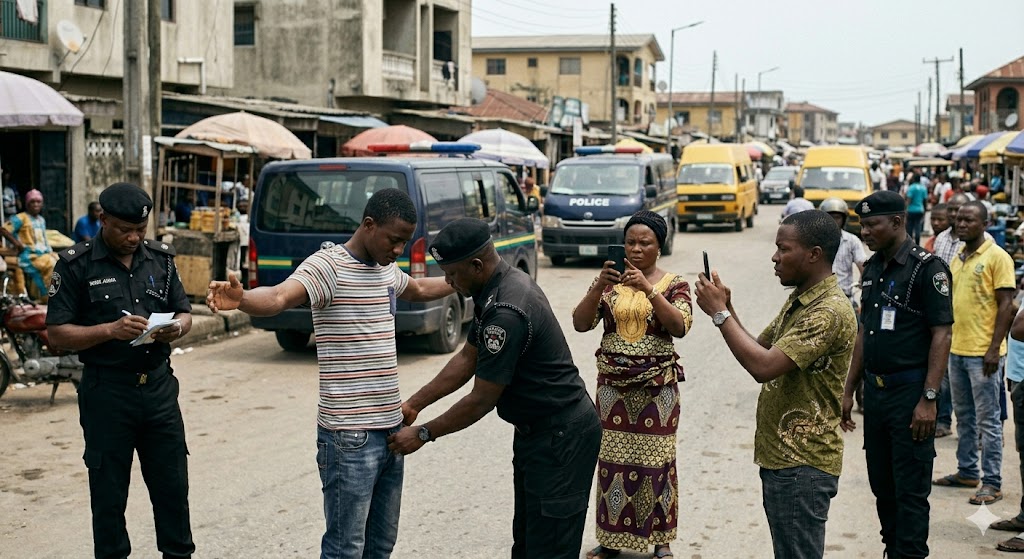
The constitutional right of Nigerians to record police officers performing official duties in public has sparked a broader conversation about transparency across public institutions, with many asking why similar recordings remain restricted in courtrooms, judges’ chambers and some government offices.
The debate follows judicial pronouncements affirming that citizens may lawfully film police officers carrying out their duties in public places, provided such recordings do not obstruct law enforcement activities. Civil rights advocates have welcomed the decisions as a significant step toward strengthening accountability and protecting citizens from abuse.
The legal basis for recording police officers stems from Section 39 of the 1999 Constitution of the Federal Republic of Nigeria (as amended), which guarantees freedom of expression and the right to receive and impart information. In addition, a Federal High Court in Warri held that police officers performing official duties in public cannot reasonably claim a right to privacy under Section 37 of the Constitution while carrying out their public responsibilities.
The ruling has, however, prompted fresh questions about why similar recordings are generally prohibited in courtrooms and other official government settings.
Legal experts say the distinction lies in the different constitutional and statutory principles governing law enforcement and judicial proceedings. While police officers perform their duties in public spaces where transparency promotes accountability, courts operate under rules designed to protect the fairness and integrity of the judicial process.
According to legal practitioners, unrestricted recording inside courtrooms could intimidate witnesses, discourage victims from testifying, influence public opinion before a verdict is reached and undermine the impartial administration of justice through what is often described as “trial by media.”
Judges also possess statutory powers to maintain order during proceedings, and unauthorized recording in court may constitute contempt of court if it violates the rules established by the presiding judge.
ALSO READ: Viral Debate Rekindles Tensions Over Citizens Recording Police Despite Court Ruling
Similarly, restrictions in judges’ chambers, government ministries and other public offices are often based on privacy considerations, security concerns and laws regulating access to sensitive or classified information. Certain government facilities are also subject to the Official Secrets Act and internal administrative regulations that prohibit unauthorized photography or video recording.
The differing legal standards have generated widespread discussion on social media, where many Nigerians argue that greater transparency should extend beyond policing to include other public institutions.
Supporters of expanded access contend that if video recordings have proven effective in exposing police misconduct and protecting citizens’ rights, allowing cameras in courtrooms, particularly during high-profile public interest cases, could further strengthen public confidence in the judiciary and reduce opportunities for corruption.
However, many lawyers and judicial observers caution against such an approach. They argue that unlike police encounters, which occur in open public spaces, courtrooms are controlled legal environments where proceedings are already documented through official transcripts and, in some cases, court-managed recording systems. They insist that unrestricted filming could compromise the rights of litigants, witnesses and victims while disrupting the orderly conduct of trials.
The debate highlights the growing challenge of balancing transparency with privacy, security and the administration of justice in an era where smartphones have made recording public officials easier than ever.
While the courts have affirmed Nigerians’ right to record police officers performing public duties, legal experts maintain that the same principle does not automatically extend to judges, court proceedings or sensitive government offices, where separate legal rules and institutional safeguards continue to apply.
As technology continues to reshape public oversight of government institutions, calls are growing for clearer guidelines that balance citizens’ right to information with the need to preserve judicial independence, fair trial rights and national security.


-

 Business1 week ago
Dangote Refinery IPO: 70% Subscription claim meets fourfold demand assertion as investors seek clarity
-
 Featured4 days ago
Inside INEC’s race to prepare for Nigeria’s 2027 elections
-

 Latest7 days ago
UCTH faces morgue crisis as 50 unclaimed corpses await mass burial
-
 Featured4 days ago
2027: APC unveils nationwide campaign timetable, Tinubu to rally in 12 states
-

 Business6 days ago
BREAKING: Nigeria’s Inflation Rate Drops to 14.63% in September
-
 Aviation1 week ago
Germany opens online application route for student, EU Blue Card and other long-stay visas
-

 Business6 days ago
President Tinubu and the Low Transport Fares Fiasco
-

 Business4 days ago
Court dismisses ₦170m Trade Fair contract claim, says Zenith Bank was not a party