
Business
Dakuku advocates African maritime sector development sustainability in Egypt

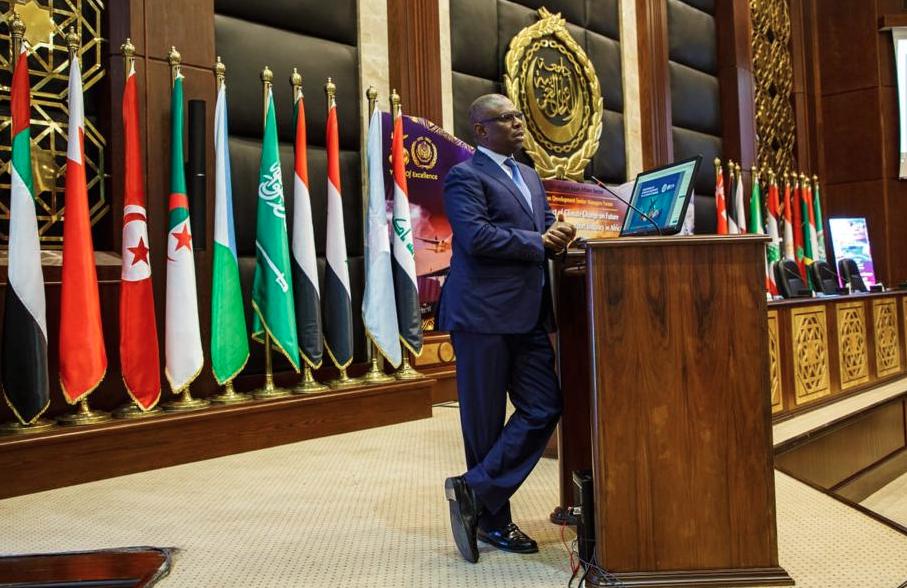
Turnaround expert and an independent maritime consultant, Dr Dakuku Peterside, says sustainable development of the African maritime sector is crucial to unlocking the potentials of the continent and making it a huge contributor to the world economy.
Peterside made this submission at the Agenda For African Development Senior Managers Forum on Environmental Management System in African Seaports at the Arab Academy for Science, Technology and Maritime Transport in Alexandria, Egypt.
Participants were drawn from 15 African countries, with funding from the Egyptian Agency of Partnership for Development (EAPD).
READ ALSO: African University invites Dakuku to speak on Nigeria’s leadership role in Africa
Revealing statistics that Africa accounts for less than 3% of global trade and just about 15% intra-African trade compared to Europe (68%), Asia (58%), North America (48%), and Latin America (20%), he argued that African leaders under the auspices of African Union (AU) must quickly activate the African Continental Free Trade Area (AfCFTA) aimed at boosting intra African trade.
The immediate past DG/CEO of Nigerian Maritime Administration and Safety Agency (NIMASA) noted that with the United Nations Economic Commission for Africa (UNECA) estimating that AfCFTA could boost intra African trade by up to 33% and cut trade deficit by 51%, time was of essence in promoting trade.
According to him, “This increase in trade will lead to higher demand for maritime transport, create new market opportunities and spur investment in port infrastructure.”
While stressing that the maritime sector will play a key role, he argued that it would involve tackling issues such as strengthening governance, improving infrastructure, investment in human capital, and improving the operating environment.
READ ALSO: Dakuku Vs Wike: Setting the records straight
The former chairman of Association of African Maritime Administrations (AMAA) added further that for the maritime industry to play its role as facilitator of growth in the continent, there is the need to fast track its development and sustainability anchored on the environment, society and economy.
Peterside revealed that developing a sustainable African maritime industry entails concise policy and sustained commitment to implementation, governance structure, robust monitoring and enforcement regime, conducive operating environment, investment in technology, digitalization, automation and innovation, among others.
He summed up by saying that “achieving a sustainable African maritime industry requires a holistic approach and long-term commitment from governments, industry leaders, and society at large.
“It is a complex challenge but with collective effort and innovative solutions, such as an articulated road map, effective governance structure, digitalization, decarbonization, sustainable energy, environmental sustainability and international partnership; it is possible to minimize the negative impacts of maritime activities on the environment while fostering economic growth. These keys are interconnected and must be pursued collectively to unlock the full potential of a sustainable African maritime sector.”


-

 Featured7 days ago
Inside INEC’s race to prepare for Nigeria’s 2027 elections
-
 Featured7 days ago
2027: APC unveils nationwide campaign timetable, Tinubu to rally in 12 states
-

 Business4 days ago
Naira faces exchange rate gap as Dollar hits N1,380 on parallel market
-
 Business1 week ago
Court dismisses ₦170m Trade Fair contract claim, says Zenith Bank was not a party
-

 Latest7 days ago
Breaking: NNPCL raises petrol price to ₦1,405 per litre amid discount controversy
-

 Featured1 week ago
From kitchen to Supreme Court: Nigerian’s fight over alleged support for terrorists
-

 Football1 week ago
Maresca reveals Guardiola’s reaction to Man City’s 4-2 defeat to PSG
-
 Business6 days ago
NCC launches Internet Governance Working Group to tackle AI risks, boost online safety