
Energy
Dangote Refinery offers fresh hope for Nigeria’s industrial transformation

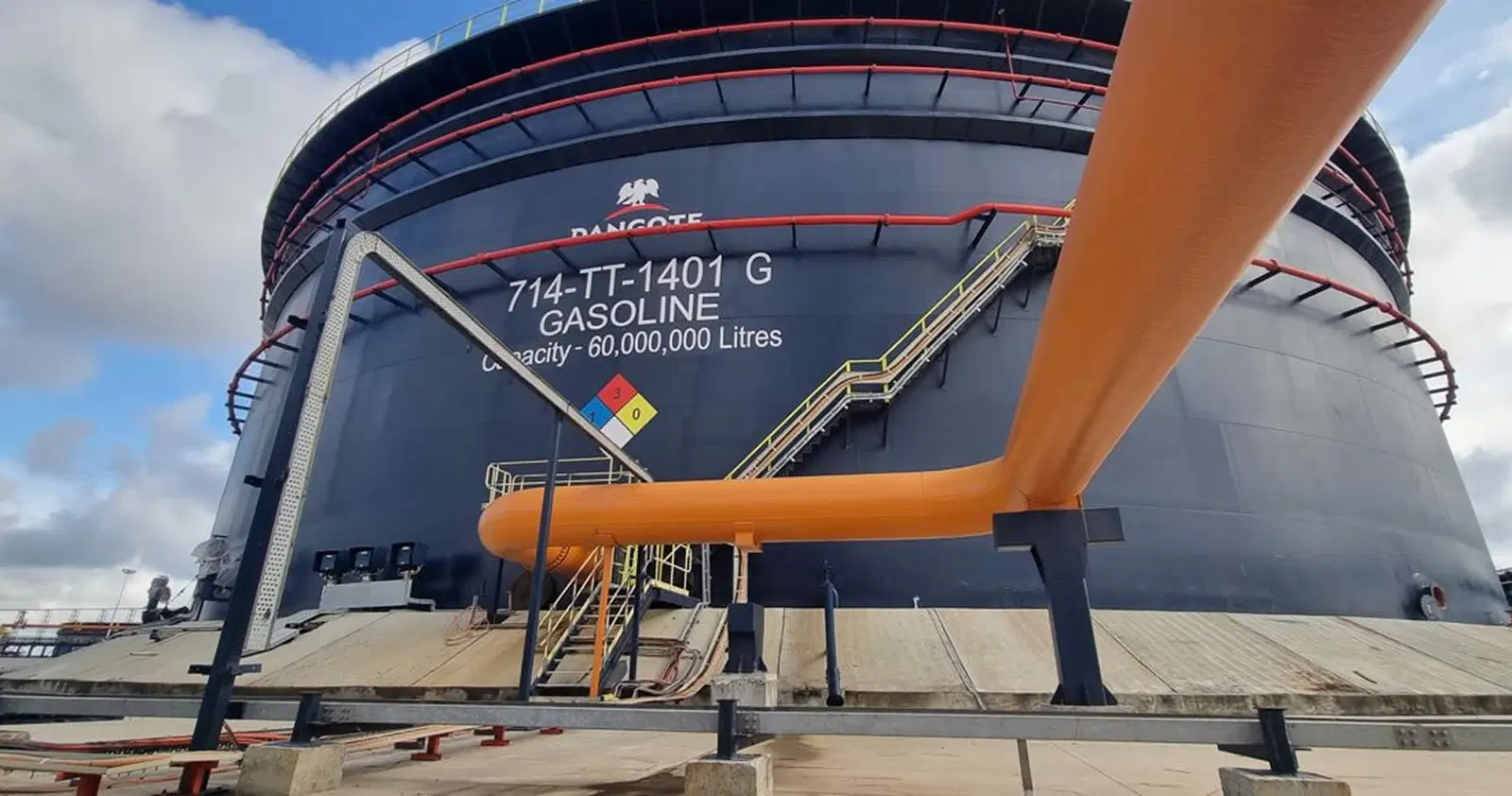
The Federal Government has identified the Dangote Petroleum Refinery as a key driver of Nigeria’s ambition to build a $1 trillion economy, citing its potential to reduce fuel imports, conserve foreign exchange and strengthen domestic industrialisation.
Speaking during a visit to the refinery, the Minister of State for Industry, Senator John Owan Enoh, described the facility as a strategic national asset capable of transforming Nigeria’s manufacturing and energy sectors.
“You cannot be Minister in charge of industry and not visit the Dangote Refinery. This facility matters because of what it represents for Nigerian industry and for the realization of President Bola Tinubu’s vision of a one trillion-dollar economy,” the minister said.
The 650,000-barrel-per-day refinery, located in the Lekki Free Zone, Lagos, is expected to reduce Nigeria’s dependence on imported petroleum products by supplying refined fuel for domestic consumption while also exporting products such as diesel, aviation fuel and other refined petroleum products to regional and international markets.
Economic analysts say increased domestic refining could help reduce pressure on Nigeria’s foreign exchange reserves by lowering the country’s reliance on imported fuel, which has historically accounted for billions of dollars in annual import costs.
They also note that refining crude oil locally enables Nigeria to earn more value from its natural resources by exporting refined products rather than relying primarily on crude oil exports.
Beyond fuel production, the refinery is expected to support manufacturing through the supply of petrochemical products and create opportunities across logistics, maritime services, engineering and other sectors linked to the oil and gas value chain.
However, analysts say the long-term economic impact of the refinery will depend on several factors, including consistent crude oil supply, stable government policies and the refinery’s ability to sustain production at high capacity.
Industry experts also maintain that while the refinery represents a significant milestone for Nigeria’s energy sector, achieving the Federal Government’s $1 trillion economy target will require broader reforms across agriculture, manufacturing, infrastructure, technology and other productive sectors.
The Federal Government has repeatedly stated that expanding domestic refining capacity forms part of its strategy to improve energy security, strengthen industrial development and promote sustainable economic growth.


-
 Latest6 days ago
Israel marks 3 years since October 7 Hamas attack amid Gaza strikes, election debate
-

 Energy6 days ago
Fuel Battle: Dangote, marketers and government clash over petrol imports
-
 Energy1 week ago
Petrol, diesel prices rise 86% in 2026 as costs hit fresh highs
-

 Football7 days ago
Nigeria’s World Cup exit under spotlight as FIFA’s DR Congo files emerge
-
 Energy1 week ago
Has Iran lost control of the Strait of Hormuz? Oil flows rebound as war disruptions persist
-

 Latest7 days ago
US Court set to rule on release of FBI, DEA records on Tinubu
-

 Latest17 hours ago
Full List: Meet the 2026 Nobel Prize winners across six categories
-

 Business7 days ago
Nigerian investors at a crossroads as fixed-income yields slide