
Featured
Economic Reality vs Party Machinery: What will drive Nigeria’s 2027 election?

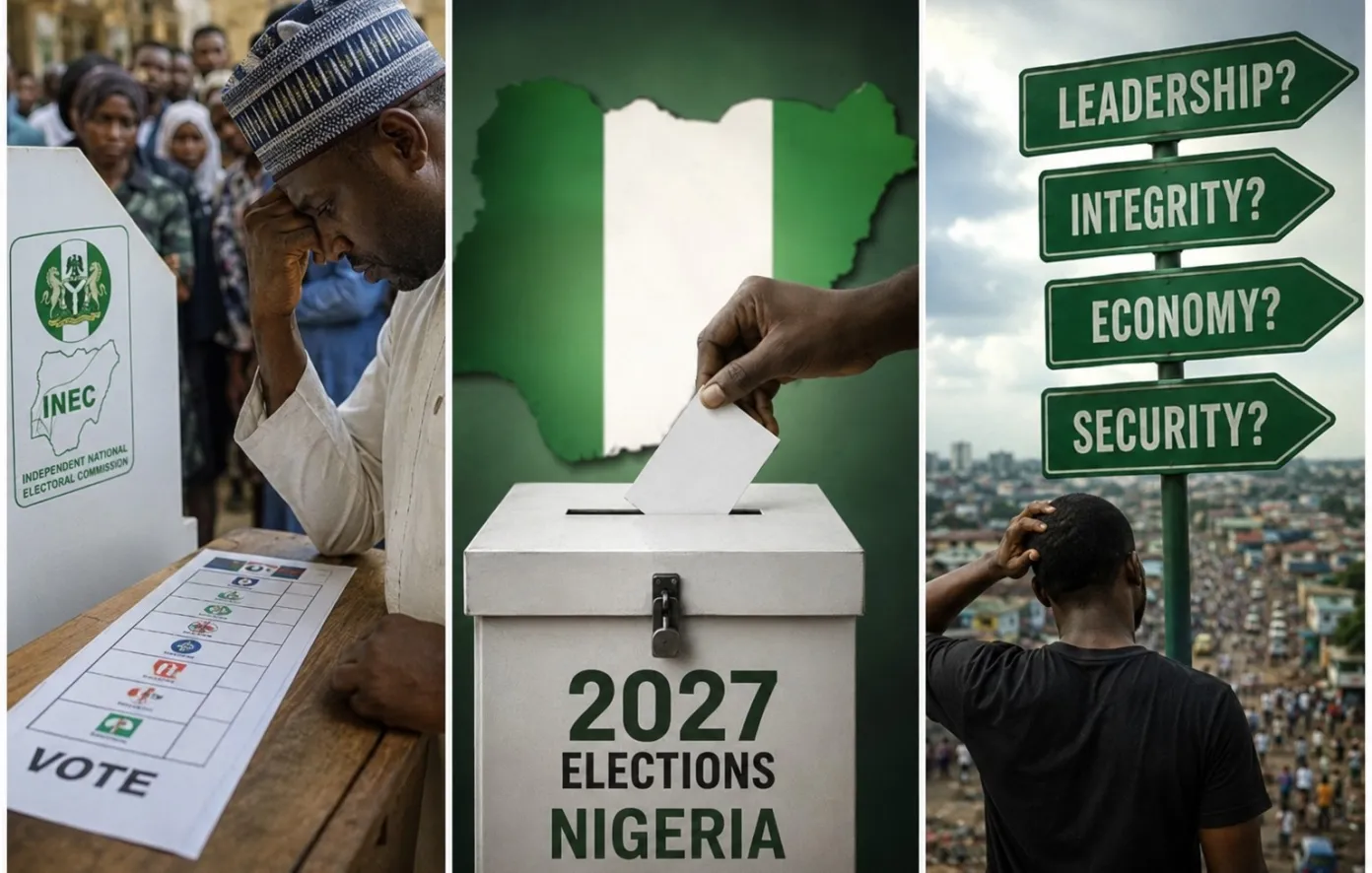
As Nigeria moves closer to the 2027 general elections, economic hardship, political realignments and the strength of party structures are emerging as major factors that could shape voters’ choices at the ballot box.
The central question is whether Nigerians will primarily vote based on their economic experiences, including food prices, employment, transport costs and purchasing power or whether traditional political loyalties, regional considerations and party machinery will continue to determine electoral outcomes.
Recent assessments by civil society organisations point to both factors playing important roles. The Centre for Democracy and Development (CDD-West Africa) has identified economic hardship, inflation, unemployment and declining purchasing power as significant issues influencing voter behaviour, while also highlighting concerns around vote-buying, voter apathy and the strength of political structures.
For millions of Nigerians, the state of the economy is expected to remain a major consideration as the 2027 contest approaches.
Rising living costs, food prices, energy expenses, unemployment and pressure on household incomes have increasingly dominated public discussions about the performance of government.
CDD-West Africa noted that economic hardship could increase voters’ vulnerability to inducements while also influencing how citizens assess political parties and candidates.
Young voters, urban professionals, small-business owners and informal-sector operators could therefore place greater emphasis on issues such as job creation, business conditions, access to credit, electricity costs and inflation when deciding whom to support.
The economic argument is particularly significant because the 2027 election will provide voters with an opportunity to assess the impact of the reforms introduced by President Bola Tinubu’s administration.
However, economic dissatisfaction alone may not determine the outcome.
Nigeria’s electoral history shows that party organisation, political alliances, regional networks and access to grassroots structures can play a decisive role in translating voter sentiment into actual electoral victories.
The Centre for Democracy and Development has warned that Nigeria’s political landscape is becoming increasingly shaped by concentrated political power, identity politics, money and control of state structures.
International IDEA has similarly raised concerns about political realignments, weakening opposition parties and the possibility of reduced electoral competition ahead of 2027.
This makes the strength of party structures particularly important. A candidate may enjoy significant popularity among voters but still face challenges converting that support into votes across the country’s numerous electoral constituencies without a strong grassroots organisation.
The ability of opposition parties and political figures to consolidate their support could also determine whether dissatisfaction with the government translates into a change in power.
Former Vice President Atiku Abubakar, Peter Obi and other opposition figures have remained central to discussions around building a stronger platform against the ruling All Progressives Congress.
Recent political analysis has suggested that opposition disunity could limit the ability of opposition parties to turn widespread public frustration into an effective electoral challenge.
The ruling APC, meanwhile, has continued to strengthen its political footprint across the country, giving it access to an extensive network of governors, lawmakers and grassroots party structures.
Nigeria’s presidential election system also makes nationwide reach essential.
Under Section 134 of the Constitution, a presidential candidate must secure the highest number of votes and at least 25 per cent of votes in two-thirds of Nigeria’s states and the Federal Capital Territory.
As a result, simply dominating one region or enjoying overwhelming support among a particular demographic is unlikely to be enough to secure the presidency.
Candidates must build broad coalitions that combine regional support, grassroots organisation and a national political message.
Economic hardship could also have another electoral consequence: greater vulnerability to vote-buying.
CDD-West Africa has identified vote-buying as one of the major threats to electoral integrity, noting that economic difficulties can make voters more susceptible to financial inducements.
Civil society organisation SERAP has also warned that the use of money and other inducements to influence voters threatens the integrity of the electoral process, particularly when citizens are experiencing severe economic pressure.
At the same time, declining confidence in the electoral process could discourage some voters from participating. International IDEA has highlighted concerns about voter disengagement, political defections, insecurity and declining trust in electoral institutions ahead of 2027.
The 2027 election could therefore become a contest between two powerful forces: economic performance and political organisation.
If voters believe that economic conditions have improved sufficiently, the ruling party could benefit from a performance-based argument. If hardship remains widespread, opposition parties may seek to turn economic frustration into an electoral mandate.
But economic dissatisfaction will only translate into political change if opposition candidates can build the alliances, structures and geographic reach required to win a presidential election.
Ultimately, the deciding factor may not be whether Nigerians are unhappy or satisfied with the economy alone, but which political camp can most effectively convert those sentiments into votes across Nigeria’s diverse political landscape.
With the 2027 election approaching, the battle is already moving beyond policy arguments to questions of organisation, voter mobilisation, political alliances and public confidence in the electoral process.


-
 Featured6 days ago
Inside INEC’s race to prepare for Nigeria’s 2027 elections
-
 Latest1 week ago
Global excitement builds as Healing Streams Live Services returns October 23
-
 Featured6 days ago
2027: APC unveils nationwide campaign timetable, Tinubu to rally in 12 states
-
 Business1 week ago
President Tinubu and the Low Transport Fares Fiasco
-
 Business4 days ago
Naira faces exchange rate gap as Dollar hits N1,380 on parallel market
-
 Business6 days ago
Court dismisses ₦170m Trade Fair contract claim, says Zenith Bank was not a party
-
 Latest6 days ago
Breaking: NNPCL raises petrol price to ₦1,405 per litre amid discount controversy
-

 Business1 week ago
Rite Foods targets beverage market growth with LIDA Malt