
Football
English football braces for major rule changes in 2026-27 season

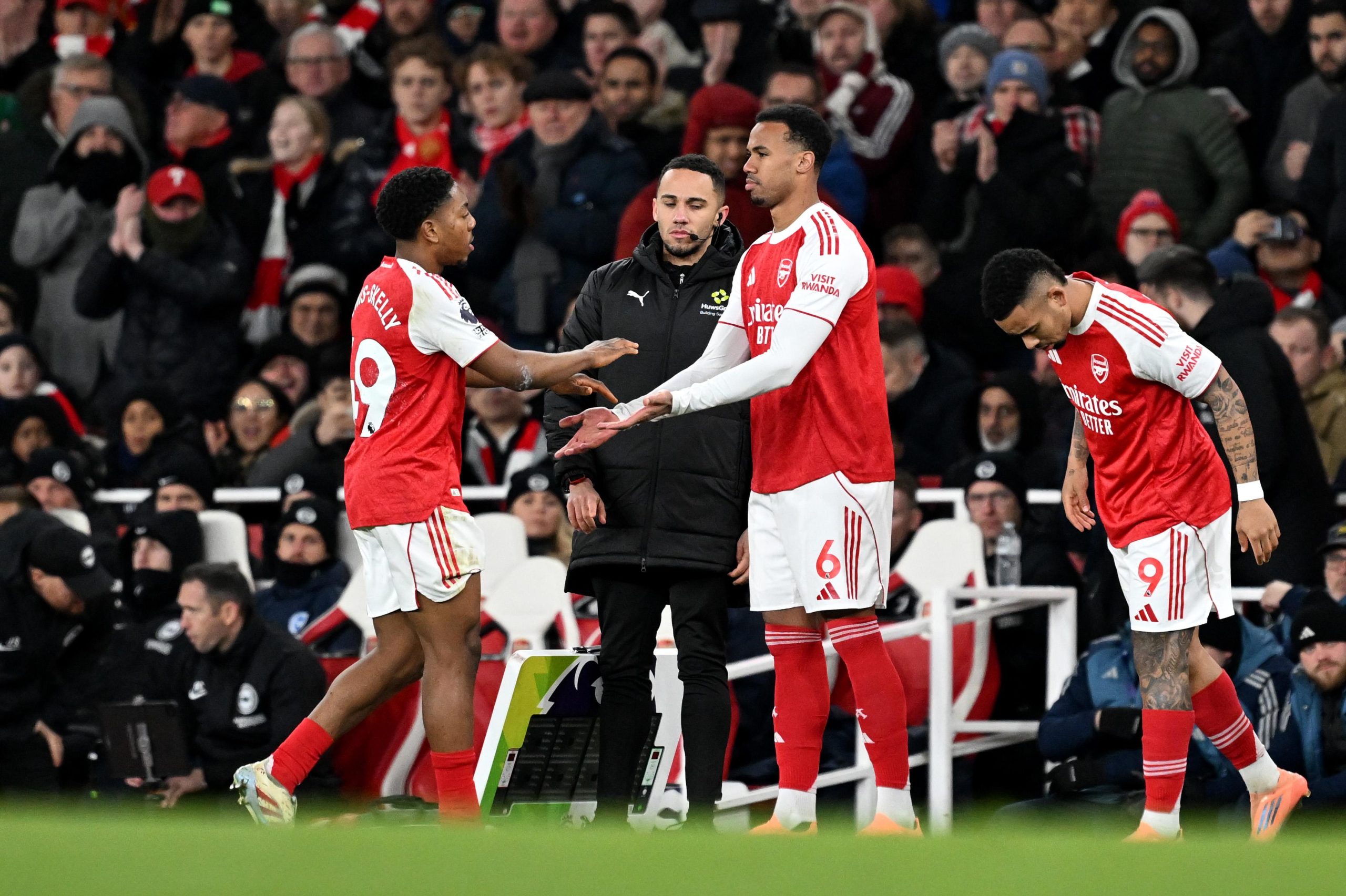
The 2026-27 football season will usher in one of the most extensive changes to the Laws of the Game in recent years, with a series of new rules aimed primarily at reducing time-wasting, limiting disruptions and increasing the amount of time the ball remains in play.
The changes, many of which were first introduced during the FIFA World Cup, will now be implemented across English football, beginning with the EFL season, the Community Shield between Arsenal and Manchester City, the Premier League and grassroots competitions, although VAR-related changes will only apply in competitions where video technology is used.
Football authorities say the objective is to eliminate the frustrating delays that often interrupt matches without simply compensating by adding excessive stoppage time.
Statistics from recent major tournaments suggest the approach has already had an impact. At the 2022 World Cup in Qatar, the ball was in play for an average of 58 minutes and three seconds, representing 56.86 per cent of total match time. During the most recent World Cup, the average rose slightly to 58 minutes and 16 seconds, but with considerably less added time, the proportion of active play increased to 60.43 per cent.
Officials believe the new laws will encourage players to change their behaviour rather than relying on harsh punishments. However, teams accustomed to using delaying tactics to protect narrow leads could find the new regulations more challenging.
READ ALSO; Premier League begins 2026/27 season with record nine new managers
Five-second countdown for throw-ins
One of the most noticeable changes concerns throw-ins.
Players who deliberately delay restarting play will now face a visible five-second countdown from the referee. The timer will not begin immediately when the ball goes out of play, but once the referee believes a player is intentionally slowing the restart.
Tactics such as placing the ball on a cone or dropping it to a teammate could trigger the countdown.
The referee will blow the whistle to signal the start of the five seconds and make a visible arm movement while counting down. If the player fails to take the throw within the allotted time, possession will be awarded to the opposing team.
The rule does not apply to teams preparing long throw-ins, which are regarded as set-piece routines, although the countdown can begin once players have taken their positions.
Goalkeepers are also affected. Those who take excessive time over goal-kicks, particularly late in matches, could now concede a corner kick to the opposition instead.
Substituted players must leave quickly
Another major change introduces a strict time limit for players being substituted.
A player must leave the field within 10 seconds, using the nearest exit point.
Failure to do so means the replacement player cannot enter for at least one minute, leaving the team temporarily reduced to 10 men.
The rule was already tested in the opening round of the Carabao Cup, where Middlesbrough striker Will Lankshear became the first player penalised.
After scoring the goal that gave Middlesbrough a 1-0 lead against Wrexham, Lankshear slowly made his way off the pitch while applauding supporters. Despite his manager urging him to hurry, he exceeded the time limit and his replacement was forced to wait until the next stoppage.
“I didn’t know,” Lankshear admitted after the match.
There are exemptions where a player is injured or where security concerns make it unsafe to leave through the nearest point.
READ ALSO; Premier League final day: Five fixtures that could produce major upsets
Injured players face longer absence
The rules surrounding treatment for injured players have also been tightened.
Previously, players who received treatment on the pitch generally had to remain off the field for around 30 seconds. That period has now been increased to one minute.
Importantly, a player must leave the field if the referee stops play because of the injury, even if the player does not request treatment. Officials say the measure is intended to prevent players from deliberately interrupting the opposition’s momentum.
The rule does not apply if the ball naturally goes out of play while the player is down, such as for a throw-in or goal-kick.
Some observers have expressed concern that the one-minute absence could disadvantage players with genuine injuries, although several exceptions have been included.
For example, if the player responsible for the foul receives a yellow or red card, the injured player will not always be required to leave the field, reducing the possibility of tactical fouls leaving an opponent temporarily short-handed.
Crackdown on goalkeeper ‘tactical timeouts’
English football will also trial measures aimed at ending the increasingly common “goalkeeper tactical timeout.”
The tactic typically involves a goalkeeper going to ground and calling for treatment, allowing teammates to gather near the technical area while the manager delivers instructions or disrupts the opposition’s momentum.
Under the new trial, if a goalkeeper requests treatment, an outfield player selected by the coach must leave the field for one minute.
The team has 10 seconds to inform the fourth official which player will leave. If they fail to do so, the captain must make the decision.
Officials believe simply preventing players from gathering near the touchline would not be enough to eliminate the tactic.
Some other countries are testing a slightly different version, requiring the captain of the goalkeeper’s team to leave the field instead.
The rule will not apply where the goalkeeper has been fouled or is bleeding.
Clearer handball rule at goal-kicks
A new clarification is also expected to remove confusion surrounding short goal-kicks.
Modern teams frequently play the ball short inside the penalty area, but previous incidents have created uncertainty over when the goal-kick was officially considered to have been taken.
From this season, once the goalkeeper or another defender kicks the ball, the goal-kick will be deemed to have been taken.
Any subsequent handling of the ball by a defender inside the penalty area will result in a penalty. If the goalkeeper handles the ball after receiving it back from a teammate, an indirect free-kick will be awarded for a backpass offence.
The clarification is intended to create consistency following contrasting decisions in high-profile European matches involving Aston Villa and Arsenal.
VAR changes
Competitions using VAR will also see several adjustments, although they are more limited than those trialled at the World Cup.
VAR will now be permitted to review the second yellow card that results in a player’s dismissal, but only where there is a clear and obvious error in awarding the foul. It cannot be used to review every possible second booking based on a difference of opinion over the caution itself.


-

 Business1 week ago
Dangote Refinery IPO: 70% Subscription claim meets fourfold demand assertion as investors seek clarity
-

 Featured4 days ago
Inside INEC’s race to prepare for Nigeria’s 2027 elections
-

 Latest7 days ago
UCTH faces morgue crisis as 50 unclaimed corpses await mass burial
-

 Featured4 days ago
2027: APC unveils nationwide campaign timetable, Tinubu to rally in 12 states
-

 Business6 days ago
BREAKING: Nigeria’s Inflation Rate Drops to 14.63% in September
-

 Aviation1 week ago
Germany opens online application route for student, EU Blue Card and other long-stay visas
-

 Business5 days ago
President Tinubu and the Low Transport Fares Fiasco
-

 Business4 days ago
Court dismisses ₦170m Trade Fair contract claim, says Zenith Bank was not a party