
Latest
Fani-Kayode: 28 of 48 ministers are Christians, Nigeria not a Muslim country

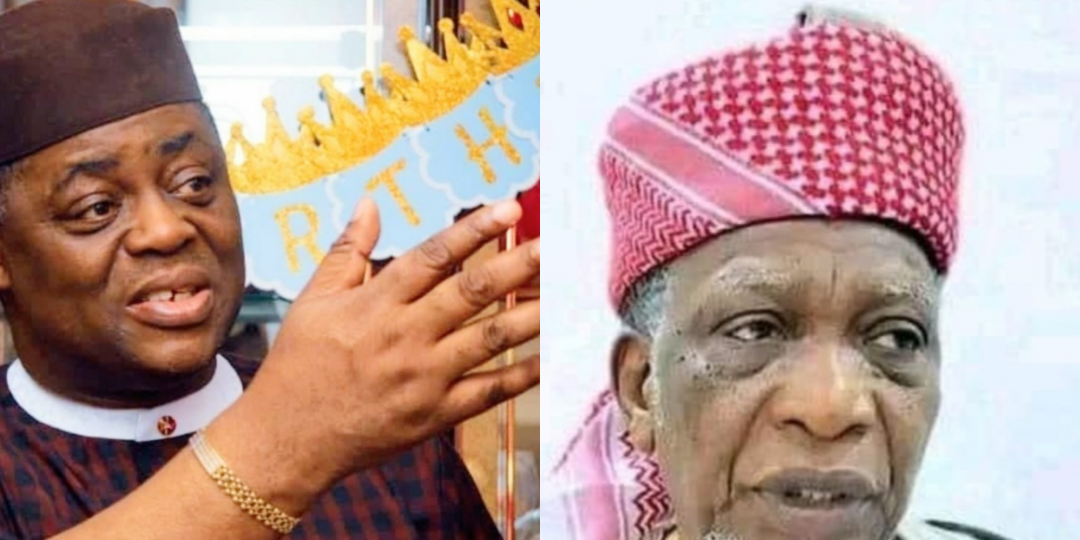
Former Minister of Aviation, Femi Fani-Kayode, has questioned claims that Nigeria is a Muslim country, pointing to what he described as the strong representation of Christians in key positions across the Federal Government and among state governors.
Fani-Kayode made the argument in a statement listing senior political, economic, security and administrative positions occupied by Christians under the current administration.
Among the offices he identified were the national chairmanship of the All Progressives Congress (APC), the Senate presidency, Secretary to the Government of the Federation, and the ministries of foreign affairs, defence, finance, works, aviation, power and communications.
He also listed the Ministers of Solid Minerals, Industry, Trade and Investment, and the Ministers of State for Petroleum Resources responsible for oil and gas.
In the security and financial sectors, Fani-Kayode identified the leadership of the Nigerian Revenue Service, Central Bank of Nigeria, Defence Headquarters, Nigerian Air Force, Nigeria Immigration Service, Defence Intelligence, Department of State Services (DSS), Economic and Financial Crimes Commission (EFCC) and Nigerian Correctional Service as positions occupied by Christians.
He further identified the Special Adviser to the President on Homeland Security as a Christian.
According to Fani-Kayode, 28 of the 48 cabinet ministers in the Federal Government are Christians, while 20 are Muslims. He also claimed that 20 of Nigeria’s 36 state governors are Christians, compared with 16 Muslims.
READ ALSO: Fani-Kayode tackles Baba-Ahmed over comment on Tinubu
However, the figures and religious classifications in Fani-Kayode’s list were presented as his own assessment and would require independent verification. Religious affiliation is also not an official criterion for holding most of the positions cited.
Fani-Kayode used the figures to challenge an assertion attributed to Sheikh Jinjir that Nigeria is a Muslim country and that Christians should leave.
“Does Sheikh Jinjir still believe that Nigeria is a Muslim country, that Christians are infidels and that we should leave?” Fani-Kayode asked.
His intervention comes against the backdrop of persistent debates over religious representation, political appointments and perceived imbalances in Nigeria’s federal structure.
Nigeria is constitutionally a secular state, with citizens guaranteed freedom of religion and the right to practise and change their faith. The country’s political landscape, however, remains deeply influenced by religious identity, particularly in debates over appointments, elections and regional power-sharing.
The composition of political appointments has repeatedly generated controversy, with competing groups accusing successive administrations of favouring particular religious or regional interests.
Fani-Kayode’s latest comments therefore extend a wider political argument over whether the distribution of power under the current administration reflects Nigeria’s religious diversity.
While his list highlights the number of Christians he says occupy influential positions, determining whether the government is religiously balanced requires independently verified data on the full composition of political and public appointments, rather than selected senior positions alone.
The controversy also underscores the sensitivity of religious rhetoric in Nigeria, where political disagreements framed along faith lines can heighten tensions in an already polarised political environment.


-
 Latest1 week ago
Full List: Meet the 2026 Nobel Prize winners across six categories
-

 Football1 week ago
Premier League Matchweek 7: Five Fixtures That Could Shape the Weekend
-

 Business6 days ago
Dangote Refinery IPO: 70% Subscription claim meets fourfold demand assertion as investors seek clarity
-

 Latest1 week ago
Umahi defends Lagos-Calabar highway route changes amid public outcry
-
Business7 days ago
Dangote Refinery IPO Extension: Was the 70% subscription report overhyped?
-
 Featured3 days ago
Inside INEC’s race to prepare for Nigeria’s 2027 elections
-

 Latest5 days ago
UCTH faces morgue crisis as 50 unclaimed corpses await mass burial
-

 Business5 days ago
BREAKING: Nigeria’s Inflation Rate Drops to 14.63% in September