
Business
FG borrows N11.9trn in two years, says subsidy removal averted higher debt

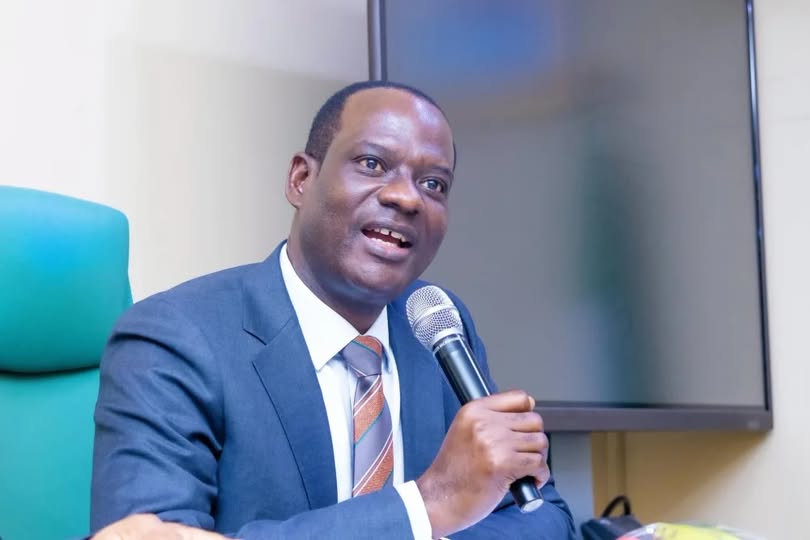
Nigeria’s Federal Government borrowed an additional N11.9 trillion between June 2023 and December 2025, even as the administration of President Bola Tinubu pursued reforms aimed at expanding government revenues and reducing the country’s dependence on borrowing.
The figure, disclosed by the Minister of Finance and Coordinating Minister of the Economy, Taiwo Oyedele, has raised fresh questions about whether the fiscal gains from the government’s economic reforms are translating into sufficient resources to reduce debt dependence and finance development.
Oyedele, while presenting the government’s reforms scorecard, said the N11.9 trillion additional borrowing would have been substantially higher without the fiscal space created by reforms including the removal of the petrol subsidy and foreign exchange liberalisation.
According to the minister, the Federal Government’s incremental resources from subsidy savings, independent revenues and additional borrowing amounted to N20.4 trillion during the period.
However, incremental expenditure by the Federal Government alone reached N30.64 trillion, leaving a substantial gap between additional resources and expenditure.
READ ALSO; ₦159tn Debt Burden: What Nigeria’s rising borrowing means for citizens
Of the additional expenditure, N9.39 trillion was spent on wage adjustments, minimum wage increases and allowances for public servants, according to Oyedele.
The figures raise a critical question: if the reforms generated additional fiscal space, why did the government still require almost N12 trillion in fresh borrowing within roughly two and a half years?
However, the minister stressed that the amount did not represent a separate cash transfer into the Federation Account.
Instead, he explained that the fiscal gains reflected the reduction in government expenditure associated with petrol subsidy payments, as well as higher naira-denominated revenues resulting from exchange-rate adjustments.
Of the N15.8 trillion estimated resources mobilised for the Federation, the Federal Government’s share was N5.4 trillion, while N10.4 trillion went to states and local governments through the Federation Account.
The government’s argument is that the N11.9 trillion borrowing should not be viewed in isolation because reforms created fiscal room that prevented the borrowing requirement from becoming significantly larger.
Oyedele said:“The additional borrowing taken for that period of time from June 2023 to December 2025 amounted to N11.9 trillion, a figure that would have been far higher and economically destabilising without the fiscal space the reforms created.”
READ ALSO; Nigeria’s debt trap deepens as domestic debt service hits N3.14trn in 3 months
But fiscal analysts say the more important question is not only how much the government borrowed but what the borrowed funds financed, how much debt service they generated and whether the expenditure created economic assets capable of producing future revenue.
This distinction is critical because borrowing can be sustainable when it finances productive infrastructure or investments that expand economic output and government revenues.
Borrowing becomes more problematic when it is used predominantly to finance recurrent expenditure, wages, debt service or other obligations that do not generate corresponding future cash flows.
Economists say the government’s presentation needs to distinguish between fiscal space created by expenditure cuts and sustainable revenue growth.
The removal of the petrol subsidy immediately reduced a major government expenditure burden. But subsidy savings do not automatically translate into additional cash available to the Federal Government because the Federation’s resources are distributed among the three tiers of government.
An economist analysing the reforms said the N15.8 trillion figure should therefore not be interpreted as money that could simply be spent by the Federal Government.
“The critical issue is what happened to the savings after they were created. If the savings were largely absorbed by higher statutory transfers, wages and debt obligations, then the reform has improved the fiscal position without necessarily creating the investment capacity Nigerians expected,” the analyst said.
The expert added that the sustainability of the reform would ultimately depend on whether the government can convert temporary fiscal gains into higher productivity, stronger domestic production, broader tax revenues and lower debt dependence.
A weaker naira can increase the domestic-currency value of dollar revenues while simultaneously raising the cost of imported goods, infrastructure inputs, debt obligations and other foreign-exchange-dependent expenditure.
Earlier this year, Tinubu said the subsidy removal saved Nigeria from imminent bankruptcy and helped establish the foundation for economic recovery.
For millions of households, the fiscal savings have been accompanied by significantly higher living costs, creating a difficult policy trade-off between macroeconomic stabilisation and household welfare.
The N11.9 trillion borrowing figure becomes more significant when viewed against Nigeria’s broader fiscal structure.


-

 Business1 week ago
Dangote Refinery IPO: 70% Subscription claim meets fourfold demand assertion as investors seek clarity
-
 Featured4 days ago
Inside INEC’s race to prepare for Nigeria’s 2027 elections
-

 Latest6 days ago
UCTH faces morgue crisis as 50 unclaimed corpses await mass burial
-
 Featured4 days ago
2027: APC unveils nationwide campaign timetable, Tinubu to rally in 12 states
-

 Business6 days ago
BREAKING: Nigeria’s Inflation Rate Drops to 14.63% in September
-

 Aviation1 week ago
Germany opens online application route for student, EU Blue Card and other long-stay visas
-

 Business5 days ago
President Tinubu and the Low Transport Fares Fiasco
-

 Business4 days ago
Court dismisses ₦170m Trade Fair contract claim, says Zenith Bank was not a party