
Crime
Miners Death: Independent probe begins as calls for justice grow

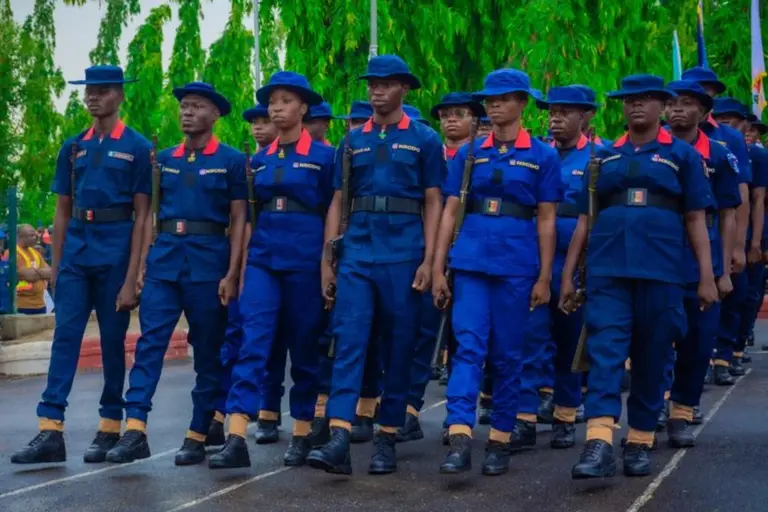
An independent investigation has begun into the deaths of 37 suspected illegal miners who died while in the custody of the Nigeria Security and Civil Defence Corps (NSCDC) in Minna, Niger State, amid demands from families, lawyers and civil society groups for accountability and justice.
The 37 detainees died on September 17, 2026, after they were arrested during operations targeting suspected illegal mining activities in the state. The precise cause and circumstances of the deaths have not yet been conclusively established.
The incident has generated widespread concern over detention conditions, the treatment of suspects and the responsibility of security agencies for people held in their custody.
Following President Bola Tinubu’s directive for a comprehensive investigation, the Minister of Interior, Olubunmi Tunji-Ojo, inaugurated a 10-member Independent Investigative Committee on September 22.
The committee is chaired by retired Deputy Director-General of the Department of State Services, Jonathan Kure, while former Director-General of the Nigerian Law School, Professor Isa Hayatu Chiroma, serves as secretary.
Its mandate includes establishing the identities of the deceased, determining the immediate and remote causes of death, examining the circumstances surrounding their arrest and detention, and determining whether there was negligence, misconduct or other wrongdoing by officials.
The committee has also been directed to investigate whether the detainees were subjected to torture or inhumane treatment or denied necessary medical attention. It has two weeks to complete its assignment and submit its report to the Interior Minister.
The minister warned that anyone who attempts to destroy or conceal evidence, intimidate witnesses or obstruct the investigation would face consequences.
The committee has already commenced its work.
According to the panel’s secretary, its medical team began examining the circumstances surrounding the deaths, with the aim of establishing their cause, mechanism and manner.
Investigators are expected to visit relevant locations, examine available records and other evidence, and interview survivors, suspects, families, security personnel, medical workers and other people with information relevant to the case.
The committee has also said it will invite memoranda from individuals and organisations with information that could assist the investigation.
The NSCDC Commandant-General, Ahmed Abubakar Audi, has pledged the Corps’ cooperation with the investigation.
Audi also visited the Emir of Minna and families of the deceased, assuring them that the Corps would not protect any personnel found culpable. Relevant NSCDC personnel have been placed in protective custody to ensure their availability for questioning.
The circumstances surrounding the deaths remain a central focus of the investigation.
Initial accounts from authorities differed from accounts provided by survivors and relatives.
The NSCDC initially raised the possibility of a disease outbreak, while other accounts pointed to overcrowding and inadequate conditions inside the detention facility.
The Associated Press reported that 67 people were held in a single cell and that families and survivors alleged that some detainees were beaten and denied adequate food, water and medical attention. These allegations remain subject to investigation.
A survivor interviewed by AP alleged that detainees were beaten and repeatedly pleaded for water and food.
The investigation is expected to establish whether such allegations occurred and, if so, whether they contributed to the deaths.
Until the panel completes its work, claims about the precise cause of death should be treated as allegations rather than established findings.
The Federal Government ordered the suspension of officers connected with the incident pending the outcome of the investigation.
The State House said the minister directed the suspension of officers involved in the incident and released the names of 20 personnel, in addition to the Niger State Commandant, who were suspended.
The NSCDC subsequently said personnel linked to the incident were being held at its national headquarters in Abuja for interrogation and administrative disciplinary proceedings.
The Corps has said officers found culpable will face appropriate disciplinary and legal action.
Suspension, however, does not establish criminal responsibility. Any individual liability will depend on the findings of the investigations and, where applicable, subsequent legal proceedings.
The federal investigation is not the only inquiry into the incident.
Niger State Governor Umaru Bago inaugurated a nine-member judicial Commission of Inquiry on September 23 to investigate the circumstances surrounding the deaths.
The commission, chaired by Justice Muhammad Muhammad of the Niger State High Court, has four weeks to complete its work.
Its terms of reference include examining the circumstances surrounding the arrests and detention of the victims, the conditions and treatment they experienced while in custody, and the medical and forensic evidence relating to their deaths.
The commission will also examine issues of responsibility and accountability and make recommendations based on its findings.
The state government has clarified that the commission’s mandate is primarily to establish the facts and make recommendations rather than impose administrative sanctions on NSCDC personnel.
The Niger State Police Command has separately commenced a forensic investigation.
The police took over the scene where the deaths occurred following a directive from Inspector-General of Police Olatunji Disu.
The State Criminal Investigation Department was directed to conduct preliminary forensic investigations, while officers secured the location to preserve evidence.
The existence of several investigations means evidence from medical examinations, forensic work, witness accounts and official records could be compared to establish a clearer account of what happened.
The deaths have prompted calls for an independent and transparent investigation from human rights groups, lawyers and civil society organisations.
The Nigerian Bar Association’s Minna branch established its own 13-member investigative committee following concerns over the conflicting accounts surrounding the deaths.
The NBA said the incident raised fundamental questions concerning the right to life, human dignity, personal liberty and fair hearing guaranteed by the Nigerian Constitution.
Civil society groups and lawyers in Niger State have similarly called for an independent investigation into the deaths and the treatment of detainees.
For affected families, the investigation is expected to answer not only how their relatives died but also why they were detained, the conditions in which they were held and whether any officials failed in their duty of care.
The investigation has also brought renewed attention to the obligations of security agencies towards people in custody.
Regardless of whether the deceased were ultimately found to have committed illegal mining offences, their detention placed them under the responsibility of the state.
The central questions therefore include whether the arrests and detention complied with the law, whether the facility met required standards, whether detainees received adequate food, water and medical attention, and whether officers followed established procedures.
The answers could have implications beyond the individual case if investigators identify systemic weaknesses in detention management.
The immediate focus is on the independent committee’s findings.
Investigators are expected to complete medical and forensic examinations, interview relevant witnesses and officials, inspect the detention facility and review documentary evidence.
The committee’s two-week reporting deadline means its findings could provide an early official account of the incident, although other investigations, including the Niger State judicial inquiry and police investigation, may continue separately.
The final determination of responsibility will depend on evidence gathered by the various investigative bodies.
For the families of the 37 deceased, however, the central demand remains straightforward: a credible explanation of what happened, accountability where wrongdoing is established and measures to prevent similar deaths in custody.
The outcome of the investigations will therefore be closely watched as Nigeria seeks to establish the facts surrounding one of the country’s most serious recent incidents involving deaths in security custody.


-

 Featured5 days ago
Inside INEC’s race to prepare for Nigeria’s 2027 elections
-

 Latest1 week ago
UCTH faces morgue crisis as 50 unclaimed corpses await mass burial
-

 Featured5 days ago
2027: APC unveils nationwide campaign timetable, Tinubu to rally in 12 states
-

 Business6 days ago
President Tinubu and the Low Transport Fares Fiasco
-

 Business1 week ago
BREAKING: Nigeria’s Inflation Rate Drops to 14.63% in September
-

 Business5 days ago
Court dismisses ₦170m Trade Fair contract claim, says Zenith Bank was not a party
-

 Business2 days ago
Naira faces exchange rate gap as Dollar hits N1,380 on parallel market
-

 Latest5 days ago
Breaking: NNPCL raises petrol price to ₦1,405 per litre amid discount controversy