
Crime
How illegal mining is driving environmental degradation, insecurity in Nigeria

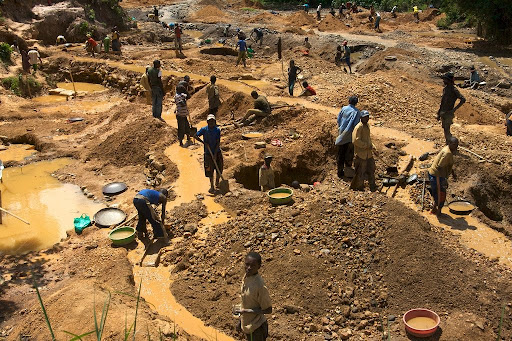
Security agencies, environmental experts and policy analysts have raised fresh concerns over the growing impact of illegal mining in Nigeria, warning that unregulated mineral extraction is not only devastating ecosystems but also providing a major source of funding for armed criminal groups.
Recent assessments by the Nigeria Security and Civil Defence Corps (NSCDC) and civil society organisations estimate that Nigeria loses more than $9 billion annually to illegal mining, mineral smuggling and unregulated extraction. Experts also estimate that nearly 80 per cent of mining activities in some mineral-rich areas of the North-West operate outside government regulation.
The development has transformed illegal mining from an economic and regulatory challenge into a national security concern, with experts linking illicit mining activities to banditry, arms trafficking and violent conflicts in several parts of the country.
Environmental experts say communities hosting illegal mining operations continue to bear the brunt of the crisis. The widespread use of hazardous chemicals such as mercury and lead in artisanal gold processing has polluted rivers, streams and underground water sources, exposing residents to serious health risks.
Large-scale excavation by illegal miners has also destroyed farmlands and forests, leaving behind abandoned pits that render land unsuitable for agriculture. The destruction of vegetation and topsoil has further contributed to erosion and declining agricultural productivity in affected communities.
Analysts warn that while illegal mining provides temporary income for many unemployed youths, it undermines long-term livelihoods by contaminating water sources used for farming and fishing, forcing many rural families to abandon their communities.
Beyond the environmental impact, security experts say illegal mining has become closely linked with the activities of armed groups operating in parts of the country.
According to intelligence reports, many bandit camps in states such as Zamfara are located close to illegal gold and lithium mining sites. Criminal groups are said to provide protection for illegal mining operations, while proceeds from the sale of raw minerals are allegedly used to acquire weapons and other logistics through cross-border smuggling networks.
Experts say this illicit trade has created a cycle in which Nigeria’s mineral resources are used to finance criminal activities, including kidnappings, attacks on rural communities and other violent crimes.
In response, the Federal Ministry of Solid Minerals Development has intensified enforcement through its Mining Marshals, a specialised unit established to combat illegal mining.
Authorities say the task force has arrested more than 300 local and foreign suspects and recovered nearly 100 illegal mining sites during recent operations.
Commander of the Mining Marshals, Attah John Onoja, described illegal mining as a major national security challenge requiring coordinated intelligence-led enforcement.
“Illegal mining is no longer just an economic crime. It has grown into a major national security threat that requires intelligence-driven and coordinated enforcement,” he said.
Despite the increased enforcement, policy experts argue that arrests alone will not solve the problem. They say weak regulatory oversight, limited government presence in remote mining communities and inadequate monitoring systems continue to create opportunities for illegal operators.
Analysts have called on the government to strengthen regulation of the mining sector by formalising artisanal miners into licensed cooperatives, improving digital monitoring of mineral production and exports, and enforcing environmental restoration laws.
They also stressed the need to dismantle the financial and criminal networks behind illegal mining, warning that unless the organisers and financiers of the illicit trade are brought to justice, Nigeria’s mineral wealth will continue to fuel insecurity instead of driving economic development.


-

 Football1 week ago
Premier League Matchweek 7: Five Fixtures That Could Shape the Weekend
-
 Business6 days ago
Dangote Refinery IPO: 70% Subscription claim meets fourfold demand assertion as investors seek clarity
-

 Latest1 week ago
Umahi defends Lagos-Calabar highway route changes amid public outcry
-
Business1 week ago
Dangote Refinery IPO Extension: Was the 70% subscription report overhyped?
-

 Featured3 days ago
Inside INEC’s race to prepare for Nigeria’s 2027 elections
-

 Latest5 days ago
UCTH faces morgue crisis as 50 unclaimed corpses await mass burial
-

 Business5 days ago
BREAKING: Nigeria’s Inflation Rate Drops to 14.63% in September
-

 Featured1 week ago
El-Rufai, ADC governorship candidate’s court appearance puts Kaduna opposition politics in focus