
Latest
HURIWA wants NASS intervention on MultiChoice over monopoly, others

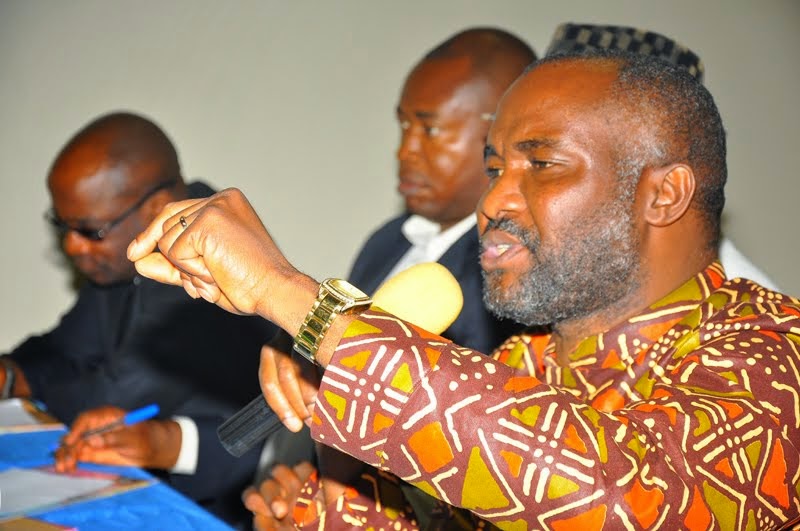
Civil rights advocacy group, Human Rights Writers Association of Nigeria, on Monday, asked the National Assembly to clamp down on the monopoly of South African digital satellite television, MultiChoice.
HURIWA, in a statement by its National Coordinator, Emmanuel Onwubiko, condemned the recent increase in the prices of the cable company’s DStv and GOtv packages in Nigeria.
The group also faulted MultiChoice’s obstinate refusal in charging Nigerians per view as done all over the globe including in South Africa, the parent country of the digital television.
It, therefore, urged the Minister of Information and Culture, Lai Mohammed, and concerned government agencies including the National Broadcasting Commission to compel MultiChoice to charge Nigerians per view or wield its big stick on the company for compliance failure.
READ ALSO: Enugu 2023: HURIWA raises alarm over Abuja political desperados
HURIWA further alleged that the South African company which has been operating in Nigeria for about three decades now has been clandestinely conniving with security agents including the Economic and Financial Crimes Commission to witch hunt indigenous Nigerian competitors who dare attempt to break the monopoly of MultiChoice.
The group said the arrest of arrested eight officials of pay television operators, Communication Trends Limited, JAO TV and Worldlink by the EFCC in November 2019 was still fresh in mind.
The EFCC had wrongfully arrested the operators over alleged broadcast the English Premier League matches and other content on their network, saying Multichoice Nigeria acquired the rights to broadcast the content, a claim that later turned out false.
HURIWA’s Onwubiko said, “The recent hike in prices of Multichoice’s DStv and GOtv packages in Nigeria is outrageous and should be reversed with immediate alacrity before the April 1, 2022 commencement date for the new price regime.
“It is no longer news that Multichoice has consistently exploited billions of dollars from Nigerians in the last three decades since its operations in Nigeria in 1993.
“The South African company has also used unfair competitive strategies to force indigenous Nigerian competitors to close shop. The case of cable television firm, Telcomm Satellite TV, is still fresh in mind.
“The Chief Executive Officer/Managing Director, TStv Africa, Bright Echefu, had said that the company which announced the commencement of its operations on November 1, 2017, faced severe battle from other operators in the industry. The company is nowhere to be found now because of Multichoice unfair tactics.
“Also, Multichoice has been allegedly colluding with the Economic and Financial Crimes Commission to arrest workers of indigenous Nigerian competitors including the officials of arrested Communication Trends Limited. This must be stopped.
“Why is it that only DStv currently broadcasts major football competitions in Nigeria, especially the English Premier League? Why hasn’t the Federal Government end the monopoly enjoyed by MultiChoice despite the many rhetoric’s of the government to protect indigenous Nigerian businesses?
“Even StarTimes, the cable arm of the Nigerian Television Authority, has been stifled due to Multichoice aggressive monopoly which the government and lawmakers tolerate. This must stop. Nigerians are entitled to jobs and should be allowed to flourish in their own country.”


-

 Latest1 week ago
Full List: Meet the 2026 Nobel Prize winners across six categories
-
 Football1 week ago
Premier League Matchweek 7: Five Fixtures That Could Shape the Weekend
-

 Business6 days ago
Dangote Refinery IPO: 70% Subscription claim meets fourfold demand assertion as investors seek clarity
-

 Latest6 days ago
Umahi defends Lagos-Calabar highway route changes amid public outcry
-
Business6 days ago
Dangote Refinery IPO Extension: Was the 70% subscription report overhyped?
-

 Latest5 days ago
UCTH faces morgue crisis as 50 unclaimed corpses await mass burial
-
 Featured2 days ago
Inside INEC’s race to prepare for Nigeria’s 2027 elections
-
 Business4 days ago
BREAKING: Nigeria’s Inflation Rate Drops to 14.63% in September