
Business
Importers face tough decisions as Naira value drops further

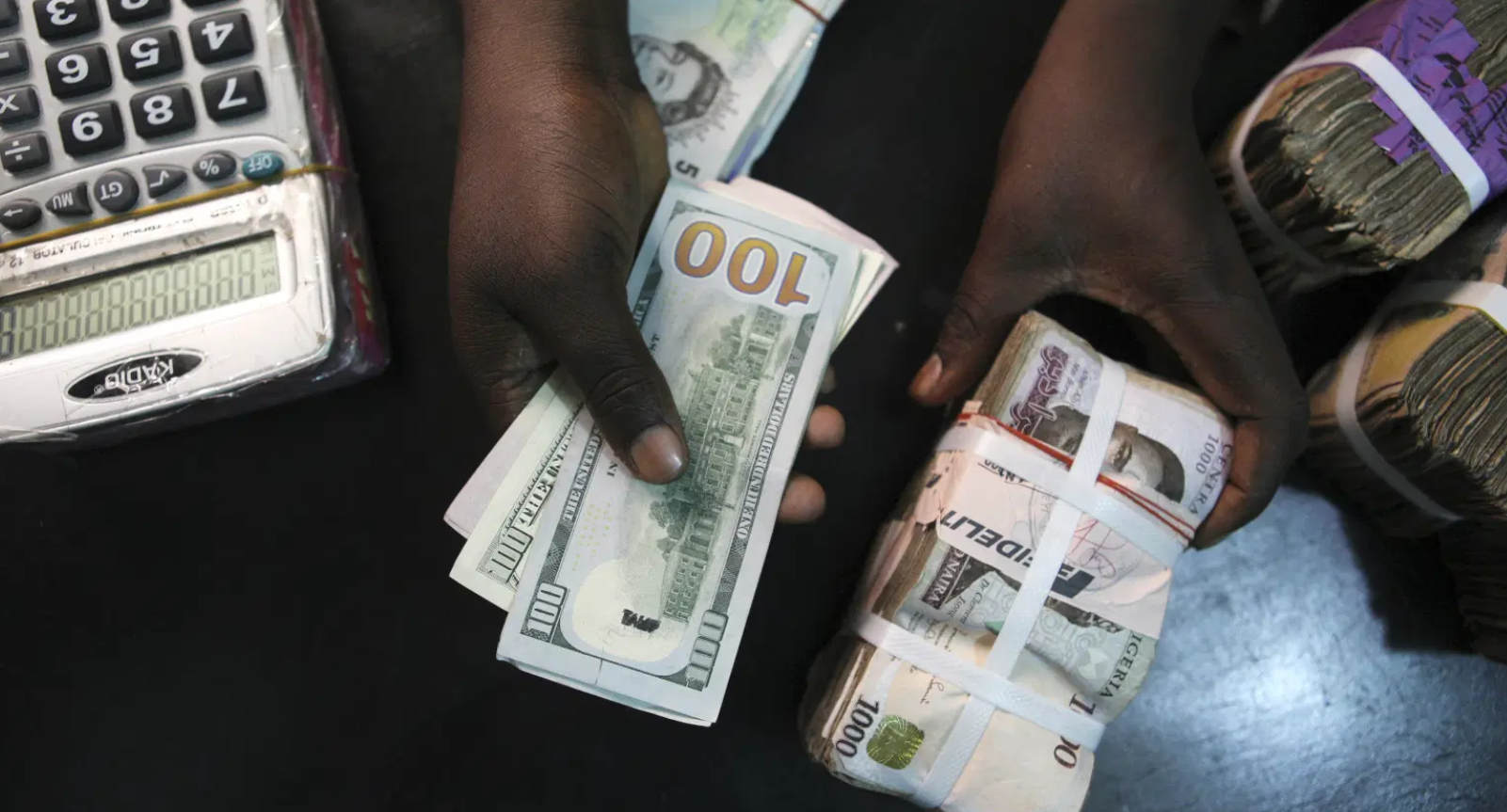
Nigerian importers face tough decisions as the Nigerian currency continues its poor performance to the US dollars at official exchange markets.
According to data from investors and exporters, the Naira closed at N415.75 to a dollar on Tuesday compared to the N415.33/$1 on Monday.
The performance of the Naira comes as participants transacted $165.30 million compared to the $95.07 million the previous day.
The increased demand for dollars in fact saw Naira fall to N444 to a dollar during the day’s trading.
READ ALSO: Naira suffers more devaluation against Dollar
Similarly, at the interbank market Naira depreciated further to N416.36/$ compared to N416.26/$.
The Naira also performed poorly against the Pound Sterling and the Euro at the same market segment yesterday. Against the British currency, the Naira closed at N561.91/£1 in contrast to N557.99/£1 at the previous session.
Naira also fell to the Euro closing at N469.40/€1, compared with the preceding day’s value of N464.25/€1. At the black market Naira remained at N570.
Meanwhile, Nigeria’s foreign exchange reserve recorded a $481.4 million decline in the month of January 2022 to close at $40.04 billion, following the $66.17 million decline recorded in the previous month.
This is according to data obtained from the Central Bank of Nigeria (CBN). Notably, foreign reserves fell by 1.2% in January 2022 compared to $40.52 billion recorded as of 31st December 2021.
READ ALSO: Why Naira may depreciate further in 2022 – Agusto
The decline in the country’s external reserve can be attributed to the continuous intervention by the Central Bank in the FX market to ensure stability of the currency. According to data from the CBN statistical bulletin for Q3 2021, the apex bank supplied a sum of $8.97 billion in the FX market through the I&E, SME, and invisible.
In the same vein, the bank supplied $1.42 billion through interbank, while $2.77 billion was channelled through BDC operators between January and June 2021, before the bank discontinued the sales of FX to them.
The Nigerian economy had endured an FX crunch in recent times, owing to the crash in crude oil prices in 2020 as a result of the covid-19 pandemic and the downtrend in foreign investment, hereby piling pressure on the supply of FX in the country.
According to data from the National Bureau of Statistics (NBS), capital imported to Nigeria declined by 47.6% year-on-year in 9-month 2021 to $4.52 billion compared to $8.61 billion recorded in the previous year, with foreign direct investment (FDI) only accounting for 7.55% of the total.
The inability of Nigeria to meet up with crude oil production quota has also been a major hindrance in boosting FX earnings despite the rally in the global market, with oil already trading at a record high of $90 per barrel, while Nigeria’s crude supply is still below target.


-

 Latest6 days ago
US Immigration fees rise from October 16 as USCIS announces new charges
-
 Latest1 day ago
Israel marks 3 years since October 7 Hamas attack amid Gaza strikes, election debate
-

 Business6 days ago
Nigeria’s $55bn reserves raise fresh questions over naira value
-

 Health5 days ago
Florida sues Pfizer over deceptive COVID-19 vaccine marketing
-

 Business1 week ago
Tuoyo Erikowa wins digital marketing personality of the Year at 2026 EDGE awards
-

 Crime5 days ago
From camp to captivity: How kidnappers now target NYSC Corps members on highways
-

 Featured6 days ago
2027: Can Nigeria’s opposition still unite behind a single presidential candidate?
-

 Crime5 days ago
Fulani Militia leader linked to Christian killings arrested in Plateau