
Business
Naira holds firm despite mild dip as external reserves cross $50bn

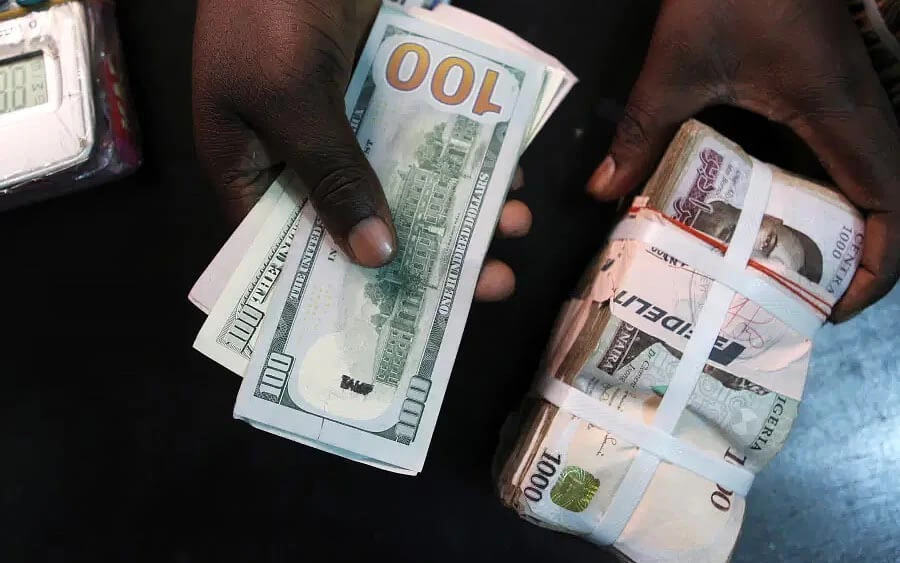
Nigeria’s currency recorded a slight depreciation against the United States dollar at the close of trading on Friday, ending a largely stable week in the foreign exchange market amid rising external reserves and sustained investor confidence.
Data published by the Central Bank of Nigeria showed that the naira settled at N1,365/$ in the official foreign exchange market, compared to N1,359.75/$ recorded on Thursday.
Although the local currency weakened marginally by N5.25 against the dollar, market analysts noted that the naira maintained a relatively strong position throughout the week, trading within a narrow range that reflected improved liquidity and reduced volatility in the foreign exchange market.
The currency opened the week at N1,366/$ on June 1 before appreciating to N1,360.22/$ on June 2. It traded at N1,360/$ on June 3 and strengthened further to N1,359.75/$ on June 4 before recording a slight decline at the close of trading on Friday.
Despite the modest setback, the naira remained stronger than levels recorded in the previous week when it traded at N1,377/$ on May 25, N1,374/$ on May 26 and N1,372/$ on May 29.
The relatively tight trading band suggests that recent policy interventions and market reforms are helping to reduce the sharp fluctuations that previously characterized Nigeria’s foreign exchange market.
Supporting the currency’s performance was another week of growth in Nigeria’s external reserves, which climbed above the $50 billion mark.
CBN data showed that the country’s reserves increased from $49.80 billion at the beginning of the week to approximately $50.04 billion by June 4, representing a gain of about $237.3 million within four days.
The reserves had earlier risen to $49.96 billion as of June 3, reflecting an increase of more than $155 million within 24 hours.
READ ALSO: Naira strengthens, breaks below N1,360/$ as external reserves near $50bn
The latest figures indicate a continued recovery after reserves declined from above $50.08 billion in March to $49.61 billion later that month.
Available data also showed that Nigeria’s gross external reserves expanded by about $1.22 billion during May 2026, underscoring improved foreign exchange inflows and stronger reserve accumulation.
Economists note that higher reserve levels strengthen the central bank’s capacity to intervene in the foreign exchange market when necessary, meet external obligations, and reassure investors about the country’s ability to manage currency pressures.
The stability observed in the foreign exchange market comes amid a series of reforms introduced by the Central Bank to improve transparency, deepen liquidity and restore investor confidence.
One of the recent measures was the introduction of the Fourth Edition of the Foreign Exchange Manual, which seeks to strengthen governance and operational efficiency within the market.
The revised framework also increased the allowable advance payment for imports from 15 percent to 30 percent, a move expected to facilitate trade transactions and improve businesses’ access to foreign exchange.
Market participants believe these reforms have contributed significantly to the gradual stabilization of the naira by improving market confidence and reducing uncertainty surrounding foreign exchange transactions.
Financial analysts say the naira’s recent stability reflects a combination of stronger reserve accumulation, improved market transparency, and growing confidence among foreign and domestic investors.
According to economic experts, the steady rise in external reserves provides an important buffer against external shocks and enhances the credibility of monetary authorities in managing exchange rate pressures.
Chief Executive Officer of the Centre for the Promotion of Private Enterprise (CPPE), Muda Yusuf, has consistently argued that reserve growth and improved forex liquidity are critical to sustaining exchange rate stability and reducing speculative demand for foreign currencies.
Other analysts note that the narrowing gap between official and parallel market rates has also helped improve confidence in the foreign exchange market, encouraging more transactions to flow through official channels.


-
 Latest7 days ago
Israel marks 3 years since October 7 Hamas attack amid Gaza strikes, election debate
-

 Energy6 days ago
Fuel Battle: Dangote, marketers and government clash over petrol imports
-

 Energy1 week ago
Petrol, diesel prices rise 86% in 2026 as costs hit fresh highs
-

 Football1 week ago
Nigeria’s World Cup exit under spotlight as FIFA’s DR Congo files emerge
-

 Latest1 day ago
Full List: Meet the 2026 Nobel Prize winners across six categories
-

 Latest1 week ago
US Court set to rule on release of FBI, DEA records on Tinubu
-

 Business1 week ago
Nigerian investors at a crossroads as fixed-income yields slide
-

 Latest1 week ago
Oyo APC crisis deepens as Oluyole reconciliation meeting ends in brawl