
Featured
Nigeria’s State Police Proposal: The key issues behind the constitutional reform

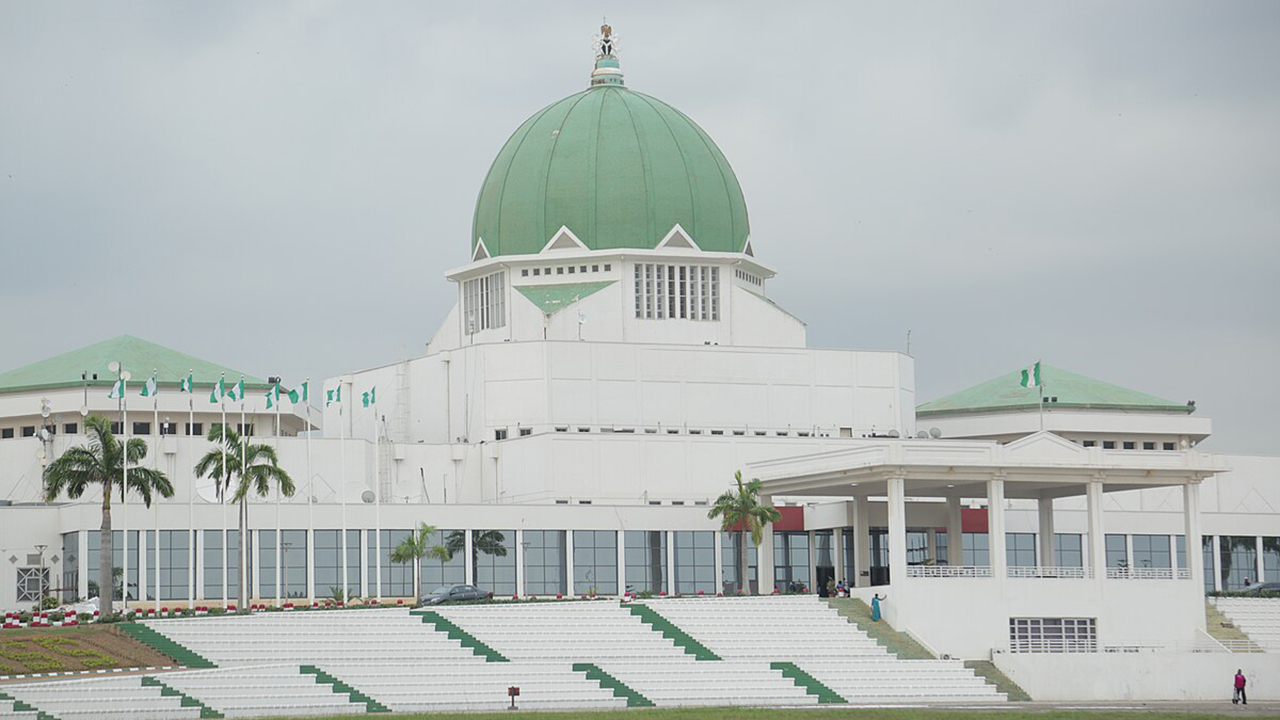
The proposed creation of state police in Nigeria is entering another important stage as the National Assembly and state Houses of Assembly consider constitutional changes that could fundamentally alter the country’s policing structure.
The reform seeks to introduce State Police Services alongside the existing Nigeria Police Force, giving states a greater role in preventing and responding to crimes within their territories.
The move has gained renewed attention amid persistent security challenges, including kidnapping, banditry, terrorism and other forms of violent crime.
However, the proposal has also generated questions about political interference, funding, recruitment, jurisdiction and mechanisms for holding state police officers accountable.
How the proposal reached the state assemblies
The National Assembly passed its version of the constitutional amendment earlier in 2026 and transmitted the State Police Bill to the 36 state Houses of Assembly for consideration.
The Senate approved the proposal on June 24, while the House of Representatives passed its version on July 23.
The bill was subsequently transmitted to the state legislatures in September as required under the constitutional amendment process.
The creation of state police requires support from the required number of state Houses of Assembly before the constitutional amendment can become law.
Several state legislatures have already begun considering the proposal.
Why supporters want state police
Supporters argue that Nigeria’s centralised policing structure is not sufficiently equipped to respond to security problems that vary significantly from one part of the country to another.
State-controlled police services, they argue, could improve local intelligence because officers would be closer to communities and potentially more familiar with local security conditions.
The proposal could also provide additional personnel and resources to complement the Federal Police Service rather than leaving the federal force responsible for virtually all conventional policing across the country.
President Bola Tinubu has supported the principle of state police but has repeatedly stressed the need for safeguards.
He has urged lawmakers to ensure that the reform does not create a system in which governors have unrestricted control over police operations.
The governor’s role
The question of political control is at the heart of the debate.
Under the proposed framework, each state would have a State Police Service and a State Police Service Commission.
The commission would have responsibilities relating to recruitment, discipline and other personnel matters.
A State Police Commander would lead the service.
The proposed appointment process would involve the governor, the National Police Council and the state House of Assembly, rather than giving the governor an entirely unilateral role.
The proposed framework also provides mechanisms through which a state police commander could challenge an instruction considered unlawful or inconsistent with policing standards.
The National Police Council would retain an important coordinating and oversight function.
These provisions are intended to create checks on political authority, although their effectiveness would ultimately depend on how the institutions operate in practice.
The funding challenge
Creating 36 additional police structures would have substantial financial implications.
States would need to provide money for salaries, recruitment, training, vehicles, communications equipment, offices, weapons, forensic facilities and other operational requirements.
The proposed framework provides for possible federal grants and financial assistance to state police services, subject to the required approval process.
That raises another question: how would poorer states sustain their police services if federal assistance is insufficient?
Nigeria’s states have significant differences in internally generated revenue and overall fiscal capacity. A funding model that works for a high-revenue state may therefore be difficult for states with much smaller budgets.
The question of whether state police should be financed primarily by states, the Federal Government or through a combination of sources remains an important part of the debate.
What about abuse?
Critics of state police have repeatedly warned that political actors could attempt to use the institution against opponents.
The concern is particularly significant during elections, when control of security agencies can become politically sensitive.
Supporters of the reform counter that appropriate institutional safeguards can reduce the risk.
The proposed State Police Service Commissions, National Police Council oversight, recruitment standards and mechanisms for challenging unlawful directives are among the safeguards being considered.
Lawmakers will also need to determine how citizens can report misconduct, how complaints against officers will be investigated and what independent bodies will have authority to impose sanctions.
Federal and state responsibilities
Another major issue is jurisdiction.
Nigeria would have both federal and state police services under the proposed arrangement. That creates the need for clearly defined responsibilities.
For example, crimes involving several states could require cooperation between different police commands. Terrorism, organised crime and offences with national security implications could also require federal involvement.
The proposed framework therefore seeks to maintain a Federal Police Service while creating state-level services rather than replacing the national force.
Effective information sharing and coordination would become essential if the two levels of policing are to operate without unnecessary duplication or jurisdictional disputes.
National policing standards
The Federal Government has also been working on a broader National Policing Bill intended to establish common standards for policing across the country.
The proposed framework covers issues including recruitment, vetting, training, welfare, pensions, equipment, firearms, custody, complaints, discipline, data management and financing.
The idea is that states would have greater policing responsibilities while still operating within national standards.
This could become particularly important in ensuring that citizens’ rights and policing procedures do not vary drastically from one state to another.
The constitutional process
The proposal is not yet the same as having state police in operation.
Because the reform requires a constitutional amendment, the National Assembly’s approval is only one stage of the process.
The required number of state Houses of Assembly must also approve the constitutional alteration before it can proceed to the next stage.
Even after constitutional approval, additional legislation and administrative preparations would be required before individual state police services could become operational.
States would need to establish their relevant institutions, develop budgets, recruit personnel and put training and operational systems in place.
What Nigerians should watch
The coming months will provide more clarity on whether the proposed reform can overcome its constitutional and political hurdles.
Among the most important issues to monitor are the final wording of the constitutional amendment, the funding formula, the powers of governors, the independence of State Police Service Commissions and the relationship between federal and state police commands.
The handling of elections will also be closely watched, given concerns about potential political interference.
Ultimately, the state police debate is no longer limited to the question of whether policing should be decentralised. It now involves determining how decentralisation can be structured so that state police services have sufficient resources and local capacity while remaining subject to effective legal and institutional oversight.
The decisions made by lawmakers and state assemblies will therefore shape not only whether state police becomes a reality, but also the institutional framework under which it would operate.


-
 Featured5 days ago
Inside INEC’s race to prepare for Nigeria’s 2027 elections
-

 Latest1 week ago
UCTH faces morgue crisis as 50 unclaimed corpses await mass burial
-
 Featured5 days ago
2027: APC unveils nationwide campaign timetable, Tinubu to rally in 12 states
-

 Business6 days ago
President Tinubu and the Low Transport Fares Fiasco
-

 Business1 week ago
BREAKING: Nigeria’s Inflation Rate Drops to 14.63% in September
-

 Business5 days ago
Court dismisses ₦170m Trade Fair contract claim, says Zenith Bank was not a party
-

 Business2 days ago
Naira faces exchange rate gap as Dollar hits N1,380 on parallel market
-

 Latest5 days ago
Breaking: NNPCL raises petrol price to ₦1,405 per litre amid discount controversy