
Business
Naira begins week stronger at official market amid volatility

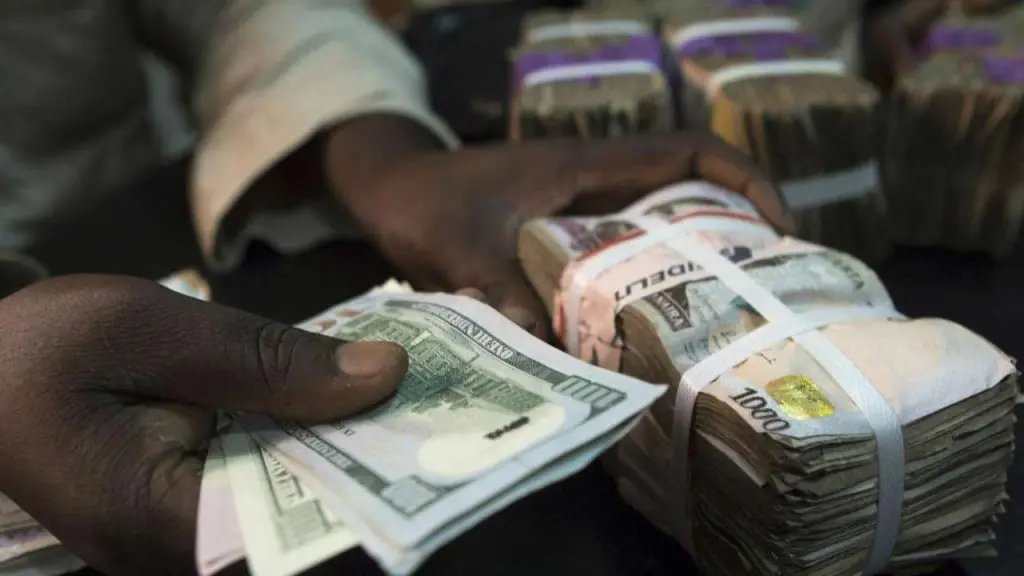
The Nigerian naira closed the week on a slightly stronger note against the U.S. dollar, appreciating to N1,599.01/$1 in the official foreign exchange market on Friday, according to data released by the Central Bank of Nigeria (CBN).
This marks a marginal improvement from Thursday’s close of N1,599.99/$1, suggesting a cautiously optimistic outlook for the local currency.
Intra-day trading on Friday revealed significant fluctuations, with the naira trading as high as N1,603.50/$1 and as low as N1,597.00/$1. Analysts say this reflects both ongoing market volatility and emerging signs of resilience in Nigeria’s managed float exchange system.
Throughout the week, the naira maintained relative stability in the official market: Monday: N1,597.70/$1; Tuesday: N1,599.75/$1; Wednesday: N1,596.01/$1; Thursday: N1,599.99/$1.
Conversely, the naira weakened slightly in the parallel market, a space often driven by higher retail demand and limited forex availability. At Wuse Zone 4 in Abuja, Bureau de Change operators reported the naira trading at N1,632/$1 on Friday, compared to N1,625/$1 the previous day.
The weekly trend in the parallel market was equally volatile: Monday: N1,633/$1; Tuesday: N1,635/$1; Wednesday: N1,625/$1; Thursday: N1,635/$1 and Friday: N1,628/$1
Analysts attribute the brief depreciation in the parallel market to a surge in dollar demand from importers and speculators, even as the CBN continues interventions aimed at stabilizing the foreign exchange environment.
In a positive economic development, Nigeria’s headline inflation rate eased to 23.71% in April 2025, down from 24.23% in March, according to the National Bureau of Statistics (NBS).
The 0.52 percentage point drop marks the first moderation in months, offering a modest boost to consumer sentiment amid rising living costs.
READ ALSO: Naira faces pressure amid Dollar resurgence, oil output growth offers hope
Further supporting the macroeconomic outlook, Nigeria’s external reserves recorded a notable rebound. Between April 30 and May 14, reserves increased by $364 million, rising from $37.934 billion to $38.298 billion—a 0.96% gain.
This marks the first sustained upward trend since reserves last peaked at $40.92 billion in early January.
Analysts credit the recovery to ongoing reforms by the CBN, including steps to liberalize the foreign exchange market, increase transparency, and improve market liquidity.
Attention now shifts to the Monetary Policy Committee (MPC) meeting scheduled for May 19–20, where policymakers are expected to reassess Nigeria’s monetary stance.
At its last meeting in February, the MPC held the Monetary Policy Rate (MPR) at 27.50%, balancing inflationary pressures with the need for economic stability.
With forex inflows improving and investor confidence cautiously returning, market watchers say the naira’s outlook will depend on the consistency of policy implementation, global commodity prices, and the country’s broader macroeconomic trajectory.


-

 Latest5 days ago
Full List: Meet the 2026 Nobel Prize winners across six categories
-

 Football5 days ago
Premier League Matchweek 7: Five Fixtures That Could Shape the Weekend
-

 Latest4 days ago
Umahi defends Lagos-Calabar highway route changes amid public outcry
-

 Business3 days ago
Dangote Refinery IPO: 70% Subscription claim meets fourfold demand assertion as investors seek clarity
-
Business4 days ago
Dangote Refinery IPO Extension: Was the 70% subscription report overhyped?
-

 Latest2 days ago
UCTH faces morgue crisis as 50 unclaimed corpses await mass burial
-

 Featured4 days ago
El-Rufai, ADC governorship candidate’s court appearance puts Kaduna opposition politics in focus
-

 Business2 days ago
BREAKING: Nigeria’s Inflation Rate Drops to 14.63% in September