
Business
Naira continues downward trend against Dollar amid rising inflation, economic challenges

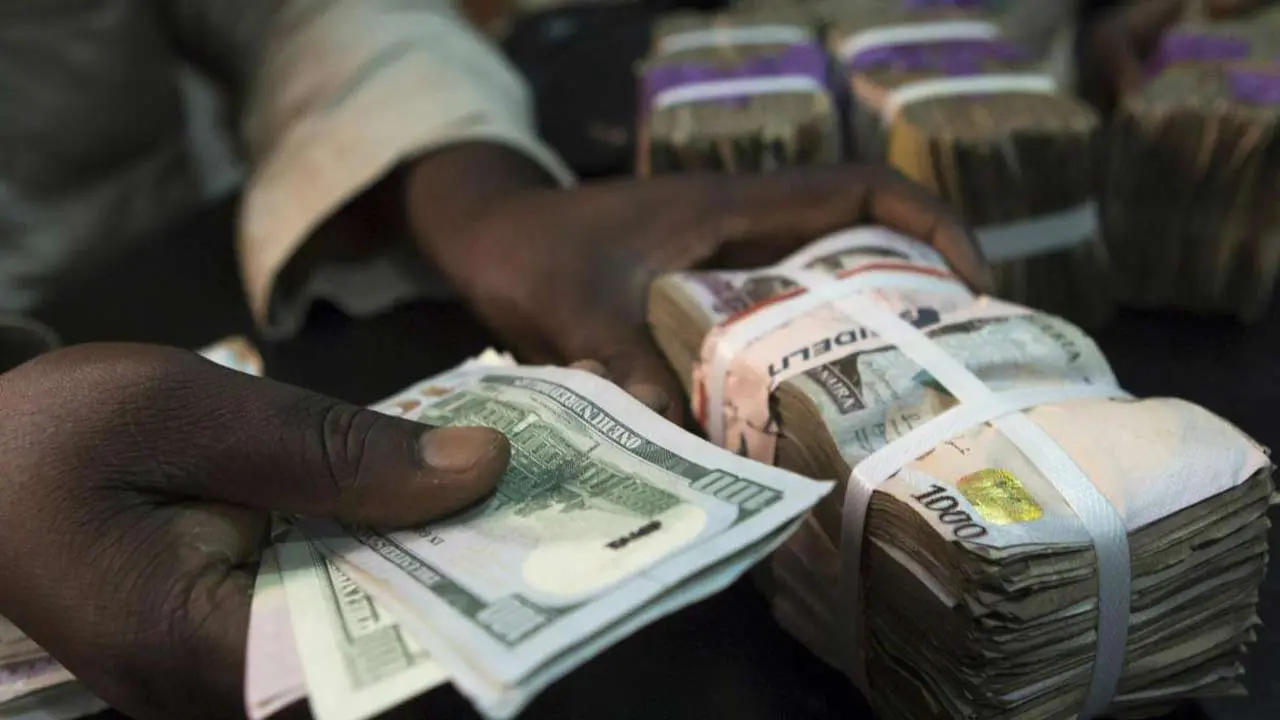
The naira resumed its downward trajectory against the U.S. dollar on Tuesday, closing at N1658.97 in the official Investors and Exporters (I&E) window.
This decline comes on the heels of troubling inflation reports, which revealed that Nigeria’s inflation rate surged to 32.70% in September, up from 32.15% in August—an increase of 0.55% month-on-month.
The naira’s depreciation at the I&E window marks a significant 6.83% drop, reflecting a notable decline in market turnover, as reported by the FMDQ exchange.
Daily trading volume in the currency market plummeted from $343.71 million on the previous trading day to $217.86 million on October 14, representing a staggering 57% decrease.
On October 14, the naira ended the trading session at N1658.97 per dollar, marking a 6.38% depreciation from the previous day’s closing rate of N1,552.92.
Throughout the trading session, the naira experienced considerable fluctuations, peaking at N1,670.50 and dipping to a low of N1,556.29 before settling at its closing rate.
READ ALSO: Naira among sub-saharan Africa’s worst-performing currencies
Market activity has taken a hit, with total traded volume in the I&E window dropping to $217.86 million, a stark contrast to the $343.71 million recorded the day before. For context, total market turnover for September 2024 reached $3.3 billion, underscoring the recent downturn.
In the parallel market, the naira opened at N1,630.35 per dollar, fluctuating between highs of N1,636.62 and lows of N1,630.35, before closing slightly higher at N1,634.66.
Throughout 2024, the naira has been under relentless pressure, leading to a dramatic depreciation of over 50% since the beginning of the year. Starting at N907.11 per dollar, the currency surpassed N1,500/USD by October. The first quarter saw a record low of N1,616.53 per dollar in February, followed by a brief stabilization around N1,303 in March.
READ ALSO: Naira-for-crude deal starts Tuesday as Nigerians anticipate lower fuel prices
However, this recovery was short-lived, and by early April, the naira had plummeted below N1,100, reaching N1,002 mid-month. By September, it closed at N1,668.97.
Compounding Nigeria’s currency woes is the escalating inflation rate, which reached 32.70% in September—a year-on-year increase of 5.98 percentage points from 26.72% in September 2023.
Additionally, Nigeria’s crude oil production, a crucial revenue source for the economy, fell by 33,000 barrels per day in September, dropping to 1.405 million barrels per day, according to OPEC’s latest market report. This is down from 1.438 million barrels per day recorded in August.
Despite these negative economic indicators, there remains a glimmer of hope that the naira could stabilize in the near future. A combination of favorable policy shifts and external factors, such as a potential weakness in the U.S. dollar, may offer the necessary support for the naira to recover some ground.
However, the path to recovery remains uncertain, as inflation, declining oil production, and other structural challenges continue to exert significant pressure on the Nigerian economy.


-
 Latest6 days ago
Israel marks 3 years since October 7 Hamas attack amid Gaza strikes, election debate
-

 Energy6 days ago
Fuel Battle: Dangote, marketers and government clash over petrol imports
-

 Energy1 week ago
Petrol, diesel prices rise 86% in 2026 as costs hit fresh highs
-

 Football1 week ago
Nigeria’s World Cup exit under spotlight as FIFA’s DR Congo files emerge
-

 Energy1 week ago
Has Iran lost control of the Strait of Hormuz? Oil flows rebound as war disruptions persist
-

 Latest1 day ago
Full List: Meet the 2026 Nobel Prize winners across six categories
-

 Latest1 week ago
US Court set to rule on release of FBI, DEA records on Tinubu
-

 Business1 week ago
Nigerian investors at a crossroads as fixed-income yields slide