
News
Okpebholo orders Edo MDAs to consolidate revenue accounts within 14 days

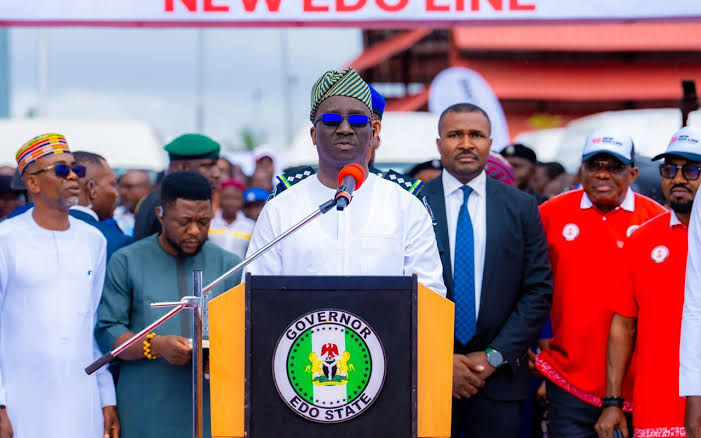
The Edo State Government has launched a major reform of its public revenue system, directing revenue-generating ministries, departments, agencies and parastatals to consolidate their collections into a single approved government account.
The directive follows the enactment of the Revenue Consolidation Account (Establishment and Operation) Law, 2026, which seeks to strengthen transparency, improve accountability and curb leakages in the state’s revenue collection system.
Under the new law, affected government institutions are no longer expected to maintain separate revenue accounts through which funds collected on behalf of the state could remain scattered across different agencies.
Instead, all internally generated revenue is expected to flow into the designated consolidated government account, giving the state a centralised view of its income and improving the monitoring and reconciliation of public funds.
The Commissioner for Finance, Emmanuel Okoebor, said affected MDAs and parastatals have been given 14 days to comply with the directive.
Within the period, the institutions are expected to declare their existing revenue accounts, transfer all balances into the approved government account, close the affected accounts and submit relevant financial records and receipts dating back to January 1, 2025, for audit.
READ ALSO: Edo Police parade suspects over N400m AIT equipment theft, vandalism
The directive effectively places every affected institution under a financial accountability test: what was collected, where the money went and whether the records can adequately account for every naira.
For the administration of Governor Monday Okpebholo, the reform is designed to address weaknesses associated with fragmented revenue collection and financial reporting.
When public revenue is spread across multiple accounts and institutions, monitoring becomes more difficult and opportunities for unauthorised retention or diversion can increase. A centralised system, if properly enforced, could provide the government with a clearer picture of its actual revenue position while making reconciliation and auditing more effective.
However, the success of the policy will depend less on the existence of the law and more on its enforcement.
Okoebor has indicated that heads of agencies and relevant financial officers will be held responsible for compliance. This places direct responsibility on those managing public revenue and could become particularly significant where declared balances, bank records and submitted financial documents fail to reconcile.
The 14-day deadline therefore represents more than an administrative instruction. It creates a defined point at which the government can begin identifying discrepancies, outstanding balances and possible weaknesses in the management of public funds.
For Edo State, the reform could mark a significant shift from fragmented revenue administration towards a more centralised and auditable financial system.
But the real measure of its success will come after the deadline—when the government must determine whether every affected agency has complied and, where necessary, take action against those that fail to do so.


-

 Latest4 days ago
Full List: Meet the 2026 Nobel Prize winners across six categories
-
 Featured1 week ago
103 Million Voters: What does INEC’s new register say about Nigeria’s population?
-

 Football4 days ago
Premier League Matchweek 7: Five Fixtures That Could Shape the Weekend
-

 Latest3 days ago
Umahi defends Lagos-Calabar highway route changes amid public outcry
-

 Business3 days ago
Dangote Refinery IPO Extension: Was the 70% subscription report overhyped?
-
Business2 days ago
Dangote Refinery IPO: 70% Subscription claim meets fourfold demand assertion as investors seek clarity
-

 Featured3 days ago
El-Rufai, ADC governorship candidate’s court appearance puts Kaduna opposition politics in focus
-

 Latest1 day ago
UCTH faces morgue crisis as 50 unclaimed corpses await mass burial