
Business
Naira dips further amid FX market volatility

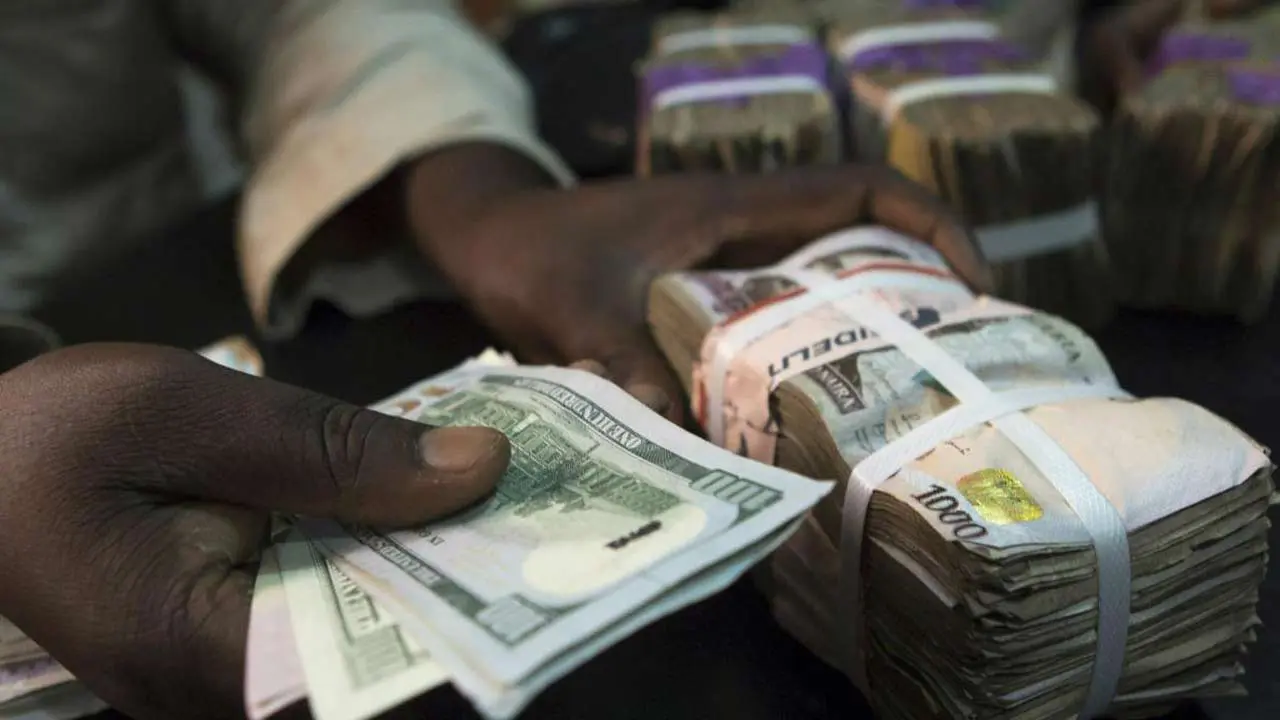
The Nigerian naira continued its downward slide at the official Nigerian Foreign Exchange Market (NFEM) on Wednesday, May 7, 2025, closing at N1,612 per dollar, according to data from the Central Bank of Nigeria (CBN).
This marks a slight depreciation from N1,609/$1 recorded the previous day, underscoring persistent volatility in the foreign exchange market despite marginal gains in external reserves and ongoing intervention efforts by the apex bank.
Intra-day trading on Wednesday reflected heightened market instability, with the naira fluctuating between a high of N1,615/$1 and a low of N1,605.01/$1.
This compares with Tuesday’s trading band of N1,609.5/$1 (high) and N1,603/$1 (low), indicating a broader trading spread driven by growing liquidity constraints and delayed foreign currency inflows.
At the parallel market, the naira also weakened, exchanging at N1,625/$1 on Wednesday, compared to N1,615/$1 on Tuesday.
This continued depreciation, combined with the narrow gap of approximately N13 between the official and parallel market rates, is reigniting fears of speculative demand and systemic challenges in FX accessibility.
Currency trader and market analyst Adetokunbo Bamidele of a Lagos-based investment firm highlighted ongoing structural bottlenecks as key drivers behind the naira’s decline.
READ ALSO: Naira stability drives corporate rebound as FX losses drop in Q1 2025
“We are seeing modest progress in terms of price discovery, but the real problem remains the supply of FX,” Bamidele said. “Until the supply side improves—whether through diaspora remittances, oil revenues, or foreign investment—the naira will continue to face depreciation pressures.”
Echoing these sentiments, Dr. Kemi Taiwo, an economist at Axion Financial Services, stressed the importance of coherent monetary and fiscal coordination to stabilize the currency and rebuild investor confidence.
“The CBN must go beyond firefighting,” Dr. Taiwo noted. “What’s required now is a strategic mix of policies that can unlock sustained inflows and reduce the reliance on the black market. Otherwise, the arbitrage opportunities will persist and distort the market.”
Despite the currency’s depreciation, Nigeria’s external reserves saw a marginal increase, rising to $38.10 billion as of May 6, 2025, up from $37.93 billion on April 30, 2025. Analysts attribute this uptick to crude oil receipts and potential foreign currency borrowings.
However, they warn that this level of reserves may be insufficient to meaningfully support the naira in the face of growing speculative activity and systemic demand pressures.
The CBN has reiterated its commitment to stabilizing the foreign exchange market through regular interventions and reforms to boost market confidence.
Nonetheless, with the naira under sustained pressure and key stakeholders calling for deeper structural reforms, the road to currency stability appears increasingly complex.


-

 Business7 days ago
Dangote Refinery IPO: 70% Subscription claim meets fourfold demand assertion as investors seek clarity
-

 Latest1 week ago
Umahi defends Lagos-Calabar highway route changes amid public outcry
-
Business1 week ago
Dangote Refinery IPO Extension: Was the 70% subscription report overhyped?
-

 Featured3 days ago
Inside INEC’s race to prepare for Nigeria’s 2027 elections
-

 Latest6 days ago
UCTH faces morgue crisis as 50 unclaimed corpses await mass burial
-

 Business5 days ago
BREAKING: Nigeria’s Inflation Rate Drops to 14.63% in September
-

 Featured1 week ago
El-Rufai, ADC governorship candidate’s court appearance puts Kaduna opposition politics in focus
-

 Featured3 days ago
2027: APC unveils nationwide campaign timetable, Tinubu to rally in 12 states